
You’ve learned how to choose a bookmaker, what the odds mean, and the difference between an accumulator and a handicap. You’ve even explored the fast-paced world of in-play betting. Now, we must discuss the single most important topic in your entire betting journey. It’s not about picking winners; it’s about managing your money.
Welcome to the world of bankroll management.
This is the concept that separates successful, long-term players from those who quickly lose their funds. It is the financial discipline that underpins any betting strategy. This guide will explain what a bankroll is, why managing it is non-negotiable, and provide you with simple, effective staking plans that you can implement today.

What is a Betting Bankroll?
A betting bankroll is a specific amount of money that you have set aside purely for the purpose of betting. This is the most critical definition to understand. Your bankroll is not your bank account balance. It is a separate fund that you can, in a worst-case scenario, afford to lose entirely without it affecting your daily life.
What is a Good Starting Bankroll?
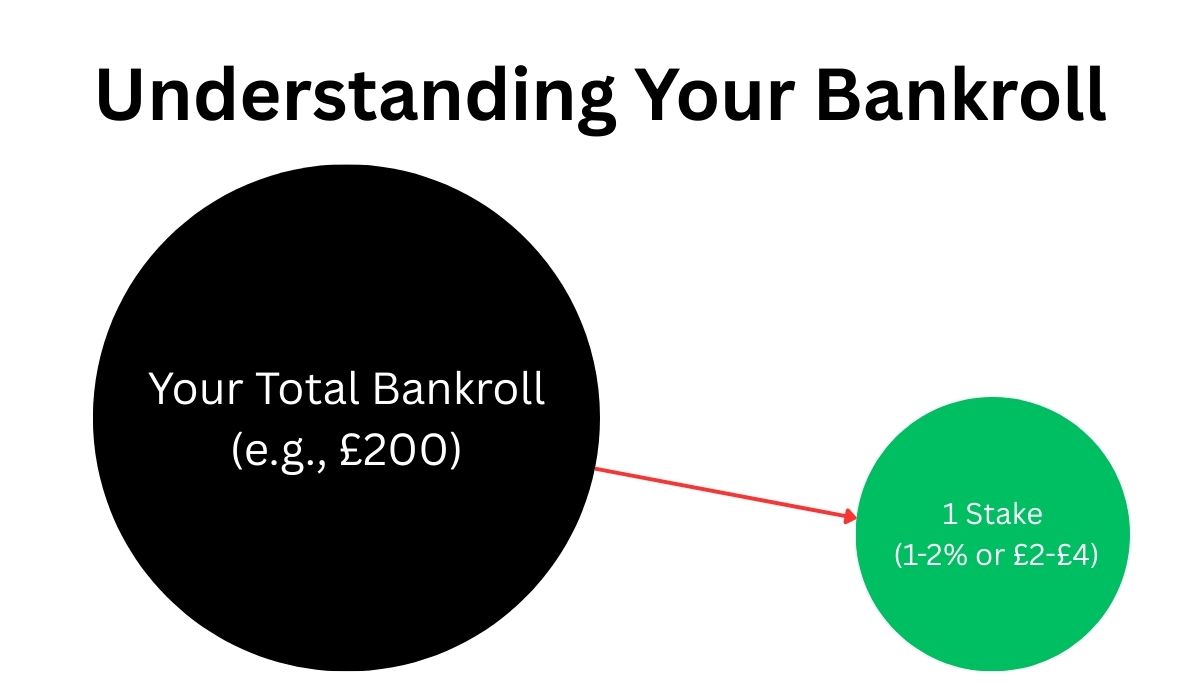
This is a highly personal question. A good starting bankroll could be £50, £200, or £1,000. The number matters less than the principle: it must be an amount you are genuinely comfortable losing. The size should also be large enough to withstand at least 20–30 bets without being depleted, giving your strategy a chance to work. Many people start with a manageable amount like £100 to learn the ropes.

Why Bankroll Management is Essential in Betting
Effective bankroll management in sports betting is your number one defence against losing streaks and emotional decisions.
- It Protects You from Going Broke: Losing streaks are inevitable. A proper bankroll strategy ensures you only bet a tiny fraction of your total funds (typically 1-3%) on any single event, allowing you to easily withstand these losing runs and stay in the game.
- It Removes Emotion from Staking: When you have a clear plan that dictates how much you should stake, you remove guesswork and emotion. You won’t be tempted to bet huge amounts after a big win or desperately try to win back losses with one reckless wager.
⚠️ Responsible Gambling Reminder
Bankroll management is a tool for discipline. Only ever bet with money you can afford to lose, and set personal deposit or loss limits before you start. If betting stops being fun, it’s time to stop. For free, confidential support, visit begambleaware.org.
Staking Plans in Bankroll Management: How to Decide Your Bet Size
Once you have established your total bankroll, the next step is to implement a staking plan. This is a simple rule that determines the exact amount of money you will place on each bet.
What is a ‘Betting Unit’?
A “unit” is a core concept in bankroll management. It is simply 1% of your total bankroll. If your bankroll is £200, one unit is £2. A 2-unit bet would be £4. This system allows you to manage your risk consistently.
The Flat Staking Plan (Recommended for Beginners)
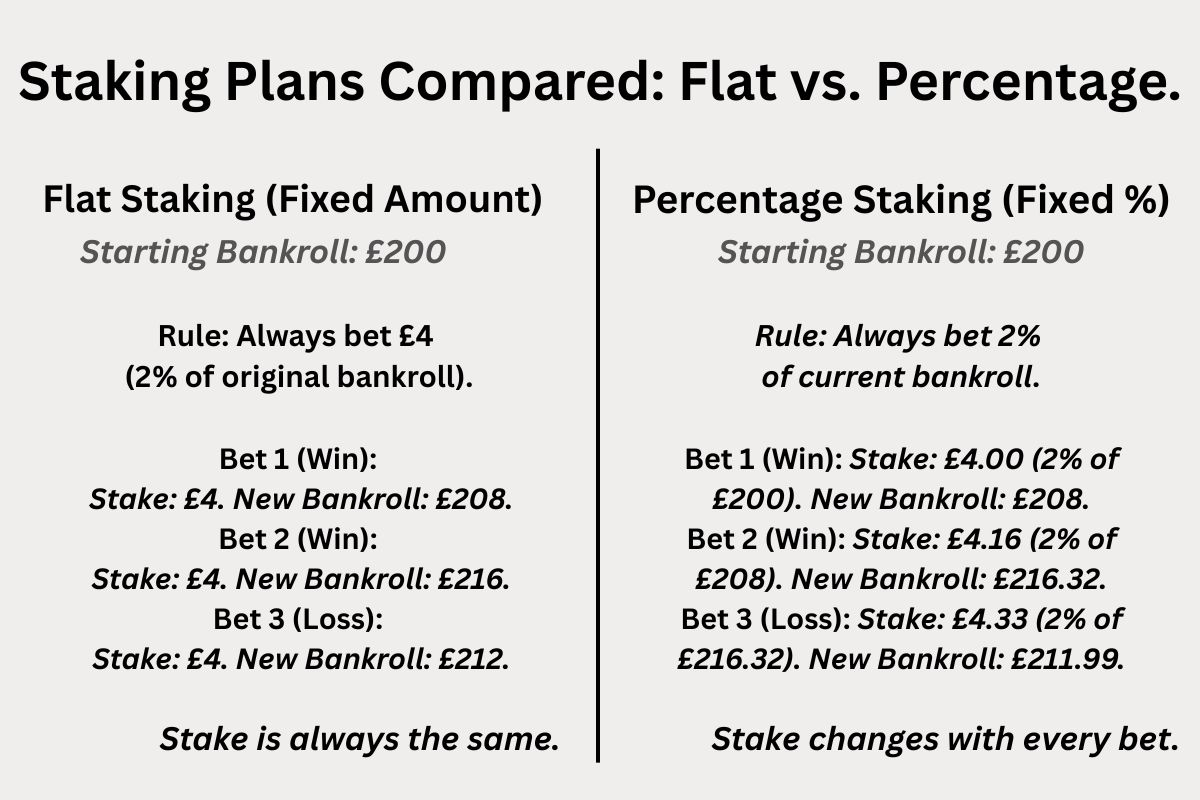
This is the simplest and most effective strategy for beginners. You bet the same amount (e.g., one unit, or 1-2% of your bankroll) on every single selection, regardless of the odds. This method forces discipline and helps you focus on finding value.
The Percentage Staking Plan
This is a slightly more advanced model where your stake is always a fixed percentage of your current bankroll. This means your stake size adjusts as your bankroll grows or shrinks, accelerating profits during winning streaks and protecting your bankroll during losing ones.
While other, more complex strategies exist (like the Kelly Criterion), they are designed for advanced bettors. For any beginner, mastering Flat or Percentage staking is the perfect foundation.
Your Betting Bankroll Management Checklist
Before you place your next bet, run through this simple checklist:
- Decide on your starting bankroll. Set aside an amount you can truly afford to lose.
- Decide your unit size (e.g., 1 unit = 1% of your total bankroll).
- Pick your staking method — for beginners, a flat stake of 1–2 units (1–2%) per bet works best.
- Set your limits. Use the responsible gambling tools on betting sites to set deposit or loss limits.
- Track every bet. Keep a simple log or spreadsheet of your bets to monitor your performance.
Conclusion: Your Most Important Strategy
Bankroll management in betting is the single most important strategy to keep you in the game long enough to succeed. By implementing a clear staking plan, you embrace responsible betting and replace emotion with logic. It is the bedrock of any smart betting approach.
You now have a solid financial strategy. Let’s combine it with analytical skills.