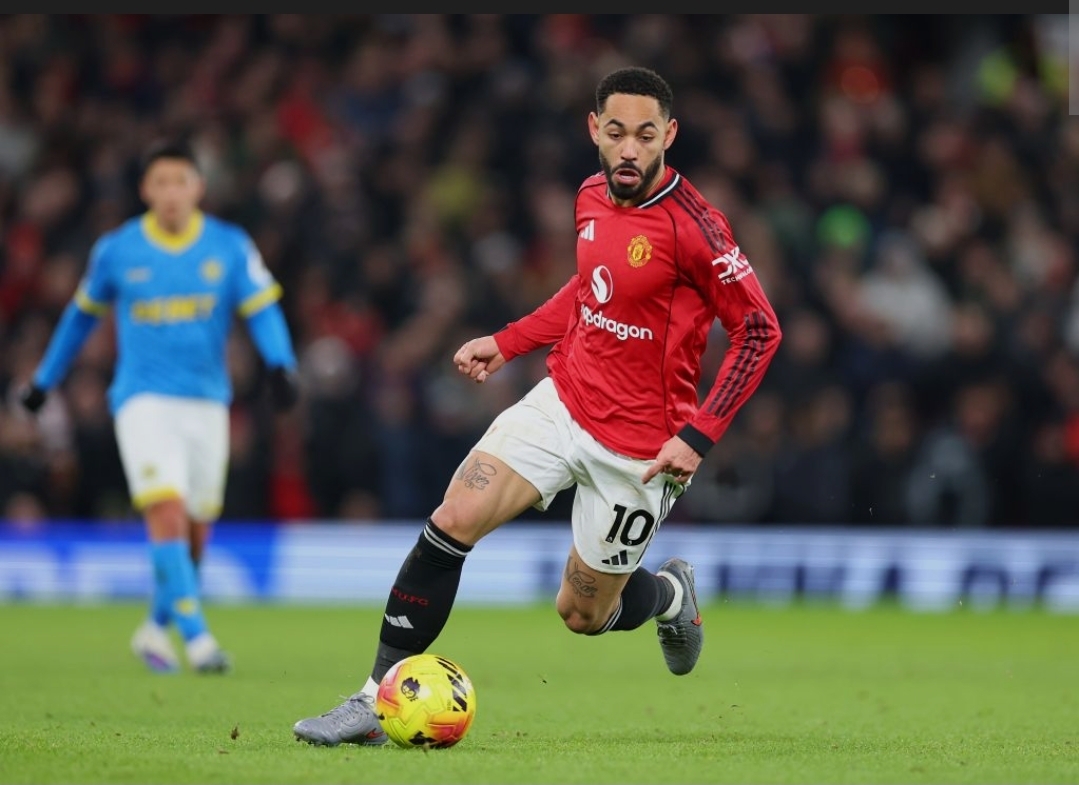
Matheus Cunha scored to put Man Utd 3-2 up against Arsenal at the Emirates with a brilliant strike, igniting joy among Manchester United fans but also sparking controversy that could lead to an FA ban. The Brazilian forward’s stunning goal late in the Premier League encounter showcased his talent, yet his post-goal reaction has now placed him under the spotlight for potentially breaching Football Association regulations.
Matheus Cunha’s Match-Winning Strike and Celebration Chaos
Matheus Cunha entered the electrifying encounter at the Emirates Stadium as a substitute for Manchester United, replacing a fatigued player as Michael Carrick sought to turn the tide against Arsenal. The match saw intense back-and-forth action, with Arsenal’s Mikel Merino leveling the game at 2-2 with a well-placed finish, setting the stage for a dramatic finale.
In the 87th minute, Cunha seized his moment. He delivered a breathtaking strike from distance that curled majestically into the bottom corner of the net, a goal crafted from excellent buildup play involving Bruno Fernandes and young Kobbie Mainoo. This effort not only silenced the home crowd temporarily but also put United a crucial goal ahead at 3-2.

However, the celebrations that followed quickly became controversial. As Cunha ran towards the away section, he grabbed a fan’s camera and appeared to shout directly into the lens. Observers immediately noticed what sounded like profanity. Sky Sports commentator Peter Drury was quick to address the issue on air, issuing an apology for the inappropriate language during the broadcast: “If you heard some bad language in among the celebrations, for that we apologise.”
The Potential FA Ban: Why Matheus Cunha Could Be Punished
The Football Association maintains strict regulations regarding player conduct, particularly in public settings and broadcasts. Their guidelines explicitly condemn “offensive, insulting or abusive language and/or gestures” on the field, categorizing these as sending-off offenses if spotted by referees. Moreover, the FA retains the right to impose retrospective bans based on video footage visible to wide audiences, even when the referee may have missed the incident during the match.
Cunha’s direct use of profane language into a camera qualifies as a “clear and deliberate” act, considered damaging to the sport’s reputation. The incident is likely to attract scrutiny because it was clearly caught on camera, broadcast live, and shared across multiple platforms, amplifying its visibility.
Historical precedent supports the potential for Cunha’s punishment. In 2011, England and Manchester United striker Wayne Rooney received a two-match ban for swearing on camera during a match against West Ham United. The FA’s disciplinary panel underscored the importance of maintaining the game’s image and sent a strong message that inappropriate language, even during emotional celebrations, would not be tolerated.
The Impact on Man Utd and Cunha’s Career
If the FA decides to act, Cunha could face a suspension that might sideline him for future crucial fixtures. Given that Manchester United are competing for both domestic and European honors, losing such a promising forward could impact the team’s tactical flexibility and goal-scoring options.
Moreover, beyond the immediate consequences, the incident may affect Cunha’s reputation among fans, sponsors, and coaching staff. The Brazilian forward has demonstrated his value through decisive contributions, but professionalism in all aspects of public conduct remains critical for sustained success in top-flight football.
Balancing Emotion and Discipline in Football Celebrations
Football is a sport full of passion and emotional highs, with goal celebrations often reflecting players’ joy and release of tension built up over 90 minutes. However, this incident serves as a reminder that players and clubs must balance emotional expression with the responsibility to uphold the sport’s integrity.
Broadcast cameras capture every moment, and with football’s global audience, any inappropriate conduct can have wide-reaching consequences. Clubs frequently remind their players about media behavior to avoid jeopardizing their team’s image and avoid sanctions that could negatively affect their campaign.
Stunning Strike Seals Victory for Man Utd
After coming off the bench, Matheus Cunha changed the course of the game with an exceptional goal in the 87th minute. The match had been fiercely contested, with Arsenal equalizing through Mikel Merino to make it 2-2. However, United’s Brazilian forward unleashed a curling effort from outside the box, expertly placed into the bottom corner following precise buildup play involving Bruno Fernandes and young debutant Kobbie Mainoo. This clinical finish ignited the away fans and gave Michael Carrick’s side a crucial late lead at the Emirates Stadium.
The Controversial Celebration That Could Cost Cunha Dearly
While Cunha’s strike was undoubtedly the highlight, his subsequent celebration has sparked debate and could lead to disciplinary action. In front of Manchester United’s traveling supporters, Cunha grabbed a camera from the sidelines and appeared to shout something directly into the lens. Although the exact words remain unclear, the expletive-laden nature of his comments was audible enough to prompt an apology from Sky Sports commentator Peter Drury. Drury acknowledged the inappropriate nature of the language, stating, “If you heard some bad language in among the celebrations, for that we apologise.”
Potential FA Ban Under Disciplinary Guidelines
The Football Association has strict rules surrounding player conduct, particularly relating to offensive, insulting, or abusive language and gestures. These are classified as sending-off offences when displayed during matches. More importantly, the FA retains the power to impose retrospective sanctions if such behavior is caught on camera and broadcast to a wide audience.
Directing profanities into a camera is considered a “clear and deliberate” violation, damaging the reputation of football and the Premier League. Cunha’s act of shouting obscenities into the lens, broadcast live to millions, may well trigger a formal investigation and potential suspension.
Historical Precedents for Similar Incidents
Football history provides several examples where players have been retrospectively punished for similar misconduct. Most notably, Wayne Rooney received a two-match ban in 2011 after swearing on camera during a game against West Ham United. Rooney’s case set a clear precedent: regardless of the emotional intensity following a significant moment, professionalism must be maintained at all times on and off the pitch.
What This Means for Matheus Cunha and Man Utd
If Cunha is handed a ban, it could impact Manchester United’s attacking options going forward, especially as Carrick’s squad battles for crucial points in a competitive Premier League title race. Suspensions can disrupt momentum and force tactical adjustments, placing additional pressure on the team.
Moreover, the incident serves as a reminder about maintaining composure amid celebration. Footballers are role models to millions, and their conduct reflects not just on their clubs but on the sport as a whole.