Players Who Cover Their Mouths When Speaking Should Be Sent Off, Says Gianni Infantino
Players who cover their mouths when speaking to opponents during confrontations should be sent off, insists Gianni Infantino, president of football’s world governing body, FIFA. His comments add fuel to an ongoing debate about transparency and accountability on the pitch — especially in the context of preventing discriminatory behavior. The discussion gained fresh urgency following a recent Champions League incident involving Benfica’s Gianluca Prestianni and Real Madrid’s Vinicius Jr.
The Controversy Behind Covering Mouths in Football
The issue arose less than two weeks ago during a heated Champions League encounter when Prestianni was seen raising his shirt over his mouth while speaking to Vinicius Jr. This gesture sparked suspicions of inappropriate, potentially racist remarks. UEFA responded swiftly, handing Prestianni a provisional one-match ban for alleged racist language—an accusation he denies. The temporary sanction remains pending a full investigation by an ethics and disciplinary inspector. Depending on the findings, he could face harsher penalties.

This incident highlights a broader challenge in football: how to effectively police players’ conduct in moments of tension, especially when they try to conceal their words from officials and cameras.
Infantino’s Call for a Presumption of Guilt When Players Cover Their Mouths
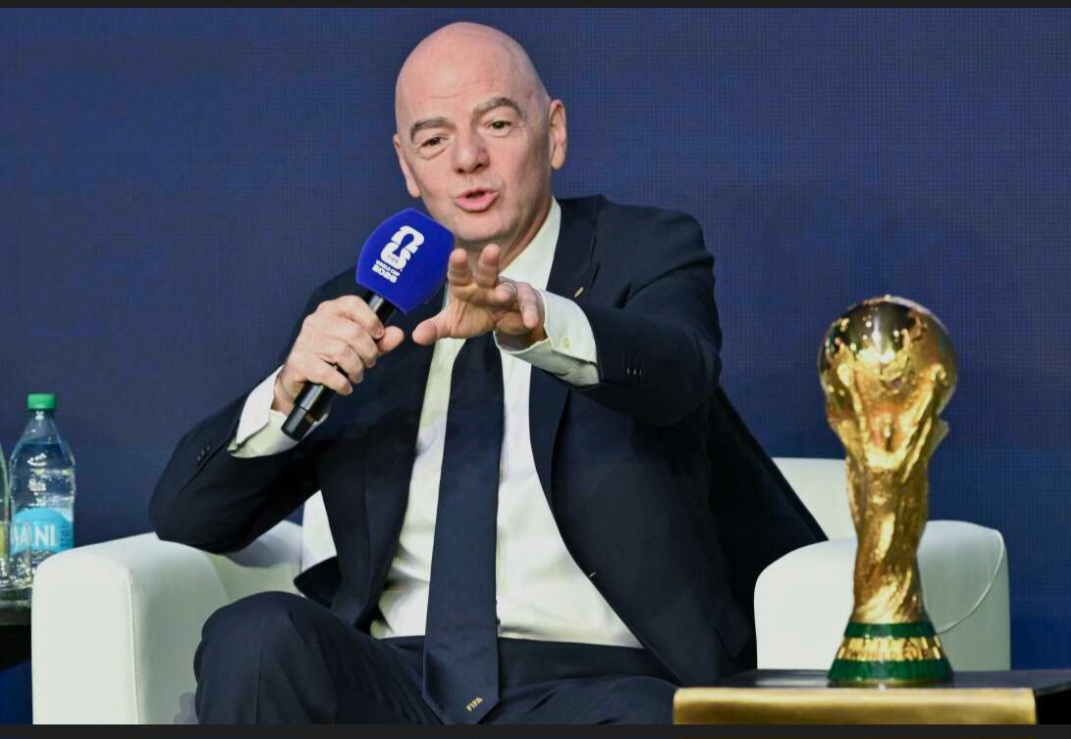
Gianni Infantino took a firm stance in a recent interview with Sky News. He stated referees should operate under a presumption that when players cover their mouths during verbal exchanges, “they have said something they shouldn’t have.” Infantino argues that a player only hides their lips if they have something inappropriate to hide.
He stressed: “If a player covers his mouth and says something, and this has a racist consequence, then he has to be sent off, obviously.” His position promotes a zero-tolerance approach to offensive language, believing that such actions should carry immediate consequences to act as a deterrent.
Infantino acknowledged individual cases like Prestianni’s should be handled by the relevant governing bodies. However, he emphasized that football as a whole must adopt decisive measures that send a clear message against misconduct and underline the sport’s commitment to fairness and respect.
The Role of International Football Association Board (Ifab)
This issue was brought to the forefront of discussions at the International Football Association Board’s (Ifab) annual general meeting in Wales. Ifab — the body responsible for overseeing the laws of the game — explored potential measures to prevent players from hiding what they say when confronting each other.
Although no agreement was reached at this meeting, participants agreed on the need for further consultation to develop workable solutions that can be implemented without unintended consequences.
FIFA Secretary General Mattias Grafstrom spoke about the road ahead, saying: “We want to continue the discussion and potentially come up with measures before the World Cup.” He pointed to the upcoming FIFA Congress in Vancouver on April 30 as a significant opportunity to finalize any law changes in time for the tournament this summer.
Finding the Right Balance: Perspectives from Football Authorities
While Infantino’s call for immediate send-offs is clear, other football leaders urge caution and more comprehensive discussion to craft a balanced approach. Mark Bullingham, Chief Executive of the Football Association and an Ifab board member, highlighted the complexities involved.
Bullingham explained, “We need to consult the game more broadly and work out where we would avoid any unforeseen circumstances.” He pointed out that, in most cases, players should have no reason to cover their mouths during confrontations and that the rule — if introduced — must not create further problems.
This collaborative approach underlines the importance of considering all stakeholders: players, referees, teams, and fans, ensuring that any new regulation is fair, enforceable, and preserves the spirit of the game.
Why Addressing Mouth-Covering in Football Matters
The debate about mouth-covering during player confrontations goes beyond a simple gesture. It touches on broader issues of sportsmanship, respect, and the ongoing fight against racism and discrimination in football. Transparency in communication helps officials maintain control and ensures players are held accountable for their words and actions.
Implementing clearer guidelines and potential sanctions could act as a deterrent against the use of offensive or discriminatory language, fostering a safer and more respectful environment on and off the field.
Looking Ahead: Possible Rule Changes at the World Cup
With the FIFA Congress scheduled ahead of the World Cup, there is an unprecedented opportunity to introduce new laws addressing this behavior. Ifab and FIFA are working closely to strike the right balance between strict enforcement and practical application. Their joint efforts aim to make the game more transparent, fair, and inclusive.
As football continues to evolve, tackling such nuanced behavioral issues demonstrates the sport’s commitment to upholding integrity and ensuring that respect remains a cornerstone of the beautiful game.
In conclusion, the call for sending off players who cover their mouths while speaking during confrontations — as advocated by Gianni Infantino — has ignited an important conversation in football’s governance. It highlights the delicate challenge of maintaining discipline and respect while safeguarding fairness and clarity. The upcoming months will be crucial as the game’s leaders deliberate on meaningful measures that could soon shape football’s future on the global stage.