Some Bad News for Harry Kane: Why History Suggests the 2026 Golden Boot Won’t Go to a 30-Plus-Year-Old
As the excitement builds around the 2026 FIFA World Cup, all eyes are on Harry Kane to add another Golden Boot to his collection. However, history paints a less optimistic picture for strikers aged 30 and above aiming for the tournament’s top scorer award. Let’s dive into why Kane—and any other older striker—might face an uphill challenge based on past trends.
The Age Factor: Why 30+ Is a Rare Age for Golden Boot Winners
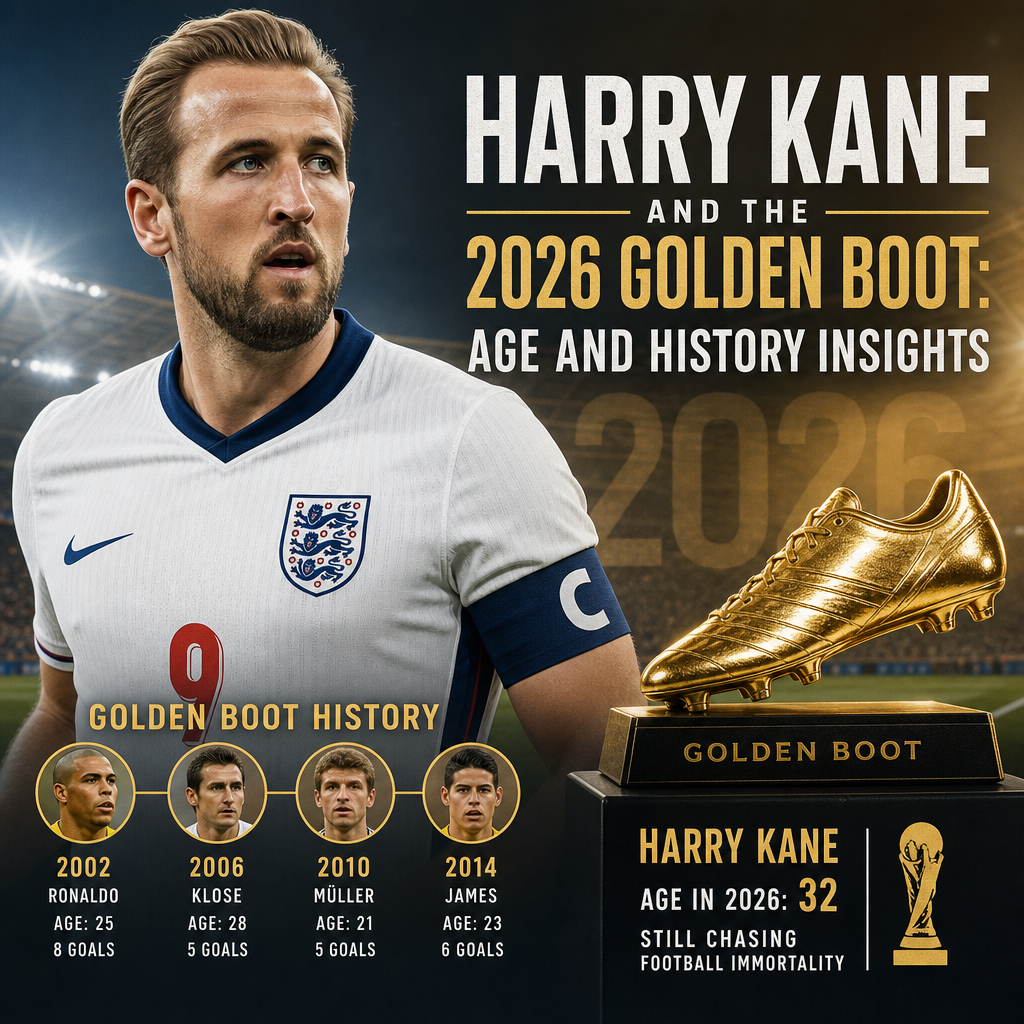
Age matters in international tournaments. The average age of World Cup Golden Boot winners is just 24.7 years, highlighting how younger players tend to dominate this prestigious accolade.

- Only One Exception at 30+
The sole player aged 30 or above to win the Golden Boot was Davor Suker, who scored six goals for Croatia in the 1998 France World Cup at the age of 30. Suker’s feat is extraordinary given Croatia’s first World Cup appearance following their independence, where they impressively secured third place. - Most Winners Are in Their Early to Mid-20s
Other historic winners often peaked in their twenties. For instance, Kylian Mbappé lowered the average age slightly when he won in 2022 at 24, just edging out Lionel Messi, who was 35 at the time.
Youngest Golden Boot Winners and Rising Stars
The race to be the youngest Golden Boot winner remains fierce:
- Record Holder: Florian Albert
The Hungarian striker Florian Albert holds the record for the youngest Golden Boot winner. He was 20 years and eight months old when he shared the award with five others at the Chile 1962 World Cup. - The Future: Lamine Yamal
At just 18 years old, young talents like Lamine Yamal could challenge these age records in the future. His rapid rise suggests that youth will remain a strong factor in goal-scoring success.
What Makes a Golden Boot Winner?
Two main factors determine the likelihood of a player winning the Golden Boot:
1. A Strong Team Supply Line
A prolific striker needs excellent service from midfielders and wingers. Being part of a team that creates numerous scoring chances is critical.
2. Team Progression Deep into the Tournament
Players whose teams reach later stages have more matches to accumulate goals. Without deep runs, even the best scorers can fall behind.
Brazil: The Golden Boot Factory
Brazil, a five-time World Cup winner, has produced six Golden Boot winners — the most of any country:
- Leonidas (1938) was their first top scorer.
- Ronaldo (2002) was the latest Brazilian to claim the honor.
Brazil’s success underlines how world-class attackers in successful teams dominate the Golden Boot race.
Group Stage Goals Are Just the Beginning
A strong group stage is essential, but it’s not the whole story:
- Cristiano Ronaldo 2018
Ronaldo scored four goals in the group stage, but Portugal’s last-16 exit ended his chances early. - Harry Kane 2018
In contrast, Kane’s six goals helped England reach the semi-finals, giving him more opportunities. - Exception: Oleg Salenko in 1994
Salenko defied the odds by winning the Golden Boot with six goals despite Russia failing to escape the group stage — highlighted by a record five goals in one match against Cameroon.
The Importance of Players Arriving in Form
Golden Boot winners often enter the tournament at peak performance levels:
- Thomas Müller 2010
Before the South Africa World Cup, Müller had never scored for Germany. Yet, he hit form at just the right time, winning the Golden Boot with five goals and three assists. - Müller’s impressive Bundesliga season with Bayern Munich leading up to the World Cup was a key factor: 13 goals and 11 assists in title-winning form.
Club Success and Golden Boot Chances
Most Golden Boot winners come from players whose clubs finish in the top four domestically:
- Only twice has a player from a club outside the top four claimed the Golden Boot.
- This connection underlines the importance of consistent high-level performance across both club and country.
The Fine Margins: Goals, Assists, and Minutes Played
When players tie on goals, the Golden Boot is decided by:
- Number of assists provided.
- If still tied, fewer minutes played.
This scenario occurred in the 2010 World Cup when Muller edged out Diego Forlán, David Villa, and Wesley Sneijder thanks to his superior assist count.
Conclusion: What This Means for Harry Kane and 2026
Given the historical data, Harry Kane faces tough odds in 2026:
- Being over 30 places him in the category where Golden Boot wins are rare.
- England will need to both supply Kane with chances and progress deep into the tournament.
- Competing with younger, in-form talents who may dominate goal scoring is inevitable.
History shows the 2026 Golden Boot is more likely to land in the boots of a player in their mid-twenties or younger. Still, Kane’s proven scoring prowess and experience ensure he’ll be a key contender — but history might not be on his side this time.