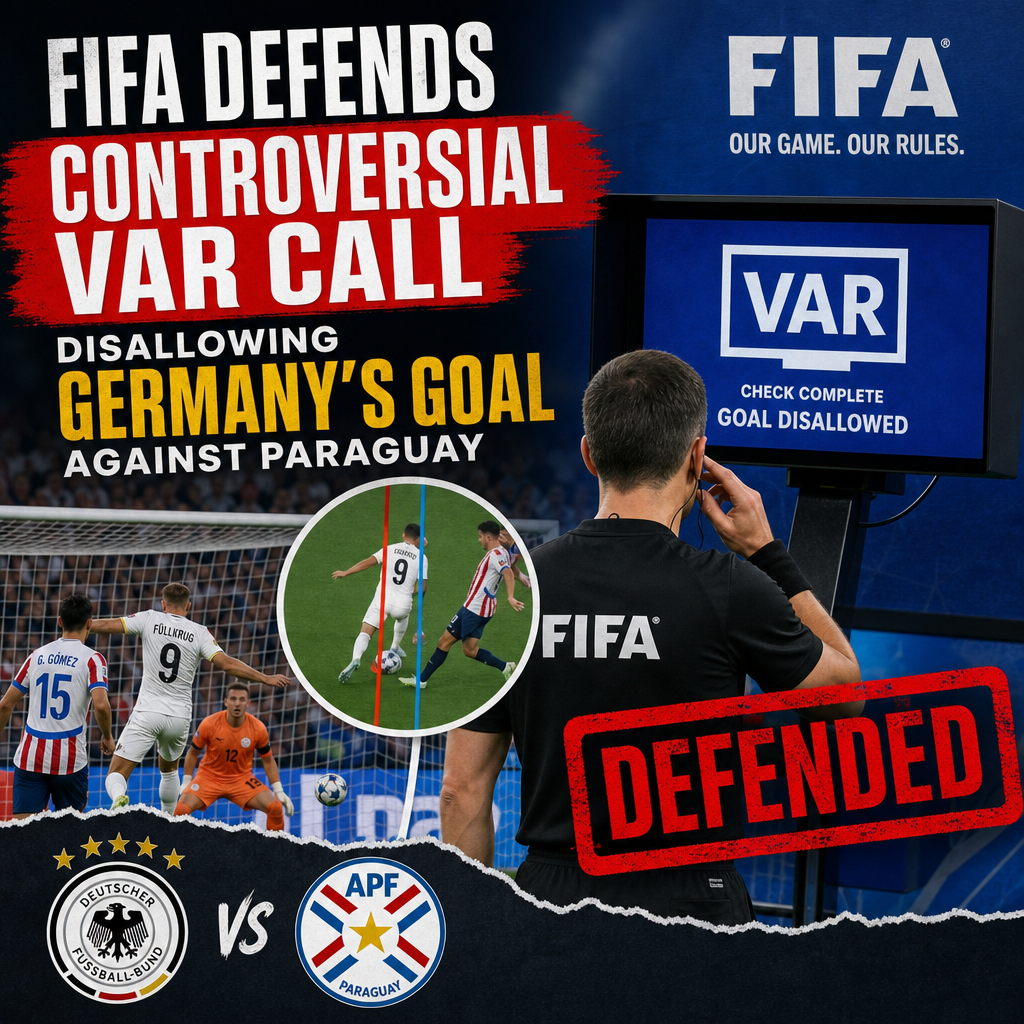
FIFA Defends Controversial VAR Decision That Disallowed Germany’s Extra-Time Goal Against Paraguay
The 2026 World Cup Round of 32 match between Germany and Paraguay ended in drama, controversy, and a heated debate over a pivotal VAR decision. FIFA officially defended the disallowed extra-time goal scored by Germany’s Jonathan Tah, explaining that the ruling was in strict accordance with new refereeing guidelines aimed at protecting goalkeepers from deliberate obstruction. This decision sparked widespread backlash, raising questions about the implementation and interpretation of the updated rules.
The Official FIFA Explanation
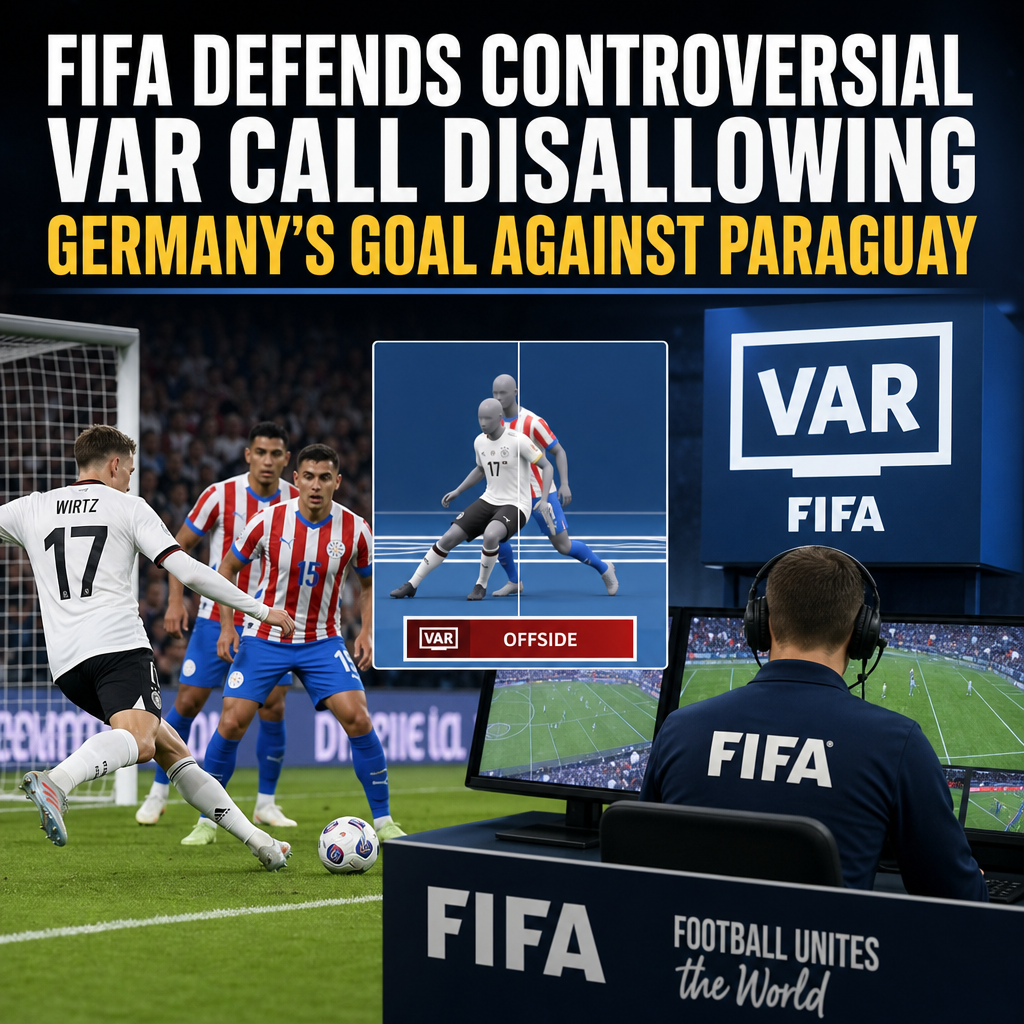
Following Germany’s heartbreaking elimination after Tah’s goal was erased, FIFA referees chief Pierluigi Collina provided clarity on the rationale behind the decision.

Targeted Obstruction Punished
FIFA explicitly instructed officials before the tournament to crack down on “pick plays” or blocking tactics. These occur when an attacking player makes no genuine attempt to play the ball but instead focuses on obstructing the goalkeeper’s movement or line of sight.
This new enforcement comes under protocols established by the International Football Association Board (IFAB), targeting actions where attackers deliberately impede goalkeepers even if no foul on the ball occurs.
Intent Over Impact
Collina emphasized that the intent of the attacker matters most. Even if physical contact seems marginal or soft, an attacker cannot deliberately position themselves to alter their movement for the purpose of screening or blocking the goalkeeper.
This approach treats subtle off-the-ball incidents with the same seriousness as obvious fouls, aiming to preserve goalkeeper safety and fair play during set pieces.
Prior Warning Given
FIFA also made it clear that all participating coaches and players were fully briefed on these stricter regulations before the World Cup began. The heightened enforcement standard was not unexpected and was consistently communicated to all teams.
The Incident That Changed the Match
The controversy centers around the 101st minute of extra time in a tightly contested game tied 1-1. Germany looked poised to seal a dramatic victory when Jonathan Tah headed the ball into the net from a corner kick.
However, VAR intervened to review an off-the-ball event:
- Waldemar Anton, a German defender, was seen initiating a block on Paraguayan goalkeeper Orlando Gill.
- After on-field review, Moroccan referee Jalal Jayed judged Anton’s movement as illegal obstruction under the updated IFAB protocols.
- The goal was therefore disallowed, nullifying what would have been the match-winner.
- The game eventually went to penalties where Paraguay triumphed 4-3.
This decision instantly became the focal point of heated debate.
Public and Pundit Backlash
Despite FIFA’s detailed explanation, many football personalities and fans voiced strong criticism of the decision.
Julian Nagelsmann’s Reaction
Germany’s head coach Julian Nagelsmann called the ruling “an absolute joke,” arguing that the physical contact did not amount to a real foul worthy of disallowing a goal that otherwise seemed legitimate.
Jürgen Klopp’s Perspective
Veteran manager Jürgen Klopp expressed frustration during his MagentaTV commentary by pointing out the inconsistency:
“Premier League teams like Arsenal perform similar set-piece screens regularly without intervention.”
His comments highlighted concerns around selective enforcement and fairness in applying the new obstruction rule.
Alan Shearer’s Opinion
Former England striker Alan Shearer, working as a BBC commentator, slammed the decision as “pathetic.” He argued that the goalkeeper “conned the referee,” suggesting that Orlando Gill exaggerated the contact in a sport known for its physicality.
What This Means for Future Matches
The FIFA defense of the decision signals a clear message: protecting goalkeepers from deliberate obstruction is now a priority. This means referees will:
- More strictly penalize off-the-ball blocking tactics in offensive set plays.
- Focus on the attacker’s intent to impede, not just the level of contact.
- Enforce these rules consistently to maintain fairness across competitions.
Teams and players will need to adapt tactics accordingly to avoid costly disallowed goals.
Conclusion
FIFA’s official defense of the controversial VAR decision highlights the evolving landscape of refereeing in modern football. While the disallowed Germany goal has divided opinion, the implementation of stricter obstruction guidelines reflects a commitment to safeguarding goalkeepers and clarifying the rules around off-the-ball incidents.
As football continues to embrace technology and updated protocols, such decisions may become more common—requiring players, coaches, and fans to adjust their expectations and understanding of the game. Whether this particular ruling was justified or not, it undoubtedly marks a new chapter in World Cup refereeing history.