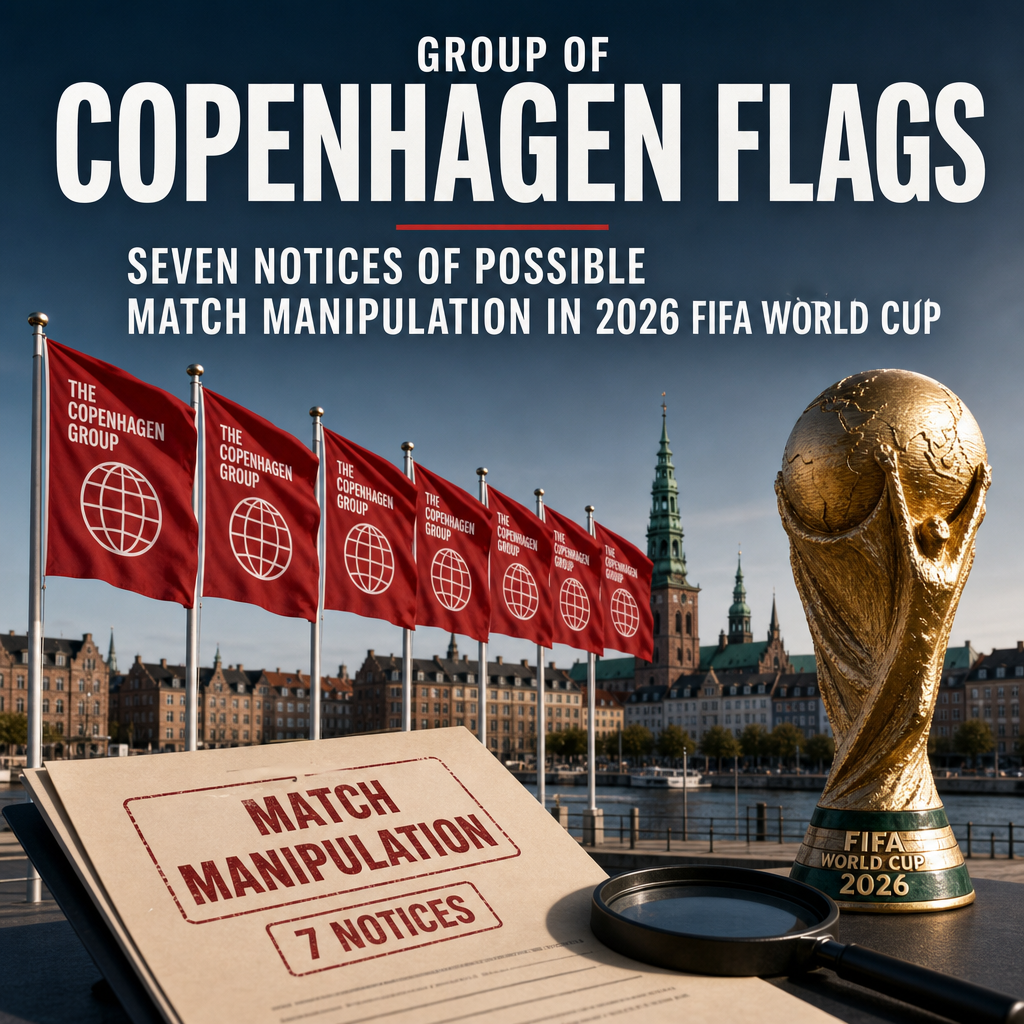
Group of Copenhagen Raises Concerns Over Potential Match Manipulation at 2026 FIFA World Cup
The 2026 FIFA World Cup has not only been thrilling on the pitch but has also drawn attention off it due to serious allegations related to possible match manipulation and betting irregularities. The Group of Copenhagen, an independent international network dedicated to detecting and preventing sports manipulation, has raised seven warnings involving football matches in the tournament, including a highly controversial overturning of Folarin Balogun’s one-game suspension.
The Controversy Surrounding Folarin Balogun’s Suspension
Folarin Balogun, a key player for the United States, was expected to miss the Round of 16 game against Belgium, having been shown a red card in the Round of 32 match against Bosnia and Herzegovina. Surprisingly, Balogun’s suspension was overturned following intervention reportedly linked to former U.S. President Donald Trump, sparking suspicion and intense scrutiny.

Betting Market Activity on Balogun’s Suspension
The Group of Copenhagen’s report highlighted the unusual betting activity connected to Balogun’s suspension. Notably, the betting platform Polymarket opened a betting market on July 2, asking, “Will Folarin Balogun play against Belgium?” This market was created the very same day Balogun received his red card.
What makes this situation suspicious is that no other red carded players (14 in total before that point) had betting markets opened on whether their suspensions would be overturned. FIFA’s Disciplinary Committee only officially confirmed Balogun’s eligibility to play on July 5, yet betting activity had already been underway, raising significant questions about potential insider information or manipulation.
Other Betting Irregularities and Match Issues Highlighted
In addition to the Balogun suspension, the Group of Copenhagen’s report discusses other troubling incidents throughout the tournament:
- Themba Zwane’s Red Card: A red card issued to South Africa’s Themba Zwane in the tournament-opening game has been flagged for suspicious circumstances.
- Spain vs. Cape Verde Betting Market: The betting platform Polymarket reportedly received an astonishing $4.8 million (£3.6 million) in bets on Spain not defeating Cape Verde in their group-stage match, an unexpected outcome based on team strengths.
- VAR Delay in Spain vs. Saudi Arabia Game: There was a three-and-a-half-minute delay from the Video Assistant Referee (VAR) team just before disallowing a goal scored by Spain’s Ferran Torres during their 4-0 win over Saudi Arabia. This delay has raised questions about potential manipulation or external interference.
FIFA’s Response and the Role of the Group of Copenhagen
FIFA’s Integrity Task Force has publicly stated that no suspicious betting activity or indications of match manipulation have been identified throughout the World Cup. However, the Group of Copenhagen operates under the Council of Europe’s Macolin Convention, a multilateral treaty aimed at combating fixing by adapting international law. This gives their warnings considerable weight.
The Group has already shared their report with FIFA and anticipates formal clarifications on these so-called “yellow notices”—indicators that signal potential threats to the sport’s integrity but do not constitute final judgments.
Understanding the Group of Copenhagen’s Impact
The Group of Copenhagen plays a vital role in:
- Monitoring betting markets and suspicious patterns.
- Collaborating with international sports and legal authorities.
- Ensuring transparency and fairness by detecting signs of manipulation early.
- Promoting adherence to the Macolin Convention across countries involved in sports governance.
This incident involving Folarin Balogun and other raised concerns at the 2026 FIFA World Cup underscores the increasing complexity of modern sports where betting markets and political interference intersect.
What’s Next for FIFA and the Integrity of Football?
As investigations continue, FIFA faces immense pressure to:
- Provide transparency on the decisions surrounding Balogun’s suspension.
- Review betting activity related to specific match outcomes.
- Strengthen their integrity measures to restore public confidence.
For football fans and stakeholders alike, understanding these issues is crucial to preserving the sport’s reputation and upholding fair play—values that underpin the spirit of the World Cup.
Conclusion
The recent report from the Group of Copenhagen, highlighting seven notices about potential match manipulation in the 2026 FIFA World Cup, has brought to light troubling irregularities—especially involving Folarin Balogun’s suspension overturning. With unusual betting patterns and political intervention allegedly influencing key decisions, the football world faces yet another challenge to maintain its integrity.
Only through continued vigilance, international cooperation, and transparent investigation can football safeguard the spirit of fair competition for generations to come.