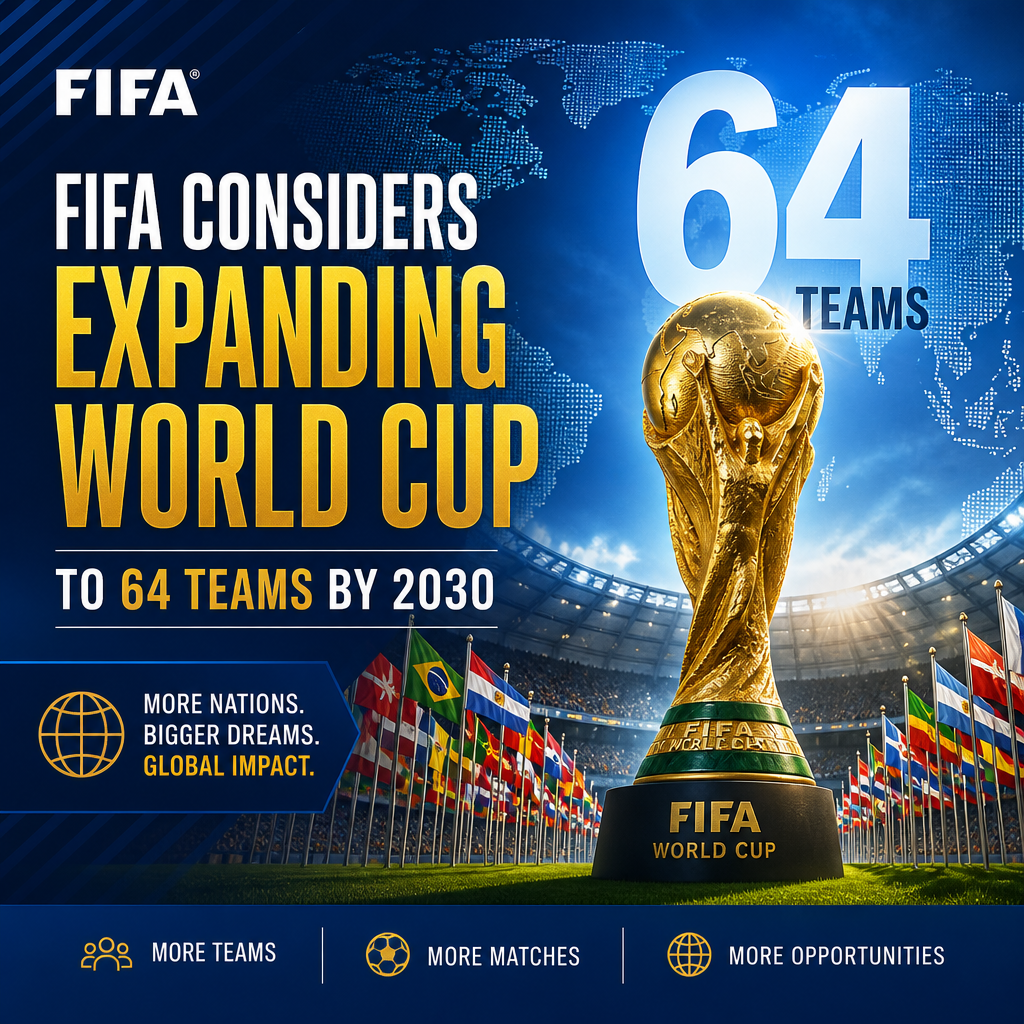
Expanding to 64 Teams: The Future of the FIFA World Cup
The FIFA World Cup has long been the pinnacle of international football, bringing together the best teams from around the globe every four years. As the tournament continues to grow in popularity and commercial significance, changes in its structure have been proposed and debated. One of the most ambitious ideas on the horizon is expanding to 64 teams for the 2030 World Cup.
The 2026 World Cup Expansion to 48 Teams
In June, ahead of the 2026 World Cup, FIFA projected record-breaking revenues exceeding seven billion euros ($8 billion), fueled partly by the expansion of the tournament from 32 to 48 teams. This was the first time the World Cup featured such a large pool of participants, allowing more nations than ever before to compete on football’s biggest stage.

This expansion reflected FIFA’s ambition to globalize the sport further, improving representation especially from continents like Africa, Asia, and North America.
The Proposal for 64 Teams in 2030
At the outset of the 48-team World Cup, FIFA President Gianni Infantino hinted at discussions regarding a potential expansion to 64 teams for the next decade, specifically 2030. This would mark another leap in size, further broadening the tournament’s scope and possibly changing the landscape of international football dramatically.
However, this idea has been met with mixed reactions. An anonymous senior football figure quoted by The Times warned that expanding the World Cup to such an extent could be “potentially much worse than the European Super League,” highlighting concerns over the negative impact on all levels of football worldwide.
Concerns About Conflicts of Interest and Oversaturation
Another anonymous source cited in The Times labeled the expansion plan as creating “unacceptable” conflicts of interest for FIFA and Infantino himself. These criticisms stem from the fear that FIFA’s expanding commercial ventures might prioritize financial gain over the integrity and competitive balance of the sport.
The rumor mill also hints that FIFA’s plans might not stop at the World Cup. The recent creation of FFE (FIFA Football Enterprises) and the expansion of the Club World Cup from seven teams to 32 clubs by 2025 suggest that football’s governing body is eyeing more frequent, larger-scale international competitions. This could lead to:
- More pressure to hold the World Cup more regularly than its traditional four-year cycle.
- Further expansion of global tournaments, potentially diluting the quality of competition and increasing player fatigue.
The Financial Backdrop of FIFA’s Expansion Plans
FIFA’s ambitions must be viewed in the context of its financial history. While the organization projected record revenues for 2026, FIFA has faced challenges before. For example, its dealings with ISL, the sports marketing company that managed World Cup rights deals until its bankruptcy in 2001, led to substantial losses estimated between $30 million and $115 million.
Similarly, in 2019, a plan championed by Infantino to secure $25 billion in private investment for an expanded Club World Cup was rejected by a FIFA stakeholders’ committee. This plan included backers such as SoftBank and Saudi Arabia’s sovereign wealth fund, illustrating how complex and controversial FIFA’s financial strategies can be.
What Could an Expanded World Cup Mean for Football?
The idea of expanding to 64 teams raises many questions about competitive balance, logistics, and the future of international football:
- Competitive Balance: Will 64 teams dilute the quality of play? Smaller footballing nations might get exposure, but critics worry about mismatches and less competitive matches in the early rounds.
- Tournament Logistics: Hosting a 64-team tournament would require more venues, longer scheduling, and increased travel, which could strain host nations as well as players.
- Global Football Development: On the positive side, expansion could accelerate football development worldwide by giving more countries the experience of World Cup-level competition.
Conclusion: Watching the Future Unfold
The concept of expanding to 64 teams for the 2030 FIFA World Cup encapsulates growing tensions between football’s global growth, commercial imperatives, and maintaining the sport’s traditions. While record revenues are enticing, stakeholders across the football world remain wary of how such massive expansions could affect the tournament’s prestige and integrity.
Only time will tell if FIFA moves forward with this grand vision or if fans and federations push back to preserve the World Cup’s status as football’s most elite competition. For now, the discussion around a 64-team World Cup highlights the evolving nature of global football and the constant balancing act between growth and tradition.