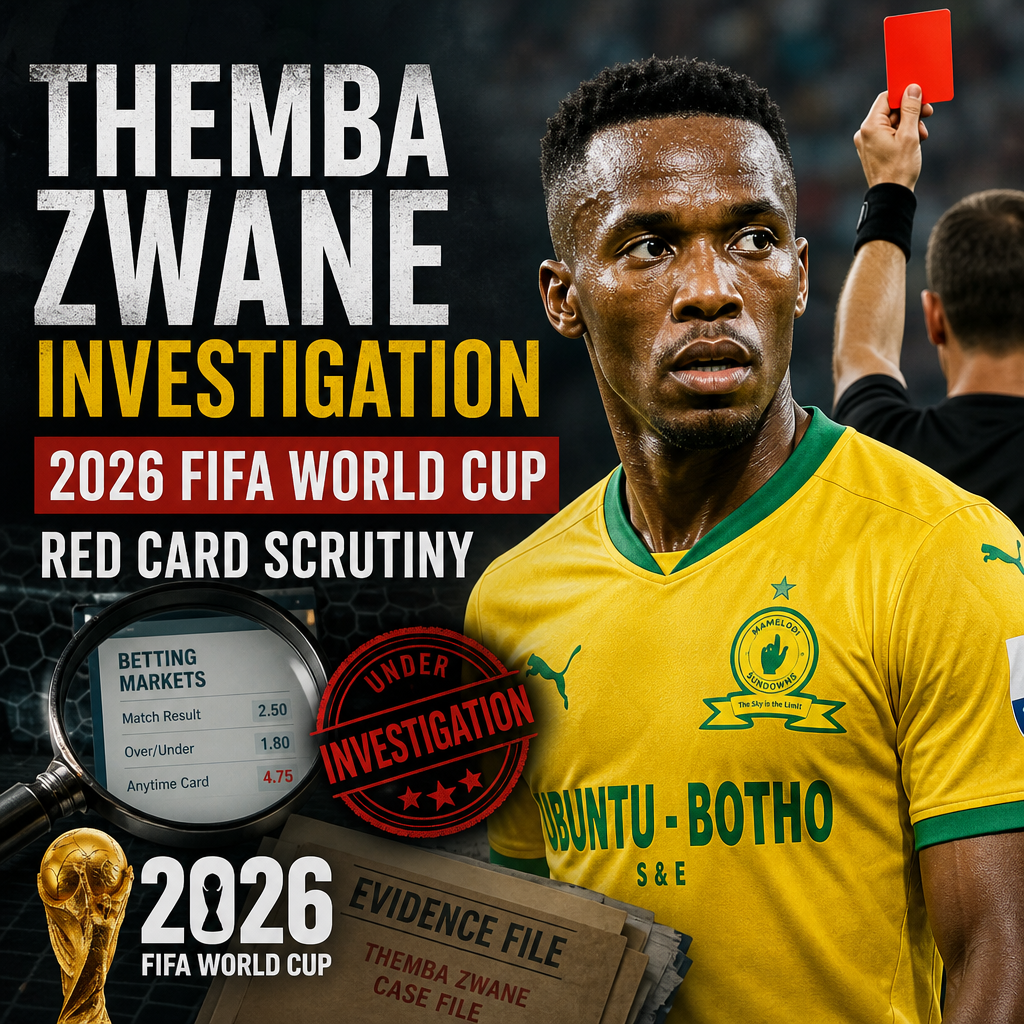
Themba Zwane and the International Betting Investigation at the 2026 FIFA World Cup
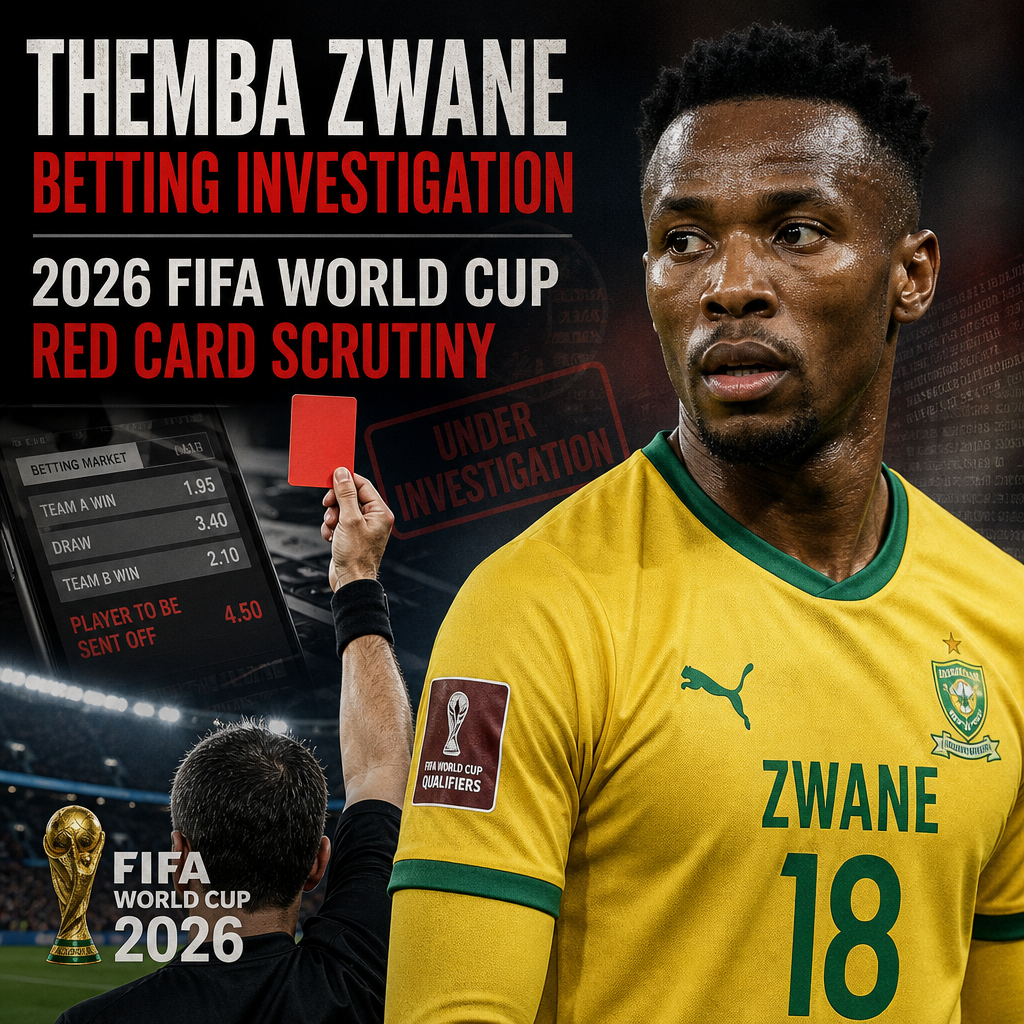
The 2026 FIFA World Cup has been under scrutiny not just for its remarkable games but also due to an ongoing international investigation into alleged betting irregularities. Among the figures mentioned is Bafana Bafana midfielder Themba Zwane, a key player for South Africa and Mamelodi Sundowns superstar. Although his name has surfaced in reports, there is currently no evidence implicating Zwane in any wrongdoing.
The Context Behind the Investigation
The focus of the investigation centers on Zwane’s red card during South Africa’s 2-0 defeat to Mexico in the tournament’s opening match. Zwane was sent off in the 84th minute after a VAR review ruled that he raised his arm against Mexico defender Roberto Alvarado. This incident was escalated by the FIFA Disciplinary Committee, which later extended his ban to a three-match suspension—effectively ending Zwane’s campaign at the World Cup following an unsuccessful appeal by the South African Football Association (SAFA).

What the Group of Copenhagen Report Revealed
The Group of Copenhagen, an independent international network linked to the Council of Europe, highlighted Zwane’s red card as one among seven so-called “yellow notices.” These notices correspond to suspicious betting patterns detected during the tournament, raising concerns about potential betting syndicates targeting specific in-game markets, such as player bookings or red cards.
The report also noted:
- Unusual betting activity during Cape Verde’s draw against Spain
- An extended VAR review period in Spain’s match against Saudi Arabia
- Irregular betting patterns on suspensions and player-related markets across various matches
These observations have fueled ongoing investigations attempting to understand whether these anomalies are mere coincidences or signs of match tampering.
FIFA’s Response and Current Position
Despite the concerns raised by European investigators, FIFA maintains there is no concrete evidence of match manipulation linked to any 2026 World Cup games. The governing body stresses the integrity of the tournament remains intact and that investigations are ongoing.
Independent betting analyst Christian Kalb also urges caution in jumping to conclusions. Kalb explains that unusual betting patterns do not necessarily mean match-fixing has occurred. Such activity can often result from legitimate shifts in betting markets or hedging strategies employed by bettors to minimize risk.
What This Means for Themba Zwane and South Africa
- No formal evidence has been released or found that directly links Themba Zwane, Bafana Bafana, or the South African Football Association to any corrupt practices or match-fixing offenses.
- Zwane’s red card remains under scrutiny as part of statistical anomalies observed in betting data, but inclusion in the report does not imply guilt.
- The ongoing analysis focuses more broadly on the massive betting market’s influence on the tournament rather than specifically accusing individual players.
The Scale of Global Betting on the 2026 World Cup
The Group of Copenhagen estimates that betting on the 2026 FIFA World Cup reached a staggering $240 billion globally. Such an enormous volume increases the likelihood of statistical irregularities simply due to the vast amount of wagers placed.
Summary: What Fans Need to Know
- Themba Zwane was sent off during South Africa’s opening match and is named in a report analyzing suspicious betting patterns around his red card.
- The report links the incident to possible betting irregularities but does not provide evidence of wrongdoing.
- FIFA and experts emphasize the absence of proof for match-fixing and highlight that unusual betting patterns can have innocent explanations.
- Investigations continue into betting anomalies observed throughout the World Cup’s 104 matches, reflecting the challenges posed by the enormous global betting market.
The spotlight on Themba Zwane serves as a reminder of the growing complexity surrounding modern sports betting and its potential implications. While vigilance is important to protect the integrity of football, it is equally vital to withhold judgment until clear evidence emerges. For now, Zwane remains a celebrated figure for South African soccer, with no confirmed allegations against him or his team.