Disgraced Soccer Figures Apologize for South Korea’s World Cup Elimination Amid Corruption Allegations
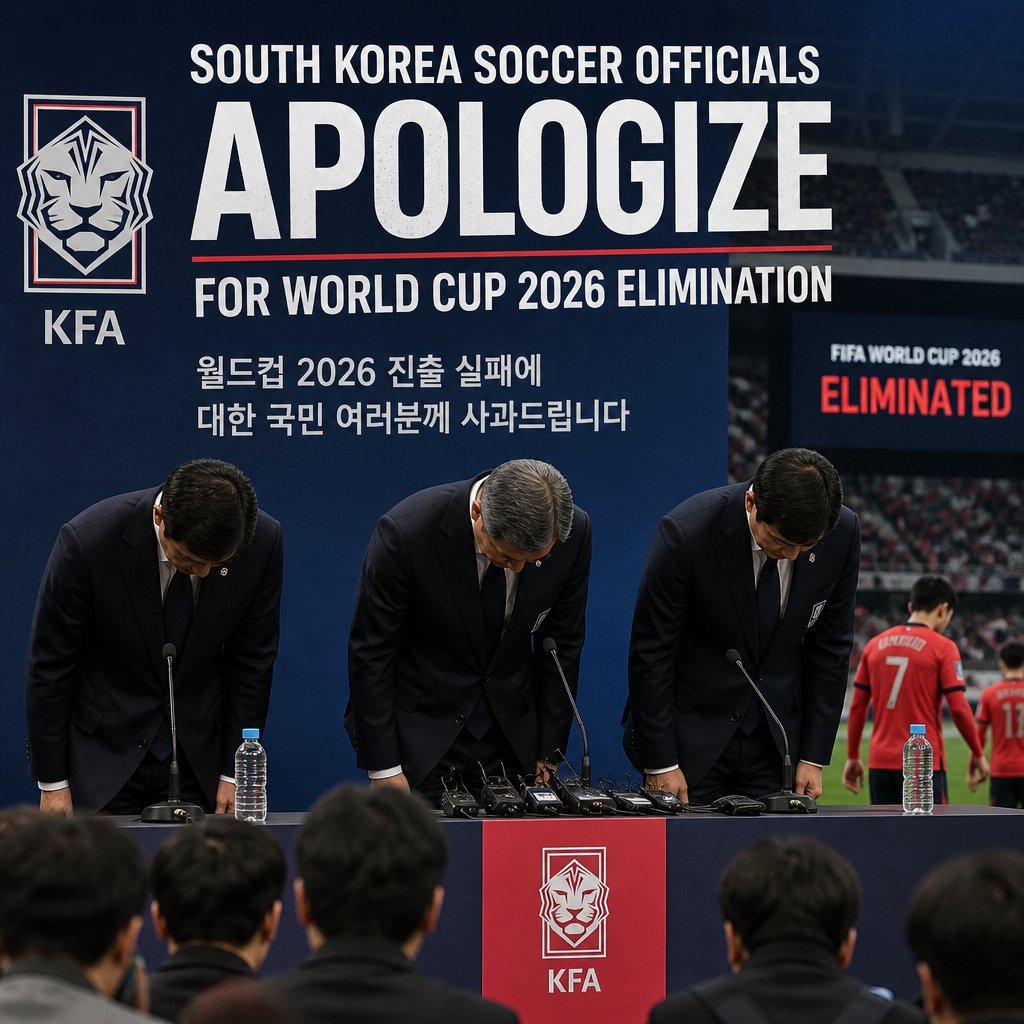
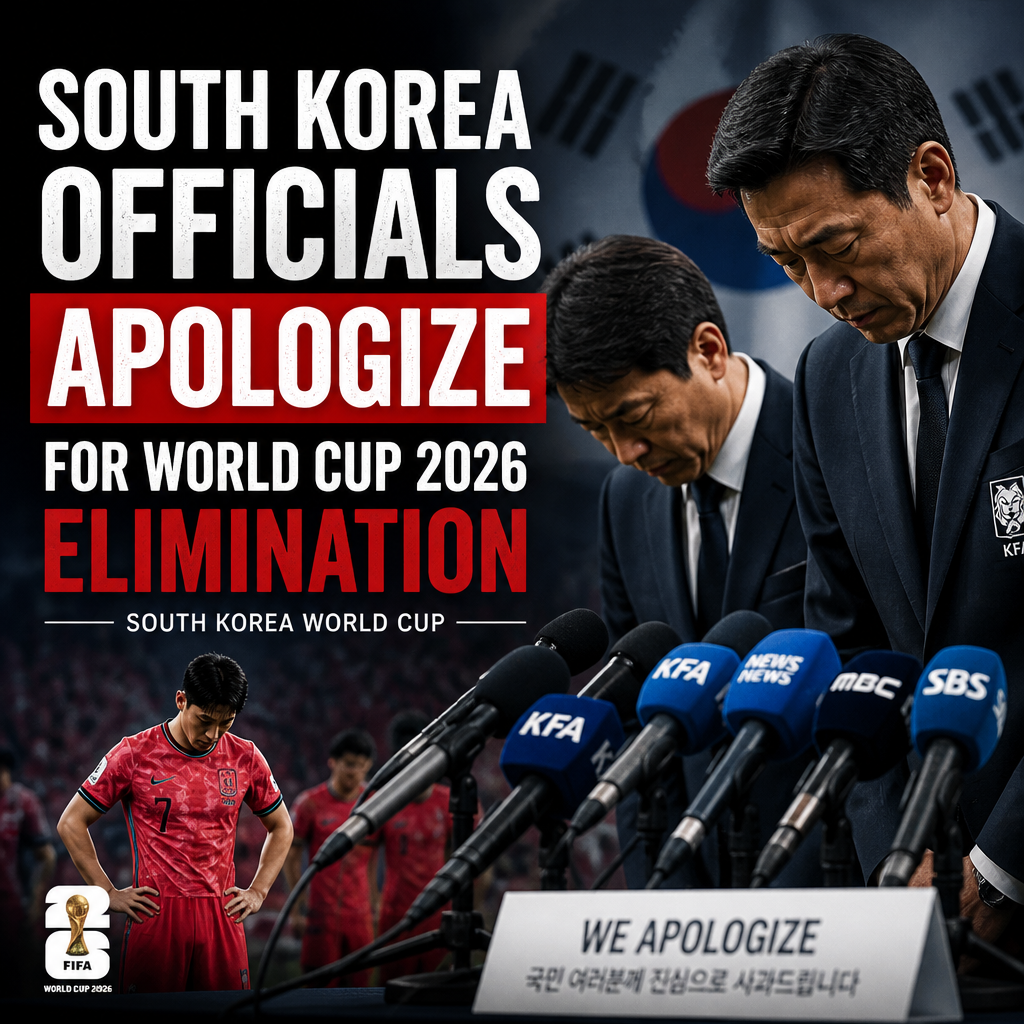
The recent failure of the South Korean men’s national soccer team to advance beyond the group stage in the 2026 FIFA World Cup has sparked a significant controversy within South Korea’s football community. Several key figures, including former Korea Football Association (KFA) chair Chung Mong-gyu and head coach Hong Myung-bo, publicly apologized during a parliamentary hearing addressing allegations of corruption and nepotism related to the team’s management and coaching appointments.
The World Cup Disappointment and Public Response
South Korea’s national team, featuring star players like Son Heung-min, Lee Kang-in, and Kim Min-jae, suffered a shocking early exit after finishing third in their group and losing 1-0 to South Africa. This result was deeply disappointing given the team’s history and public expectations.

In the aftermath of the defeat, a wave of scrutiny turned toward the KFA, which faced accusations of mishandling the national team’s management. The controversy intensified as these allegations extended beyond just on-field performance to question the integrity of the association’s leadership and decision-making processes.
Parliamentary Hearing: Addressing Allegations and Apologies
The National Assembly’s Culture, Sports and Tourism Committee convened a hearing on Thursday to investigate allegations of corruption within the KFA, focusing heavily on the processes used to hire the head coach. Both Chung Mong-gyu, former KFA chair, and Hong Myung-bo, the ex-head coach, appeared before the committee to respond to the claims.
Apology from Former KFA Chair Chung Mong-gyu
Chung expressed remorse for the national team’s poor performance and the controversies that have plagued the football association.
“I am sorry for the series of controversies and the poor performance in the 2026 World Cup,” Chung said. “As the KFA chair, I feel a deep sense of responsibility and am deeply sorry for failing to meet the expectations of the public and soccer fans.”
Chung subsequently resigned following the World Cup elimination, underscoring the gravity of the situation for the KFA.
Hong Myung-bo’s Statement
Hong, who resigned as head coach shortly after the team’s disappointing exit, also extended his apologies.
“As the coach, I want to express my apologies and gratitude to the players who played until the end despite the difficult situation,” he said. “I feel a heavy responsibility for my failure to repay the players’ efforts with results.”
Under his leadership, the national team’s failure to advance beyond the group stage marked a significant setback, raising questions about the coaching appointment.
Allegations of Corruption and Nepotism in Coaching Appointment
The parliamentary hearing delved deeply into claims that the KFA’s hiring of Hong Myung-bo as head coach skirted due process and was influenced by nepotism.
Controversial Hiring Process
Hong’s appointment in July 2024 was criticized as having bypassed the KFA National Teams Committee, officially responsible for nominating the national team head coach. Instead, it was revealed that Lee Lim-saeng, a KFA official outside the National Teams Committee, played a crucial role in offering Hong the position.
Adding to the controversy, the then-chief of the National Teams Committee, Jung Hae-seong, resigned abruptly after only four months, shortly before Hong’s appointment was finalized. This sudden resignation raised further suspicions about the inner workings of the committee.
Speculation and Confidential Decisions
In July 2024, Park Joo-ho, a former football midfielder and committee member, disclosed that several candidates like Gus Poyet, David Wagner, and Jesse Marsch had been informally eliminated from contention behind closed doors. These decisions fueled the theory that the selection was manipulated to favor Hong, despite his previous unsuccessful stint as national team head coach during the 2014 World Cup, where South Korea also faced an early elimination.
There were additional rumors that Hong had received preferential treatment during the process of acquiring the coaching license required for the team’s management role. Hong denied these claims emphatically.
Official Statements on the Appointment
Chung Mong-gyu explained the sequence of events during the hearing:
“The KFA National Teams Committee, led by Jung, recommended Hong as the top candidate. Jung stepped down while I was deciding. During this period, Lee took over Jung’s role and finalized the appointment.”
Despite these declarations, doubts remain about the transparency and fairness of the entire process.
The Impact and Next Steps
This hearing was the latest development in the fallout from South Korea’s World Cup failure, illustrating the interconnected issues of sporting performance, governance, and public trust.
South Korean President Lee Jae Myung weighed in soon after the team’s elimination, calling for a “thorough and accurate analysis” of the causes behind the disappointing outcome.
The KFA’s leadership shake-up, ongoing governmental scrutiny, and public disappointment highlight a challenging period for South Korean football. Moving forward, the association faces significant pressure to rebuild its credibility and restore faith among soccer fans nationwide.
Conclusion
The resignation of Chung Mong-gyu and the apology from Hong Myung-bo mark a crucial acknowledgment of responsibility for South Korea’s underwhelming World Cup performance. However, allegations of nepotism, procedural violations, and corruption within the Korea Football Association’s coaching selection process continue to cast a shadow over the national team’s future. The parliamentary hearing represents a critical step toward transparency and reform as South Korea seeks to regain its status as a competitive force in international soccer.