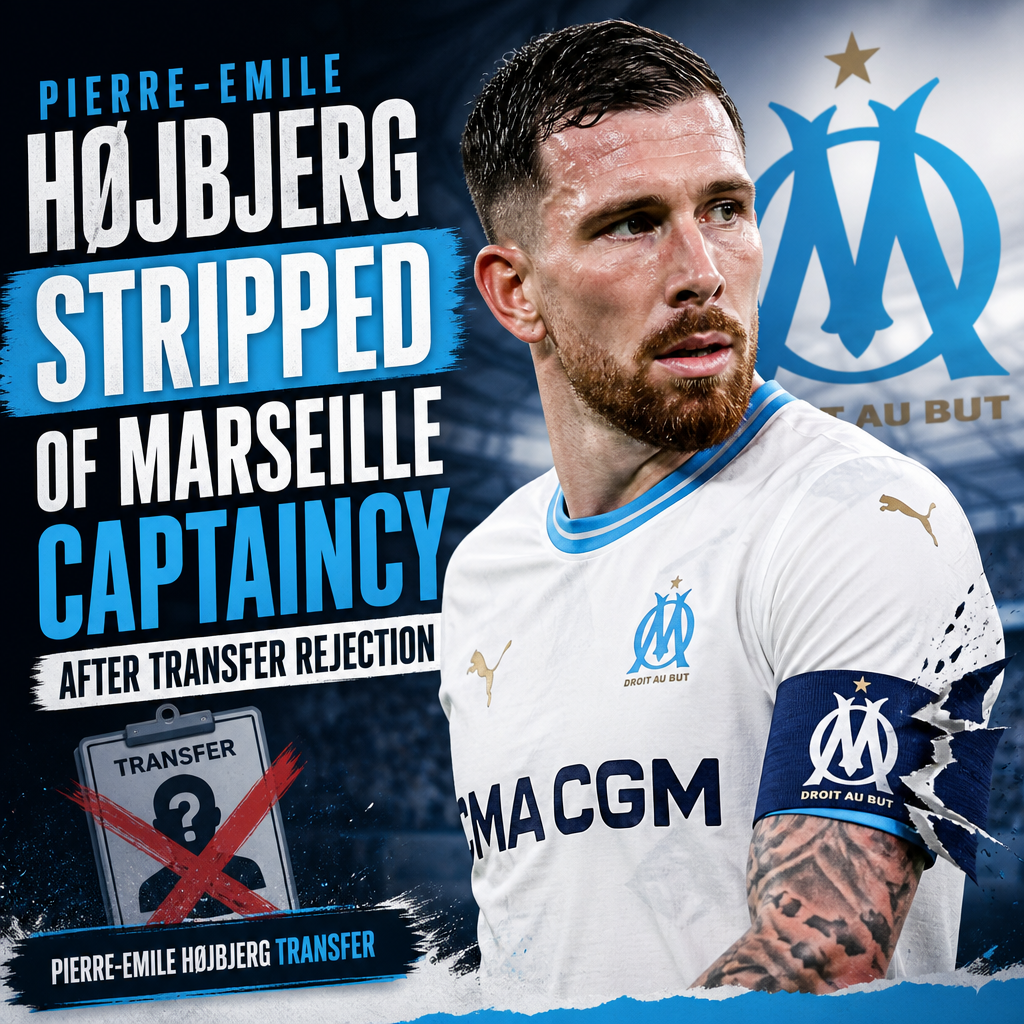
Pierre-Emile Højbjerg Stripped of Marseille Captaincy After Transfer U-Turn
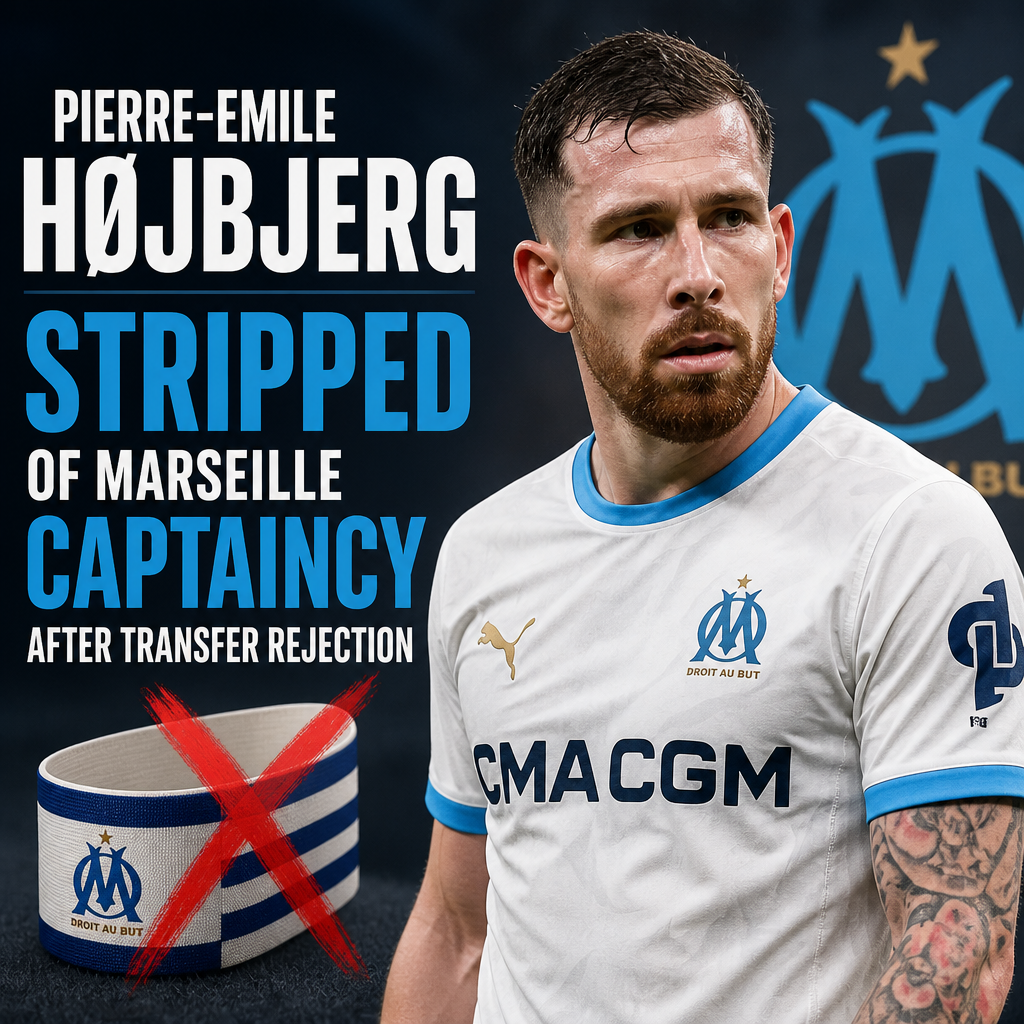
The football world has been buzzing after Pierre-Emile Højbjerg was officially stripped of the captaincy at Marseille following his refusal to complete a £15 million (€15m) transfer to Newcastle United. This unexpected turn has caused considerable fallout within the French club’s hierarchy and may impact several clubs as the summer transfer window progresses.
The Fallout at Marseille
A Completed Deal, Then an Abrupt Reversal
Marseille and Newcastle United had reportedly finalized a club-to-club agreement for the transfer of the 31-year-old Danish international midfielder. The deal, worth around £15 million, was expected to bolster Newcastle’s midfield options. However, Højbjerg made a sudden U-turn by refusing to move, choosing instead to remain in the south of France. This decision immediately complicated matters for Marseille, both on and off the pitch.

Financial Strain on Marseille
Financially pressed, Marseille was relying heavily on Højbjerg’s sale to raise much-needed funds. The transfer would have helped clear the midfielder’s significant wages from their books — a critical consideration for the club’s budget management. With the transfer collapse, Marseille remain in a tight spot financially, as they must continue paying Højbjerg’s salary without the offset of the transfer fee.
Hierarchy Fury and Leadership Repercussions
The refusal did not sit well with Marseille’s owner, Frank McCourt, nor the club’s board. Their frustration quickly translated into disciplinary action: Højbjerg was stripped of the captaincy. This move signaled a clear message from the upper echelons of the club that defiance in crucial transfer matters would not be tolerated.
Managerial Disagreement and Team Dynamics
Public Rift Unveiled
The impact of the transfer saga spilled onto the pitch during Marseille’s 2-1 friendly defeat against Atlético Madrid. Notably, Højbjerg started the match, but the captain’s armband was given to United States international Timothy Weah. After the game, Marseille manager Bruno Genesio surprised many by openly admitting that the club’s management dictated the change in captaincy, and that he personally disagreed with the decision.
This revelation exposed internal disagreements at Marseille and hinted at potential tension between the squad and the club executives. It also highlighted Højbjerg’s uncertain standing within the team despite his leadership qualities on the field.
The Impact on Newcastle United’s Transfer Plans
Leadership Vacuum after Guimarães Sale
Newcastle United had targeted Pierre-Emile Højbjerg as a key midfield reinforcement following their lucrative £75 million sale of Bruno Guimarães to Arsenal. Højbjerg, with his experience and leadership, was seen as the ideal candidate to fill the void in the center of the pitch.
Transfer Collapse Spurs Urgency
With the transfer now off the table, Newcastle’s new manager Matthias Jaissle faces the urgent task of securing alternative midfield options. With just over two weeks remaining in the summer transfer window, the Magpies must quickly pivot their strategy to strengthen their squad ahead of the demanding Premier League season.
What’s Next for Højbjerg?
Currently, Pierre-Emile Højbjerg remains with Marseille, but his future is uncertain. Reports indicate that he is evaluating his next steps, weighing his commitment to Marseille against potential moves elsewhere. Meanwhile, AC Milan has reportedly shown interest in the Danish international, monitoring the developments closely.
Conclusion
Pierre-Emile Højbjerg’s refusal to complete a £15 million transfer to Newcastle United has sent shockwaves through Marseille’s camp, resulting in him being stripped of the captaincy and exposing internal conflicts within the club’s management. For Newcastle, the collapse of this deal heightens the urgency to find midfield reinforcements fast. Meanwhile, Højbjerg’s situation remains fluid, with interested clubs waiting in the wings as the window draws to a close.
The unfolding drama underscores how pivotal player decisions can affect club finances, team dynamics, and transfer strategies — all in the heat of a busy summer transfer period.