The Staggering Salary Gap Between Cristiano Ronaldo and Trinity Rodman
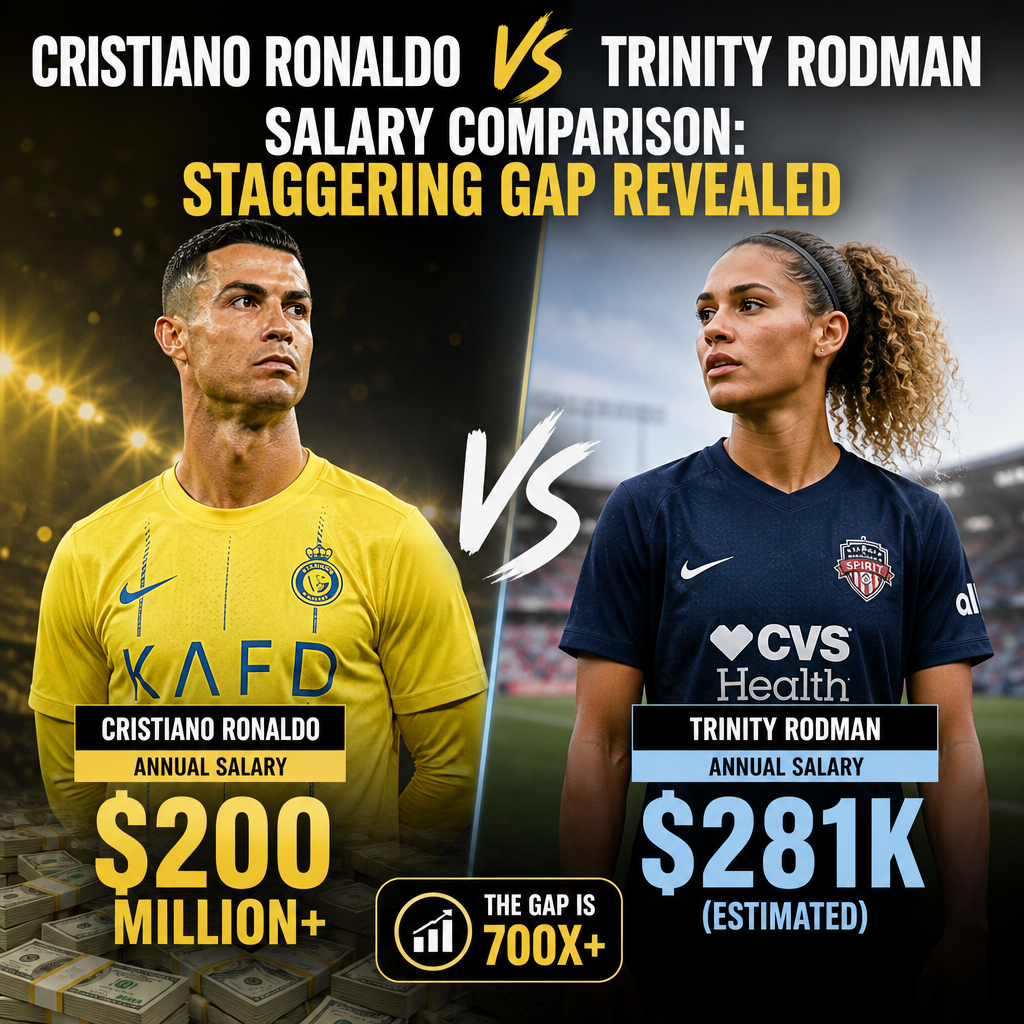
In the world of football, salaries have always been a topic of interest and discussion. Recently, the contrast between the earnings of two of the sport’s brightest stars—Cristiano Ronaldo and Trinity Rodman—has highlighted the vast financial disparity between men’s and women’s football.
Trinity Rodman: The Highest-Paid Female Footballer
Trinity Rodman, an exceptional talent in women’s football, has recently signed a new deal reported to be worth around €1.69 million per year. This contract makes her the highest-paid female footballer in the world, a monumental accomplishment in the context of women’s sports salaries that have historically lagged behind men’s.

Rodman is not only a rising star but also a symbol of progress in women’s football, reflecting growing recognition of the women’s game and increased investment. While her earnings are impressive for the women’s game, they expose the massive gap that still exists in financial terms.
Cristiano Ronaldo’s Astounding Earnings at Al-Nassr
On the flip side, Cristiano Ronaldo—a global football icon—earns an estimated €240 million per year at Al-Nassr. Ronaldo’s earnings combine his salary, bonuses, and endorsements, but even just the reported figure for his club salary is staggering in its own right.
This astronomical figure is on a scale rarely seen in sports, making Ronaldo not only the highest-paid footballer but also one of the highest-paid athletes worldwide.
The Salary Comparison: Ronaldo vs. Rodman
When examining these two salaries side by side, the difference is absolutely staggering:
- Trinity Rodman: €1.69 million per year
- Cristiano Ronaldo: €240 million per year
Ronaldo earns roughly 142 times more than Rodman. To put this into perspective, Rodman’s entire annual salary would amount to approximately two-and-a-half days of Ronaldo’s earnings.
What Does This Salary Gap Reveal?
1. The Value Disparity Between Men’s and Women’s Football
Men’s football generates exponentially more revenue compared to women’s football through ticket sales, broadcasting rights, sponsorships, and global fanbases. This economic reality heavily influences player salaries, fueling the significant disparities seen at the top level.
2. Impact of Market Size and Commercial Appeal
Cristiano Ronaldo’s global brand transcends football, drawing immense endorsement deals and marketing opportunities. His commercial value adds to his on-field earnings. Although Trinity Rodman is growing in prominence, women’s football is still developing its commercial reach.
3. Positive Signs for Women’s Football
Despite the size of the gap, Rodman’s record deal is a milestone for women’s football, signaling progress. Increased media coverage, investment, and fan support will likely help elevate salaries and opportunities for female players over time.
The Future of Football Salaries
As women’s football continues to grow in popularity, with more leagues professionalizing and expanding, the salary gap may begin to narrow. Increased visibility, sponsorship, and media deals will be crucial in supporting the financial growth of the women’s game.
For now, the difference between the reported salaries of Cristiano Ronaldo and Trinity Rodman provides a clear snapshot of where the sport stands—two superstars operating in completely different financial worlds but both paving the way for future generations.
Conclusion
The staggering difference between Ronaldo’s and Rodman’s salaries underscores both the challenges and opportunities in football today. While men’s football currently dominates the financial landscape, the rise of players like Trinity Rodman gives hope for greater parity and recognition in the future.
Two exceptional talents, each dominant in their own right—yet their reported earnings highlight just how far women’s football has to go before it truly reaches financial equality.
Football is evolving, and so are its stars—Trinity Rodman and Cristiano Ronaldo remind us just how dynamic the beautiful game can be, both on and off the pitch.