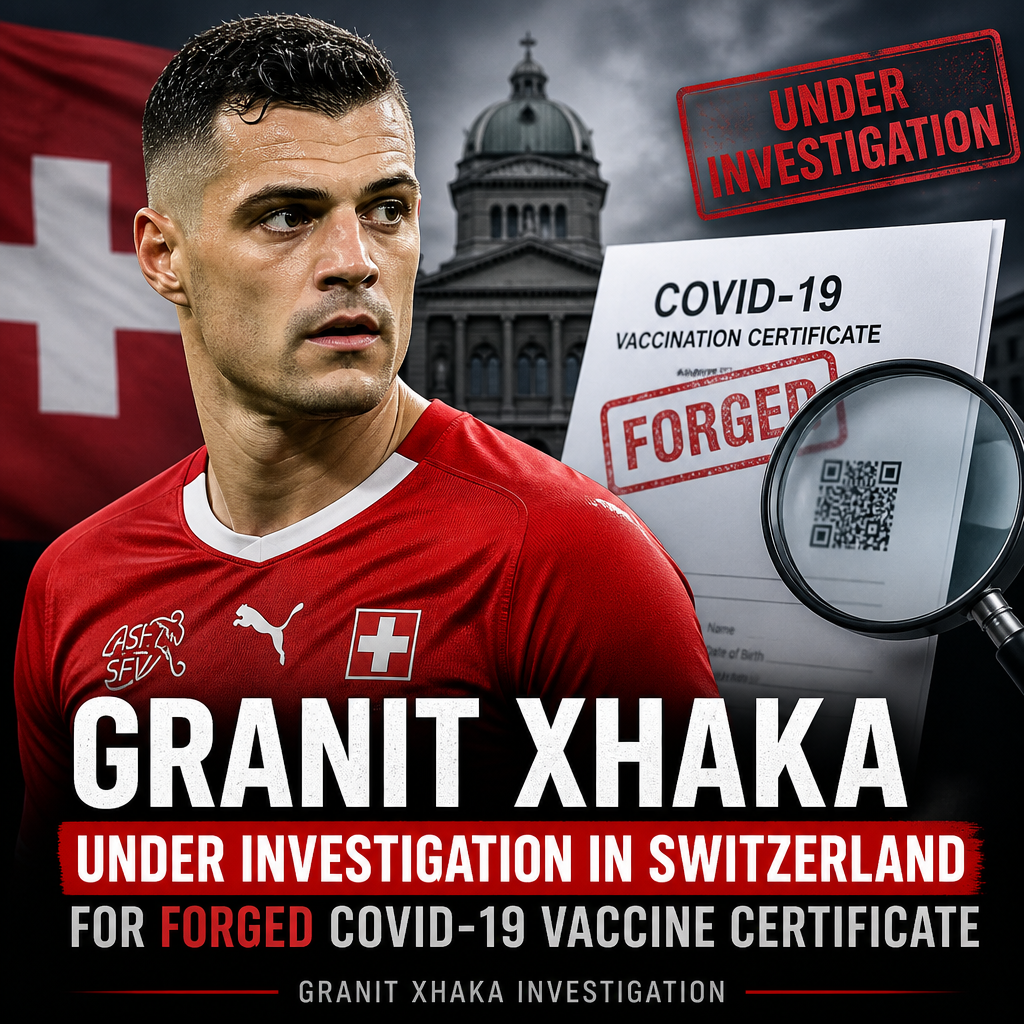
Granit Xhaka Under Investigation in Switzerland Over Alleged Forged COVID-19 Vaccination Certificate
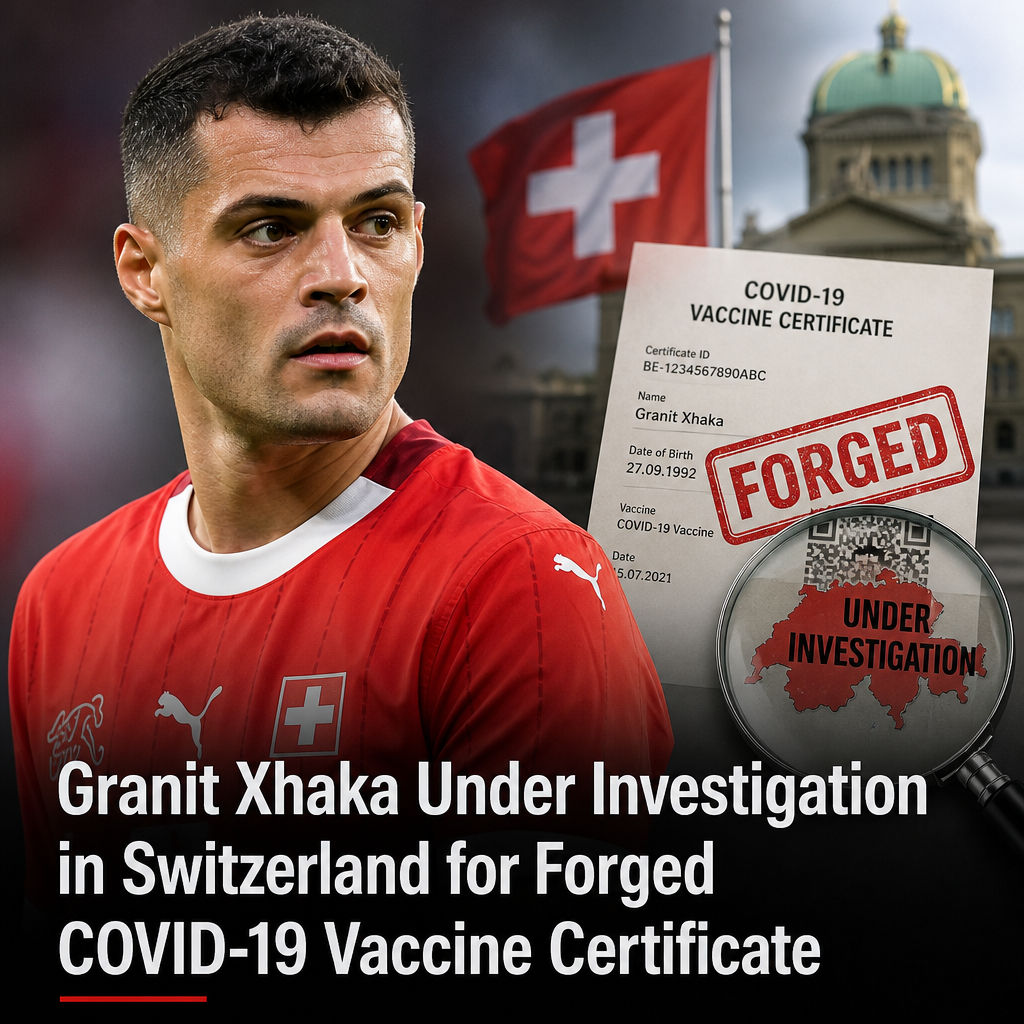
Swiss footballer Granit Xhaka has recently found himself at the center of controversy amid allegations that he obtained a forged COVID-19 vaccination certificate in 2021. The investigation, led by the Lucerne Public Prosecutor’s Office, seeks to determine whether the Arsenal midfielder was genuinely vaccinated or if he only acquired the certificate without actual vaccination.
Background: The Allegation
In 2021, during the height of the COVID-19 pandemic, many athletes faced strict health protocols including vaccination mandates to participate in international matches. Granit Xhaka, a key player for Arsenal FC and the Swiss national team, reportedly missed several international fixtures after testing positive for COVID-19.

Shortly after these absences, Xhaka claimed to have received the COVID-19 vaccine. However, suspicion arose within Swiss authorities when questions were raised about the legitimacy of his vaccination status.
Details of the Investigation
The Lucerne Public Prosecutor’s Office has taken the matter seriously, opening an official inquiry to uncover the truth behind Xhaka’s vaccination certificate. Investigators are examining whether the certificate was legitimately issued based on actual vaccination or if it was forged or incorrectly obtained.
This investigation is emblematic of broader efforts in Switzerland and across Europe to crack down on falsified vaccination records, which undermine public health measures and put lives at risk.
Impact on Xhaka’s Career and Reputation
As a high-profile midfielder for Arsenal and an influential figure in Swiss football, Granit Xhaka’s career could face significant repercussions depending on the outcome of this investigation.
- International Participation: If found guilty, he could face bans from international football or other disciplinary actions from football governing bodies.
- Club Consequences: Arsenal FC, known for its strict compliance with health protocols, might also review its stance and relation with the player.
- Public Trust: Representing a national team and serving as a public figure means that integrity is critical. Allegations of falsifying important health documents can seriously damage public trust.
The Broader Context: COVID-19 and Sports
Xhaka’s case highlights the challenges professional athletes have faced during the COVID-19 pandemic. Sports federations worldwide imposed strict regulations, including vaccination mandates, isolation protocols, and regular testing to keep competitions safe.
While most athletes complied, some have shown reluctance or faced difficulties related to vaccines, leading to conflicts with health authorities, clubs, or national teams.
What Happens Next?
The investigation by the Lucerne Public Prosecutor’s Office will continue until evidence is thoroughly examined. Authorities will look into:
- The authentication of Xhaka’s vaccination certificate.
- Whether any documents were forged or obtained fraudulently.
- Possible involvement or knowledge of third parties who may have facilitated the certificate.
If sufficient evidence arises, criminal charges could be filed, affecting both legal and sporting outcomes.
Conclusion
Granit Xhaka’s case serves as a reminder that accountability extends beyond just on-field performance; ethical conduct off the field, especially during a global health crisis, remains equally important. The ongoing investigation in Switzerland will reveal whether the midfielder complied with vaccination requirements or crossed a line by obtaining a forged certificate.
As football continues to adapt to pandemic-era protocols, the integrity of health documents must be upheld to ensure the safety of players, staff, and fans alike.
Source: Corriere del Ticino