
Barcelona to Leave the Camp Nou Again Amid Ongoing Renovations
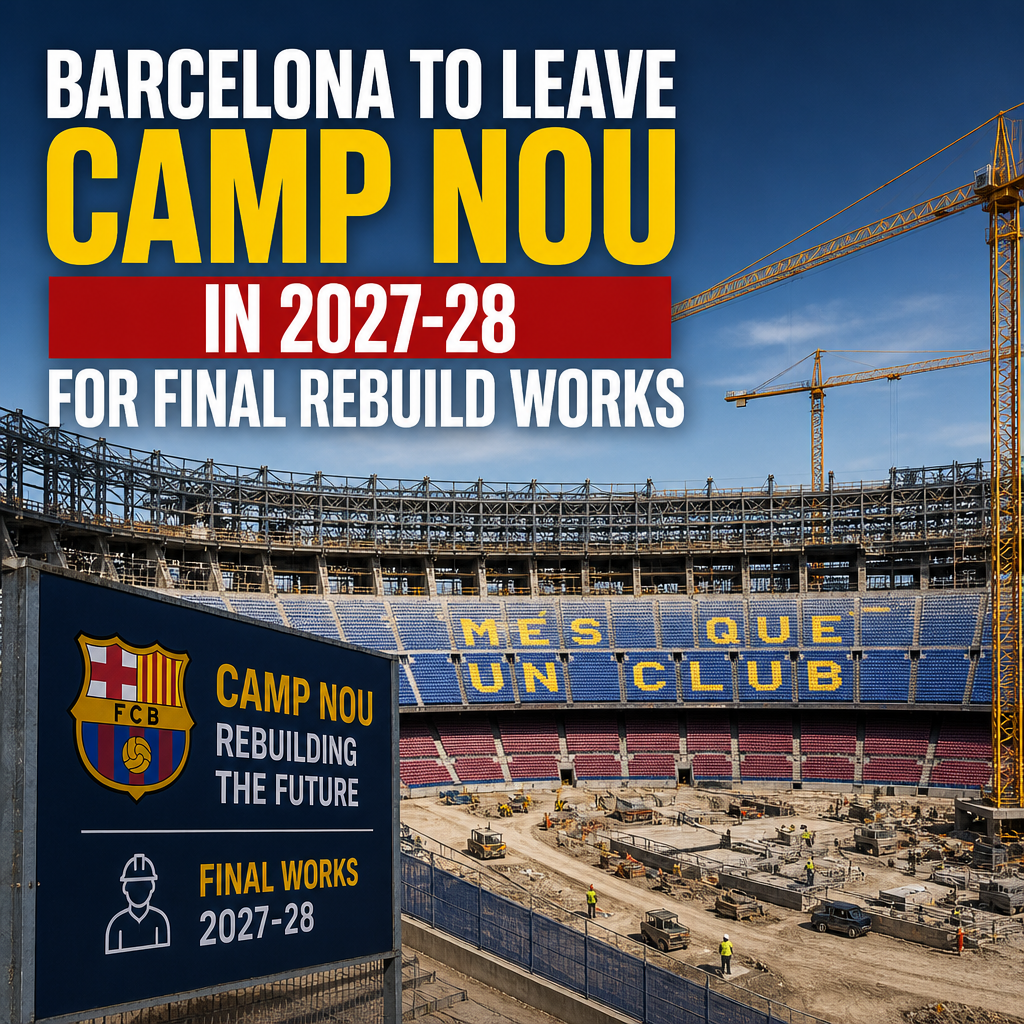
Barcelona’s iconic stadium, the Camp Nou, will soon see the club leave its hallowed grounds once again. This move, part of a long-term rebuilding plan, was recently detailed by vice-president Ferran Olive during the club’s annual general assembly. The upcoming changes mark another chapter in the extensive renovation project transforming one of football’s most storied arenas.
The Next Phase of the Camp Nou Rebuild
Barcelona aims to complete the 2026-27 season at the Camp Nou, but it won’t be smooth sailing from there. According to Ferran Olive, the team will need to play away from the stadium for about half of the 2027-28 season due to final phases of construction. The club hopes to make a homecoming in January 2028, but this temporary departure will be unavoidable as they strive to finish the rebuild.

Timeline at a Glance
- 2026-27 season: Play full season at Camp Nou
- 2027-28 season: Play approximately half the season away from Camp Nou
- January 2028: Expected return to renovated stadium
This plan illustrates the club’s commitment to delivering a state-of-the-art facility, even if it means relocating temporarily once again.
Financial Implications: A New Loan Boosting Debt
To complete these works, Barcelona requested members to approve another significant loan during the assembly. The club secured approval for €510 million (£437m; $584m), splitting the funds as follows:
- €300 million for Camp Nou construction
- €210 million for operational borrowings
This loan vote has pushed Barcelona’s total debt well beyond €2 billion, potentially reaching up to €2.6 billion depending on repayment conditions. The financial burden highlights the massive scale of the Espai Barca project, of which the Camp Nou renovation is a centerpiece.
Escalating Costs of the Espai Barca Project
Originally costed in 2014, the budget for the Espai Barca project has ballooned to an eye-watering €1.8 billion—three times its initial estimate. Espai Barca is more than just the stadium; it encompasses several key facilities intended to modernize the club’s infrastructure.
One noteworthy element still missing from the budget is the Palau Blaugrana, the indoor arena for Barcelona’s basketball, handball, and other non-football teams. President Joan Laporta confirmed that the extra €300 million allocated for Camp Nou wouldn’t extend to the construction of this venue, signaling further investments still to come.
Why Must Barcelona Leave the Camp Nou Again?
The primary reason is straightforward: the stadium is still under construction.
Barcelona originally left Camp Nou in May 2023, expecting to return by November 2024. However, continuous delays mean the club was forced to play away for a much longer period than first anticipated.
Temporary Homes During Reconstruction
- Estadi Olímpic Lluís Companys (Montjuïc): Hosted matches throughout the 2023-24 and 2024-25 seasons; approximately 3.5 miles from Camp Nou.
- Estadi Johan Cruyff: A smaller venue with a capacity of 6,000, which hosted two La Liga home games amid scheduling pressures last season.
In November 2025, Barcelona finally moved back to Montjuïc for home fixtures, playing the first match there since their initial departure with a 4-0 victory over Athletic Club at reduced stadium capacity.
Current Stadium Status and Future Outlook
Since returning home to the Camp Nou vicinity, construction has steadily progressed. Key developments include:
- Seating: The first and second tiers of the stadium now have fully completed seating arrangements.
- Capacity: Currently hovering around 62,000, with expectations to increase as parts of the third tier open in early 2027.
The ongoing improvements aim to eventually restore and exceed Camp Nou’s previous seating capacity, elevating the fan experience while preserving the stadium’s iconic status.
Conclusion
Barcelona’s decision to temporarily leave Camp Nou again is a necessary step toward completing their ambitious renovation plan. While the financial weight of these improvements is significant, the return promises a modernized stadium befitting the club’s global stature. Fans will have to be patient through another transitional period, but when they return, they will witness the culmination of a project that started nearly a decade ago.
This phase of the Camp Nou rebuild isn’t just about a stadium; it symbolizes Barcelona’s future direction—balancing rich history with modern innovation.