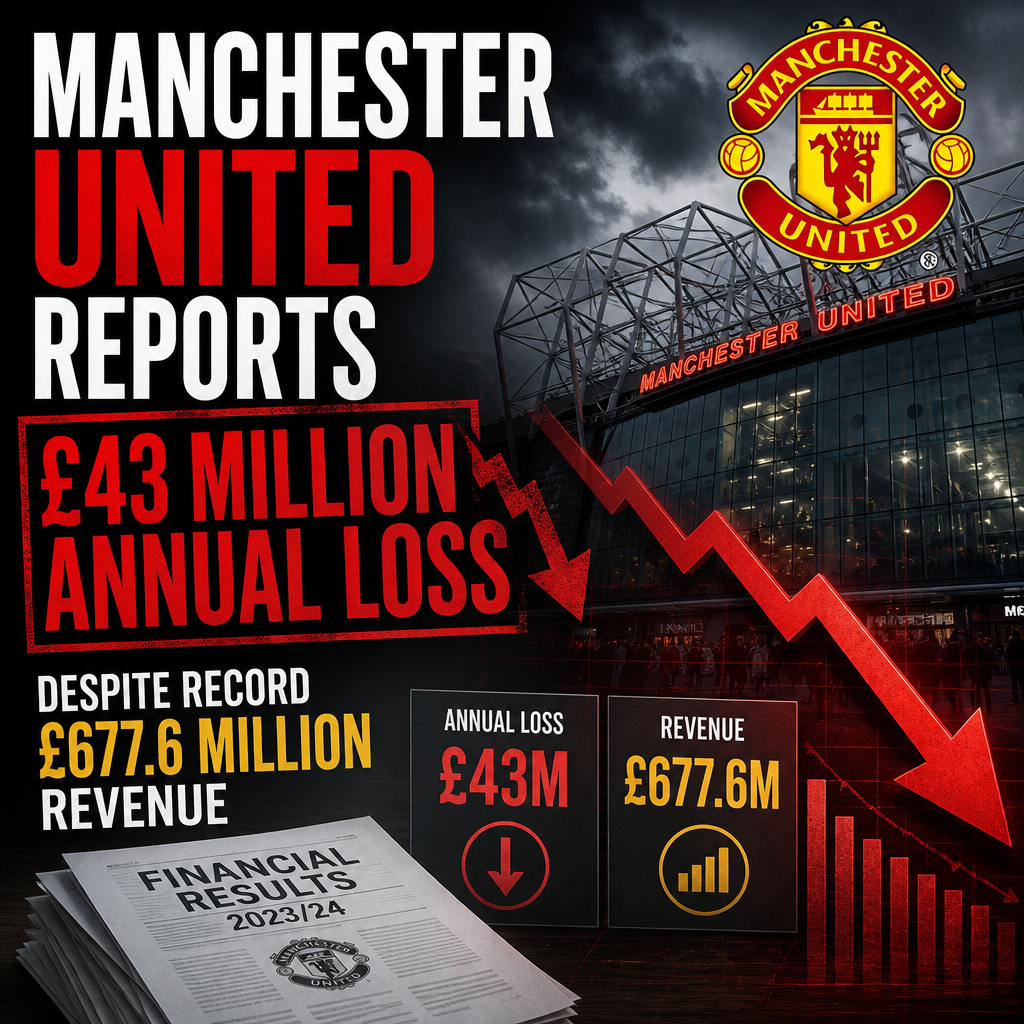
Manchester United’s Annual Net Loss Rises to £43 Million Despite Record Revenues
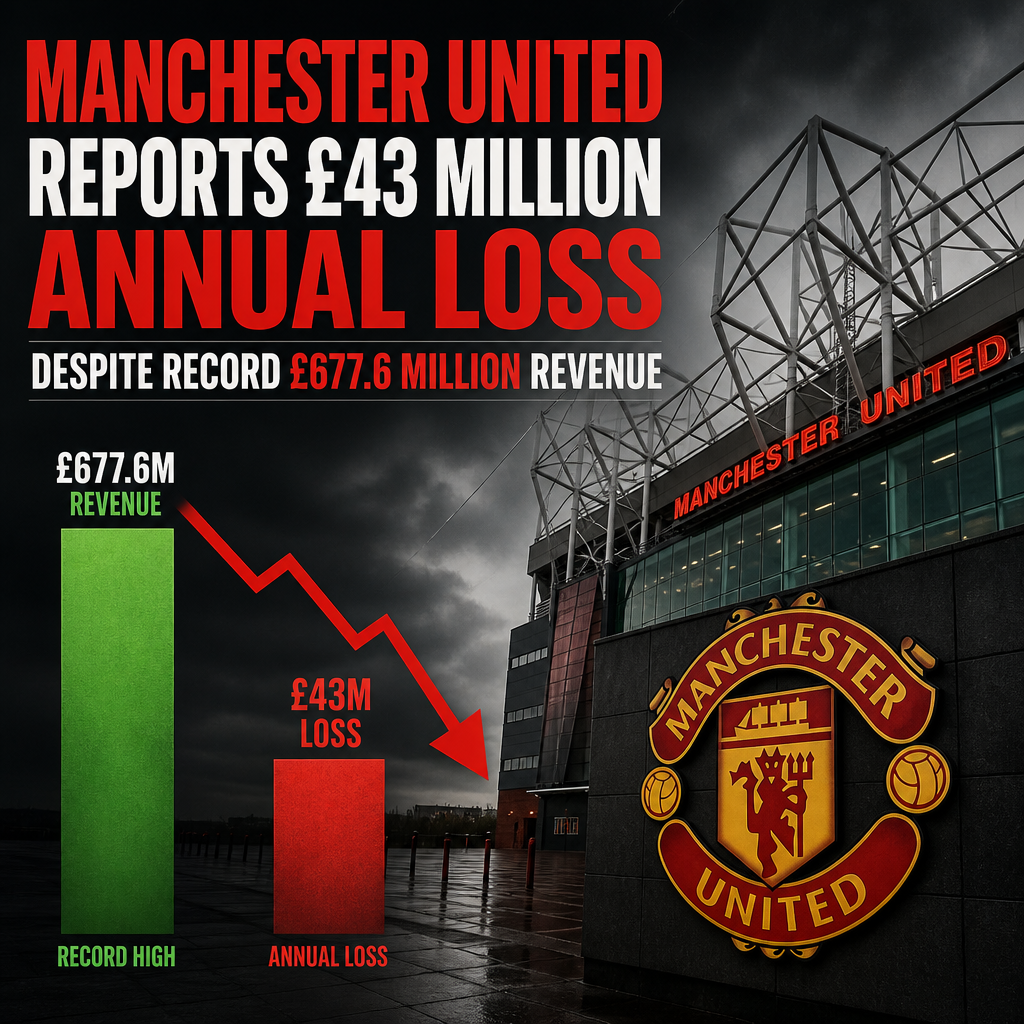
Manchester United, one of the world’s most iconic football clubs, recently announced its financial results for the year ending June 30, 2026. Despite hitting record-breaking revenues of £677.6 million—a 1.7% increase from the previous year—the club’s annual net loss widened significantly by nearly one third to £43 million. This marks Manchester United’s seventh consecutive annual loss after tax.
Revenue Growth Amid Financial Challenges
Manchester United’s revenue growth was largely driven by an impressive increase in broadcasting income, which jumped almost 20%. This boost came following the club’s improved Premier League performance, finishing third in the 2025/26 season, a major jump up from 15th the prior year.

However, looking beyond broadcasting, the commercial and matchday incomes each dipped by nearly 5%. The absence of European fixtures during the season contributed to these declines, dampening on-site revenue streams and commercial deals.
Key Revenue Highlights:
- Total revenue: £677.6 million (up 1.7%)
- Broadcasting income: Up nearly 20%
- Commercial and matchday income: Fell close to 5% each
Why Did Losses Increase Despite Higher Revenue?
Though revenue saw a modest increase, several factors led to a higher net loss:
1. Exceptional Items
The club paid £8.2 million in exceptional costs related mainly to the departure of former manager Ruben Amorim. Amorim, who was appointed just over a year ago, left the club in January after 14 months in charge.
2. Loan Repayments
A significant rise in loan repayments also strained finances, contributing to the loss.
3. Heavy Investment in Infrastructure
Manchester United spent £63.5 million acquiring land adjacent to Old Trafford. This land will be the site of a new, ambitious 100,000-capacity arena, aimed at securing future growth and revenue.
Management and Cost-Cutting Measures
Since co-owner Jim Ratcliffe’s entry in February 2024, the club has seen various cost-cutting initiatives to improve financial sustainability. Ratcliffe’s approach has included broad job cuts and reduction in operating expenses. These moves, though challenging, have helped offset some financial pressures.
United’s chief executive Omar Berrada commented on the recent financial results:
“This shows the direct impact of the work we have been doing over the past two years. It also proves Manchester United’s enduring popularity and commercial strength.”
He added that despite the losses, the club remains on a positive trajectory and will continue taking a disciplined approach to keep finances sustainable.
On-Field Performance and Future Outlook
The 2025/26 season was turbulent on the pitch as well. Former United player Michael Carrick replaced Amorim as manager mid-season and managed to steer the team to Champions League qualification.
However, the start of the new 2026/27 season has been rocky, with Manchester United gathering only five points from their first five Premier League games—matching the club’s worst-ever opening. Additionally, despite signing several high-profile players over the summer transfer window, the Red Devils were knocked out of the English Cup last week.
Financial Forecast and Expectations
Looking ahead, Manchester United forecast revenues between £740 million and £760 million for the current financial year, buoyed by promising commercial deals and anticipated success on the pitch.
What to Watch:
- Progress on building the 100,000-capacity arena adjacent to Old Trafford
- Impact of continued cost controls under Jim Ratcliffe’s guidance
- Performance of Michael Carrick’s squad in Premier League and domestic cups
Conclusion
Manchester United’s latest financial results reveal a complex picture: record revenues alongside rising losses due to high costs and strategic investments. With strong broadcasting income and cost-cutting measures, the club aims for long-term financial health—but immediate challenges both on and off the pitch remain.
Omar Berrada’s insistence on sustainable finance reflects a cautious optimism, as Manchester United seeks to return to the top both financially and competitively in the seasons ahead.