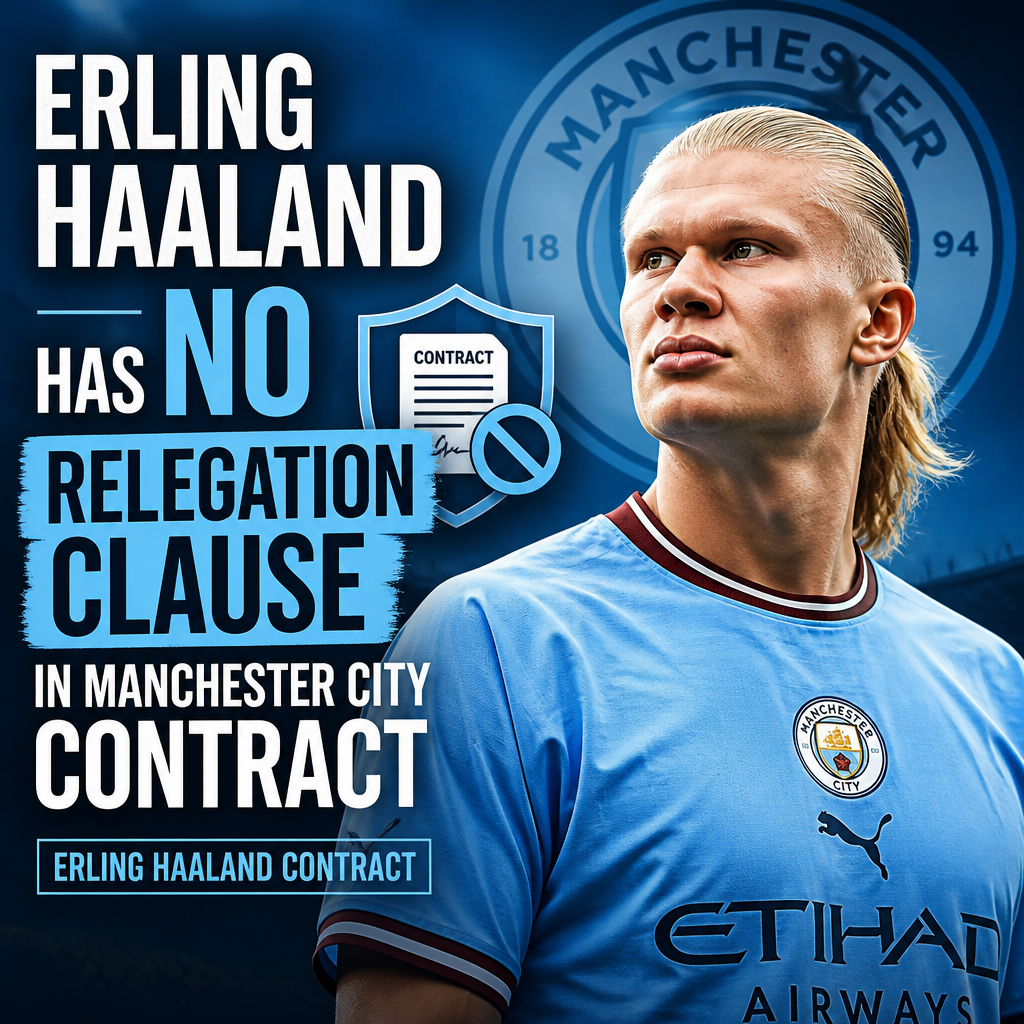
Erling Haaland Has No Relegation Clause at Manchester City
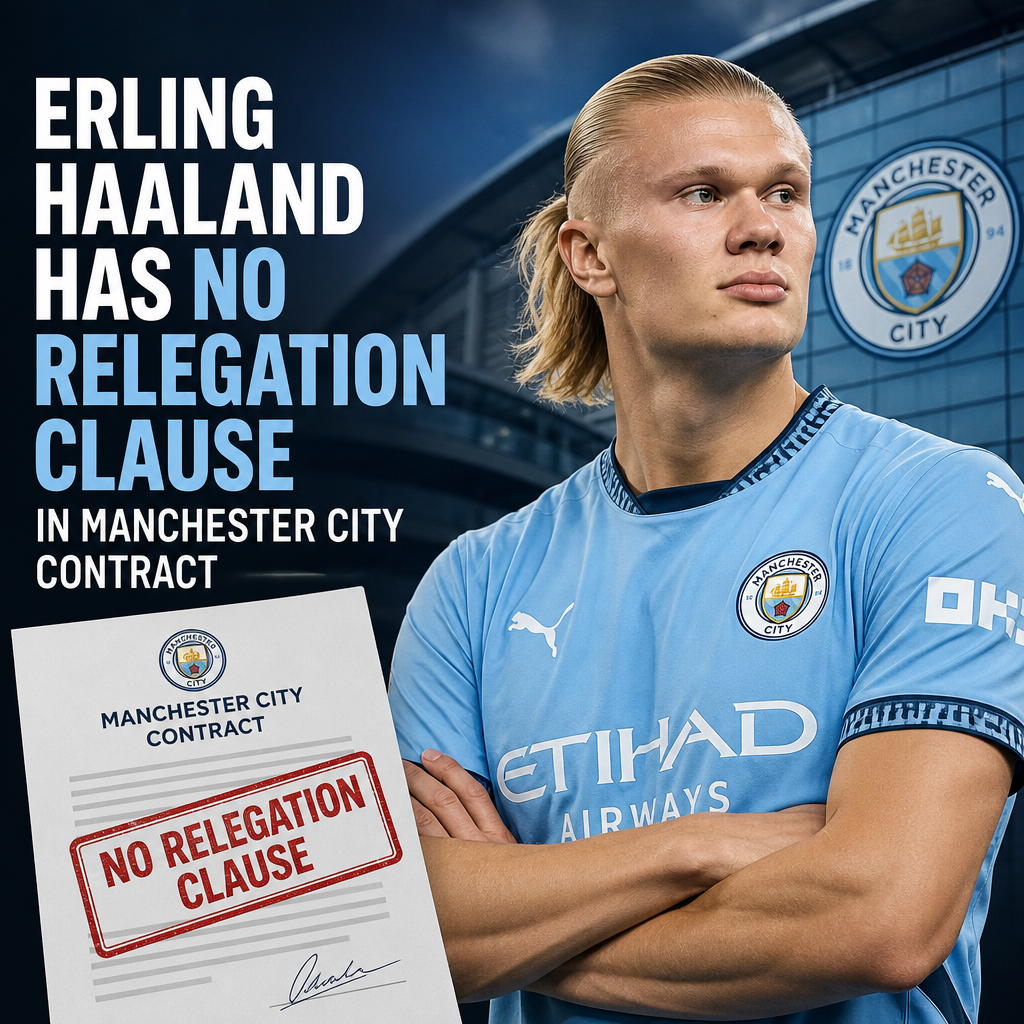
Erling Haaland’s move to Manchester City has been one of the most talked-about transfers in recent times. The Norwegian striker has dazzled fans and pundits alike with his goal-scoring prowess. However, a key detail regarding his contract has come to light that could have a significant impact on his future at the club: Haaland has no relegation clause in his contract.
What Does This Mean?
A relegation clause typically allows a player to leave a club if that club is relegated to a lower division. For a club like Manchester City, a constant Premier League contender, relegation is highly unlikely, but such clauses are still common in player contracts to protect their careers.

In Haaland’s case, it means:
- If Manchester City were ever relegated from the Premier League, Haaland would not have the automatic right to leave the club.
- He would be contractually bound to stay unless the club agrees to sell or release him.
- This is noteworthy because many top players seek such clauses to avoid being stuck in lower divisions.
Haaland’s Contract Details
The Norwegian striker signed a long-term deal with Manchester City, reflective of the club’s ambition to build a strong squad for the future.
Key points about his contract include:
- The contract runs until 2034, marking a decade-long commitment.
- There is a potential window allowing Haaland to depart midway through the contract in 2030, should he wish to leave.
- Should Haaland choose to leave in 2030, his exit price would gradually decrease as the contract approaches its expiry date.
This structure gives both the player and the club some flexibility while still ensuring a prolonged partnership.
Why No Relegation Clause?
Manchester City may have opted out of including a relegation clause for a few reasons:
- Confidence in the club’s performance: Manchester City is one of the strongest teams in the Premier League with a solid financial foundation.
- Contract length and terms: The long contract naturally secures the player for the club’s future ambitions.
- Strategic control: Without a relegation clause, City can retain control over Haaland’s future and negotiating power if situations change.
What Happens If Manchester City Is Relegated?
While unlikely, it’s worth exploring what could happen if the unimaginable happens and Manchester City gets relegated:
- Haaland would not be able to trigger a release purely based on relegation.
- The club could decide whether or not to keep him in the squad.
- If City chooses to keep him, Haaland would continue to play in the lower division until a mutually agreed deal is reached.
- Alternatively, City could sell Haaland, especially if the player expresses a desire to leave.
The financial implications of such a scenario would be significant. Haaland’s value would impact negotiation terms and the feasibility of keeping him without Premier League football.
The Mid-Contract Exit Option in 2030
One of the most interesting parts of Haaland’s contract is the mid-term exit opportunity:
- From 2030 onwards, Haaland could potentially leave Manchester City if he wants.
- The exit price decreases progressively, making a transfer easier for interested clubs as the contract nears its end.
- This clause strikes a balance between securing a long-term talent and providing an exit strategy that respects the player’s future wishes.
How Does This Affect Manchester City Fans?
For fans, this contract represents a statement of intent:
- Haaland is committed to Manchester City for the long term.
- The club believes in building a competitive team around him.
- Despite no relegation clause, fans can be confident the club retains significant power in transfer dealings.
- The mid-contract clause in 2030 offers some flexibility but still secures Haaland’s services for critical seasons in between.
Conclusion
Erling Haaland’s contract with Manchester City is an example of strategic long-term planning by both the player and the club. The absence of a relegation clause reveals the club’s confidence and raises the stakes for any potential future scenarios involving relegation. With a contract running until 2034 and a gradual exit possibility from 2030, Haaland’s stay at City is poised to impact the Premier League for years to come.
Manchester City fans can look forward to the legendary striker continuing his goal-scoring exploits while knowing that the club has crafted a deal that supports both ambition and flexibility.