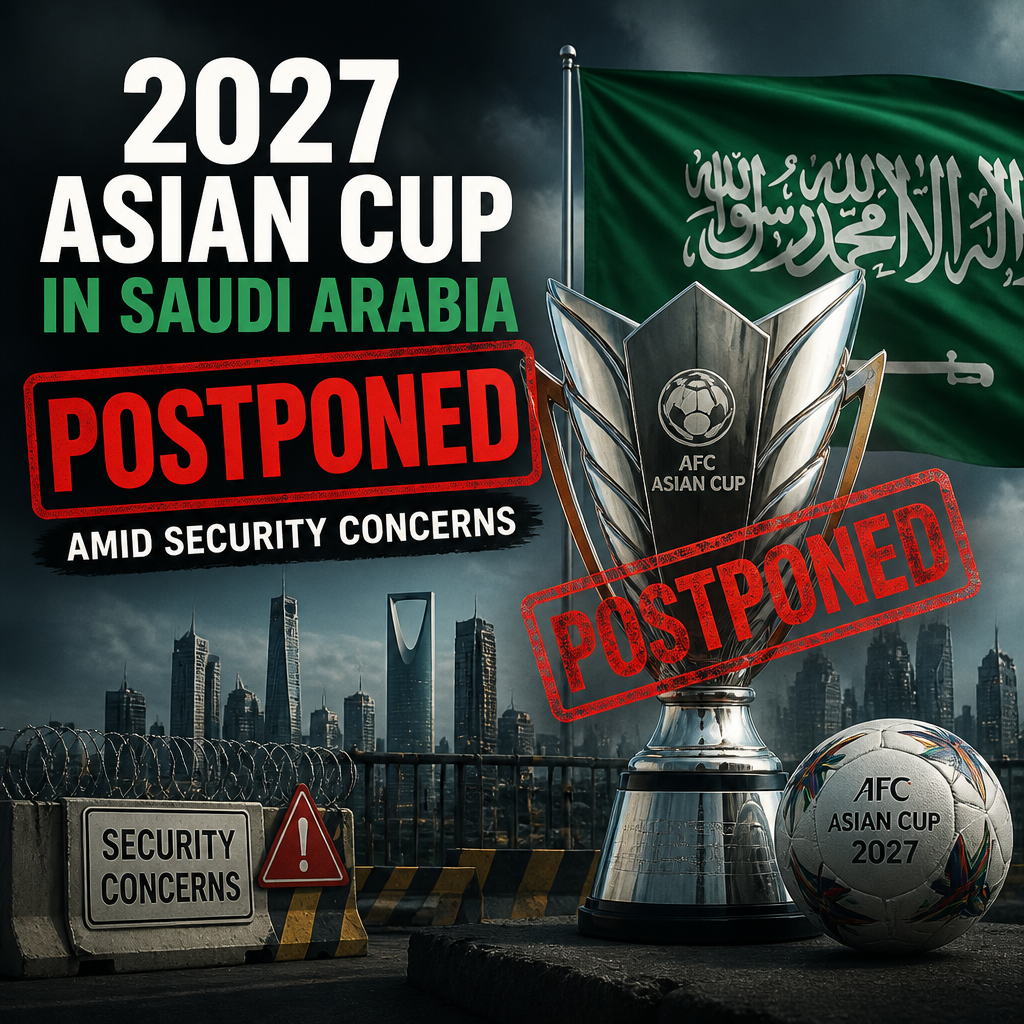
The 2027 Asian Cup in Saudi Arabia Postponed Amid Security Concerns
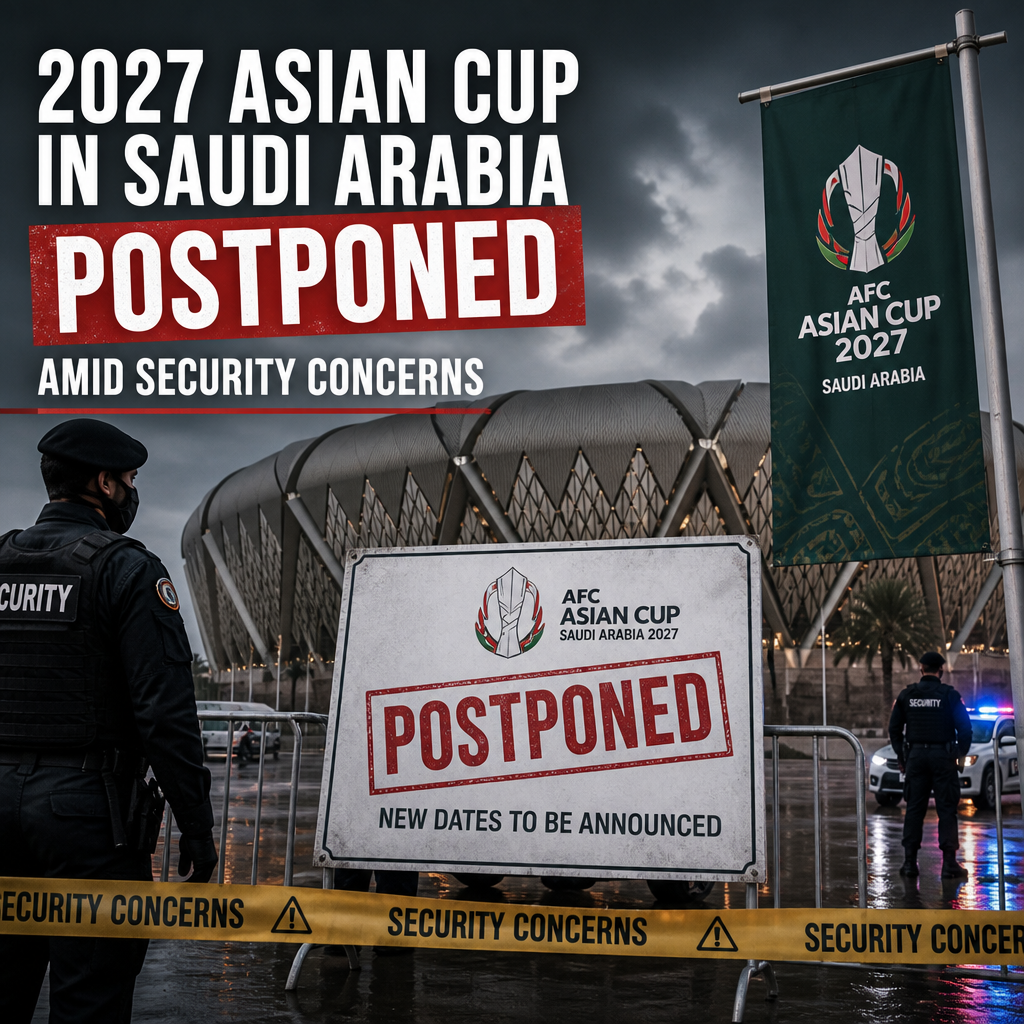
The 2027 Asian Cup, originally scheduled to take place in Saudi Arabia from January 7 to February 5, has been postponed due to a series of deadly attacks on the host country. This important football tournament, featuring 24 teams from across Asia, will now be held from December 23, 2027, to January 21, 2028. The postponement reflects ongoing concerns about security and logistical challenges caused by recent regional unrest.
Background: Security Issues in Saudi Arabia
In October, Riyadh, the capital of Saudi Arabia, was targeted by a missile attack carried out by Yemen’s Houthi movement. The attack struck Riyadh’s airport, tragically killing 13 people and injuring more than 300. This violent incident contributed significantly to the uncertain environment in which the Asian Cup was due to be held.

Following the attack, the Asian Football Confederation (AFC) issued a statement emphasizing the need for rescheduling. The statement cited “exceptional circumstances arising from developments in the region, including substantial logistical complexities and travel disruptions.” The AFC also noted that they would submit the new tournament dates to FIFA for approval.
Impact on Regional Sports Events
The postponement of the 2027 Asian Cup is not an isolated case. Several other high-profile sports events in Saudi Arabia have recently been cancelled or postponed due to similar concerns:
- Six Kings Slam Tennis Exhibition: This tennis event, which was planned for Riyadh, has been cancelled.
- Asian Tour Golf Tournament: The season-ending golf tournament scheduled for November 18-21 has been postponed indefinitely.
These disruptions highlight the broader challenges facing sporting events in the region amid ongoing tensions.
Historical Context: A Second Consecutive Asian Cup Postponement
The postponement of the 2027 Asian Cup marks the second consecutive delay for the prestigious tournament. The 2023 Asian Cup was initially scheduled in China but had to be moved to Qatar and rescheduled to 2024 because of the COVID-19 pandemic.
This prior experience with postponement makes the current situation particularly tough for organizers and participants, who require stability to prepare adequately.
Implications for Premier League Players
One notable consequence of rescheduling the 2027 Asian Cup relates to Premier League footballers who would have been called up to represent their countries, especially Japan, one of the tournament favorites.
Some players expected to be involved include:
- Zion Suzuki (Aston Villa)
- Wataru Endo (Liverpool)
- Daizen Maeda (Ipswich Town)
- Ao Tanaka (Leeds United)
- Takehiro Tomiyasu (Crystal Palace)
- Daichi Kamada (Crystal Palace)
- Hidemasa Morita (Hull City)
If the tournament had gone ahead as planned, clubs like Aston Villa, competing in the Champions League, might have had to manage the absence of key players such as Suzuki for up to seven games in case Japan reached the final. Liverpool, also in the Champions League, would have been affected by Endo’s call-up, although he has yet to make an appearance this season.
Brighton’s Kaoru Mitoma, currently recovering from injury, was likely to be called up as well once fit.
What’s Next?
The AFC will present the new Asian Cup schedule to FIFA for approval, and updates will follow as the situation evolves. Meanwhile, football fans and clubs will be watching closely as Saudi Arabia navigates these challenging circumstances.
The rescheduled dates at the end of 2027 promise that Asia’s premier football tournament will still go ahead, allowing the continent’s best teams and players to compete under safer and more secure conditions.
The postponement of the 2027 Asian Cup highlights the complex interplay between global sport and geopolitical realities. As the region works towards stability, the football community hopes to ensure the competition’s success while prioritizing the safety of players, officials, and fans alike.