Espí’s Impact as a Substitute
During the tightly contested match where Real Madrid was locked at 1-1, Mourinho brought on 21-year-old Carlos Espí as a substitute. The young forward quickly made a decisive impact by scoring the winning goal following a rebound, solidifying his reputation for delivering in limited game time. This was not the first time Espí has influenced matches as a super-sub since joining Real Madrid. His ability to capitalize on crucial moments makes him an invaluable asset, but Mourinho’s hesitation to start him alongside Mbappé reveals deeper tactical considerations.
Mourinho’s Tactical Concerns
In the post-match press conference, Mourinho addressed the possibility of pairing Espí and Mbappé as a striking duo from the start. His dismissal of this idea reflected his pragmatic approach to team shape and defensive responsibility. He famously remarked: > “If I start with Mbappé and Espí, I’ll have to run onto the pitch myself during a defensive transition to clobber an opponent! Fans think it’s easy, but it’s not.” This statement encapsulates the Portuguese manager’s concern about the defensive vulnerabilities that would arise from such an attacking combination.
Defensive Transition Risks
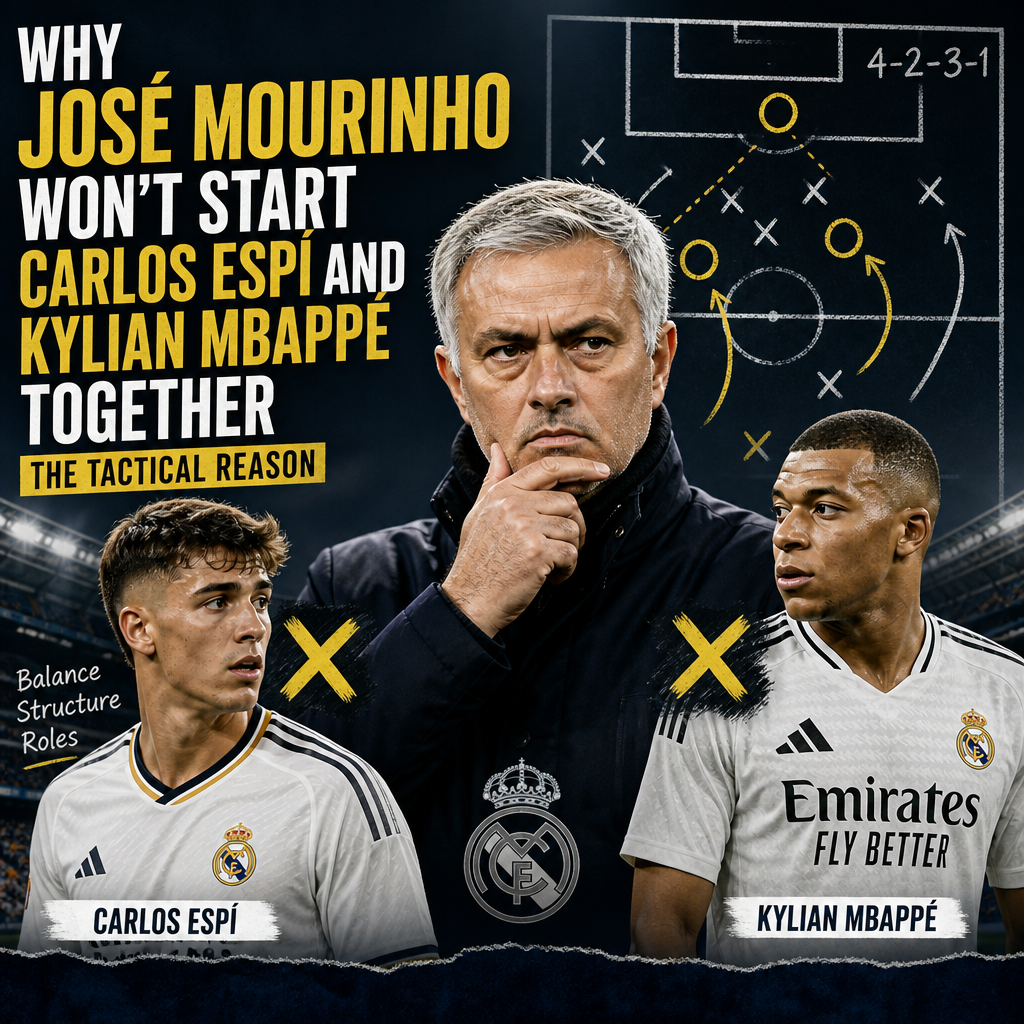
Mourinho explained that starting Espí and Mbappé together would expose Real Madrid to significant risks during defensive transitions. Both players excel as offensive threats but offer limited defensive cover, which is crucial in Mourinho’s system. Real Madrid’s current formation, a rigid 4-4-2 shape supported by wingers who contribute defensively, is designed to maintain balance across the pitch. Introducing two forwards who are primarily attacking-focused would compromise this balance, potentially leaving the midfield and defense exposed.

Espí’s Role as a Penalty-Box Focal Point
Another key factor in Mourinho’s reluctance ties into Espí’s playing style. Mourinho described Espí as a “penalty-box focal point,” a striker whose strengths shine most brightly in late-game situations when opponents are defending deep. This means Espí thrives against low blocks and tight defenses, where his positioning and quick finishing can make the difference in the dying minutes. It’s a role that complements a fluid and dynamic forward like Mbappé rather than pairing as a co-starter.
Tactical Unsuitability of a 4-4-2 with Espí and Mbappé
Mourinho also highlighted the tactical limitations of deploying the team in a classic 4-4-2 when featuring Espí and Mbappé together. The 4-4-2 requires strong wide players to track back and help defensively, ensuring the team isn’t caught out of shape. Real Madrid’s current wingers and midfielders are selected to support this system, but fitting two natural strikers who demand forward freedom disrupts the delicate defensive-pivot that Mourinho values highly. As a result, Mourinho prefers to stagger the attacking threats or use Espí as an impact substitute rather than a starting partner alongside Mbappé. —
Conclusion
 José Mourinho’s cautious approach regarding starting Carlos Espí with Kylian Mbappé reveals the intricate balancing act behind Real Madrid’s tactical setup. While Espí has proven his worth as a clutch substitute and lethal finisher in tight moments, Mourinho’s system prioritizes defensive solidity and balance, especially during transitions. Fans may see the prospect of a Mbappé- Espí offensive partnership as exciting, but Mourinho’s perspective sheds light on the complexities involved in blending individual talent into a cohesive team strategy. For now, Espí’s role remains that of a decisive impact player off the bench, perfectly suited to exploit defenses late in the game where his talents can shine without compromising Real Madrid’s tactical discipline.