CAS Set to Deliver Ruling on 2025 Africa Cup of Nations Final Dispute
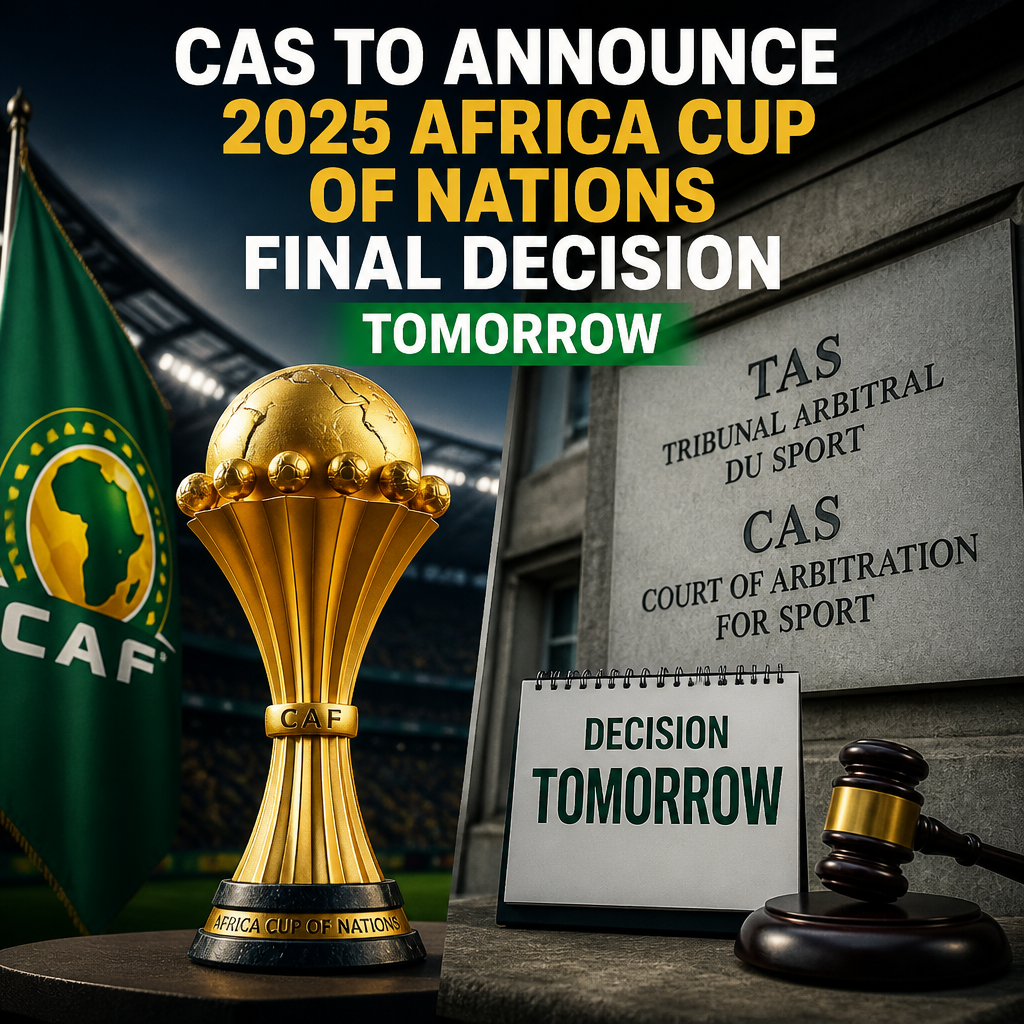
The Court of Arbitration for Sport (CAS) has officially announced that it will release its verdict on the contentious 2025 Africa Cup of Nations (AFCON) final between Morocco and Senegal tomorrow, Tuesday. This high-stakes decision has attracted significant attention, as it could determine the rightful champion of one of Africa’s most prestigious football tournaments.
Background: The 2025 AFCON Final Controversy
The final, held between Morocco and Senegal, was closely contested and ultimately decided after extra time. Senegal initially emerged victorious with a 1-0 win, earning them the title of African champions. However, the aftermath of this match turned unexpectedly dramatic.

During the latter stages of the second half, a penalty was awarded to Morocco, prompting a dramatic reaction from the Senegalese players. In protest, the Senegal team walked off the pitch, refusing to continue the match. This walk-off was due to their disagreement with the referee’s decision to grant Morocco a late penalty.
Confederation of African Football’s Controversial Verdict
Following the player walk-off and the conclusion of the match, the Confederation of African Football (CAF) took a decisive step. They stripped Senegal of the continental title and subsequently awarded the championship to Morocco. This decision has been a source of intense debate and disagreement in the African football community.
CAF justified its ruling by citing the unsportsmanlike conduct of the Senegalese players who abandoned the game. The governing body emphasized the importance of respecting refereeing decisions and completing matches regardless of on-field disputes.
What’s Next? CAS and the Final Decision
The Court of Arbitration for Sport, the international body responsible for resolving sports-related disputes, stepped in following appeals and formal complaints about CAF’s decision. CAS reviewed all evidence, including match footage, referee reports, and official statements from both parties.
On its official website, CAS stated:
“The parties to the dispute have been informed that the Court of Arbitration for Sport will issue its decision tomorrow, Tuesday, during the afternoon.”
This timing reflects the urgency and gravity of the case. The verdict will finally offer clarity and closure to the ongoing controversy, determining whether Senegal’s initial win stands or if Morocco’s award of the title remains valid.
Potential Outcomes of the CAS Decision
Several outcomes are possible depending on CAS’s interpretation of the rules and the circumstances of the match:
- Upholding Senegal’s Win: CAS may overturn CAF’s decision, recognizing Senegal as the rightful champions. This would emphasize the sporting result on the pitch before the walk-off incident.
- Confirming Morocco’s Title: CAS may support CAF’s ruling, citing the walk-off as a violation of competition rules and validating Morocco’s championship.
- Ordering a Rematch or Further Action: In rare cases, CAS might call for a replay or suggest additional steps to resolve the dispute fairly.
Why the CAS Decision Matters
The Court of Arbitration for Sport’s ruling will have wide implications beyond just this final:
- For African Football Governance: The verdict could set a precedent on how CAF and other football bodies handle disciplinary issues and match disruptions in the future.
- For the Teams and Fans: Both nations eagerly await the outcome, as the title carries immense prestige, national pride, and potential financial rewards.
- For the Integrity of the Game: Ensuring fairness and respect for the rules is crucial to maintaining trust among players, officials, and supporters worldwide.
Conclusion
The decision by the Court of Arbitration for Sport regarding the 2025 Africa Cup of Nations final dispute will be a landmark moment in African football history. With CAS scheduled to announce its verdict tomorrow afternoon, fans from Morocco, Senegal, and across the continent watch anxiously. Whatever the outcome, it will shape the narrative of the tournament and influence the governance of African football for years to come.