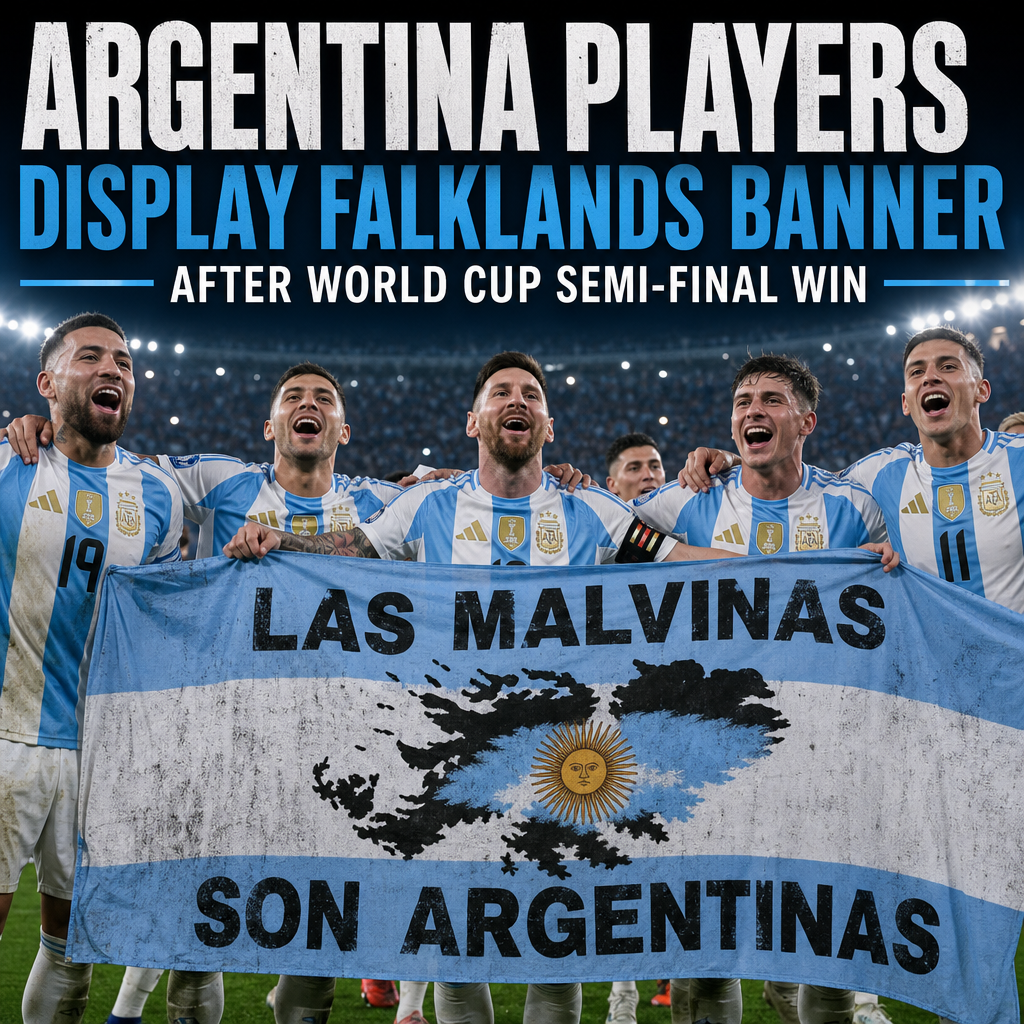
Argentina Players Hold Up Falklands Islands Banner After World Cup Semi-Final
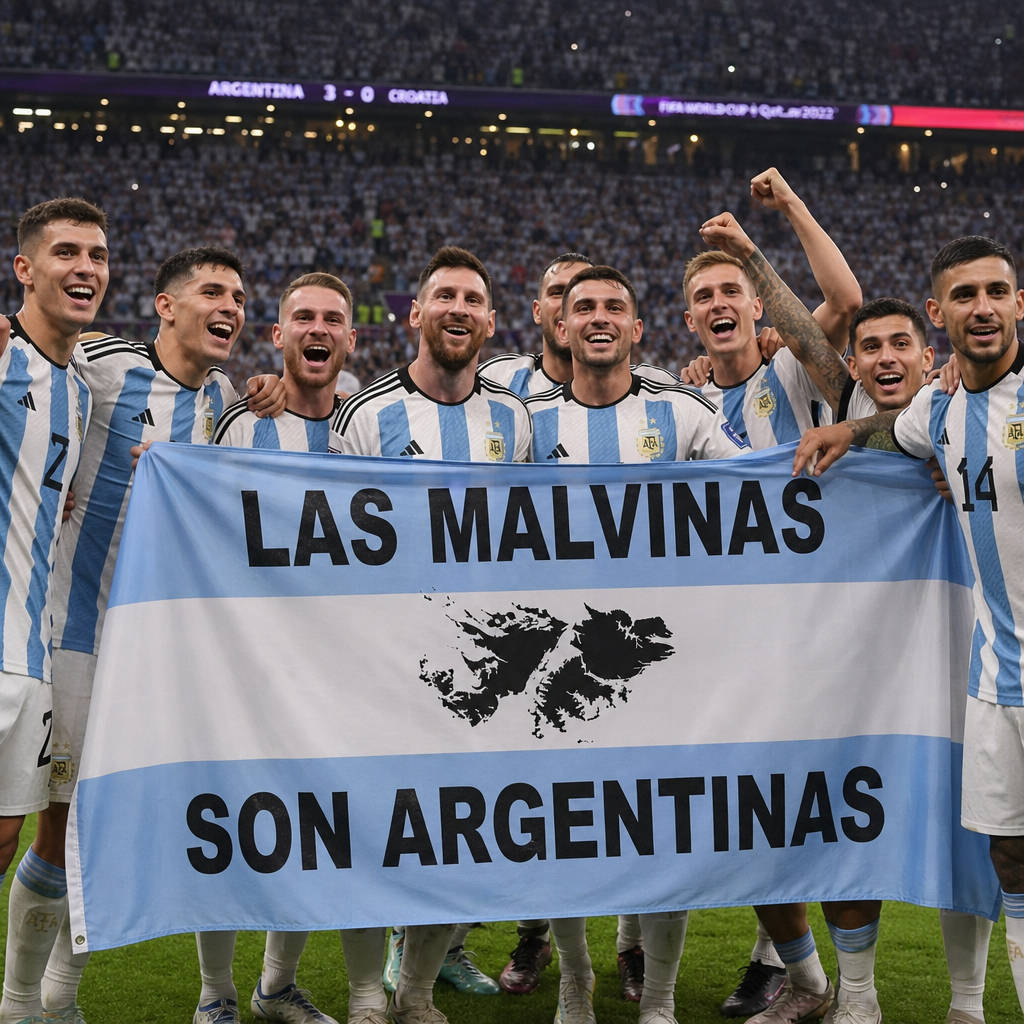
In a dramatic conclusion to the World Cup semi-final between Argentina and England, several Argentina players held up a banner proclaiming “Las Malvinas son Argentinas” — which translates to “The Falkland Islands are Argentinian” — immediately after their 2-1 comeback victory. The display, which took place on the pitch in Atlanta, has sparked widespread political controversy and revived longstanding tensions between the two nations.
Background: The Semi-Final Match
Argentina’s win came after a thrilling match in which they overcame a 1-0 deficit in the final five minutes. The victory secured Argentina’s place in a second consecutive World Cup final, intensifying celebrations for the South American side.

Ahead of the game, Argentina’s head coach Lionel Scaloni emphasized that the fixture should focus strictly on football and not the political dispute surrounding the Falkland Islands. However, the post-match banner display defied this hope and shifted attention to the ongoing conflict.
The Falkland Islands Dispute
The Falkland Islands, located roughly 300 miles off the coast of mainland Argentina but about 8,000 miles from Britain, remain a deeply contested territory. The dispute reignited to open conflict in 1982 when Britain and Argentina fought over control of the islands.
Argentina continues to claim sovereignty over the islands, which it calls Las Malvinas. The issue remains a sensitive and emotional one, regularly influencing diplomatic relations and public sentiment in both countries.
Reactions to the Banner
Argentina’s players holding the “Las Malvinas son Argentinas” banner was viewed as a political statement by many, particularly in England. The move led to immediate reactions from politicians and officials:
- Argentina Vice-President Victoria Villarruel described England as “invaders” and “usurping pirates” in the run-up to the match. She also posted a celebratory tweet referencing Argentinian soldiers, reinforcing the nationalistic tone.
- UK Prime Minister’s Office issued a firm response, stating:
“The World Cup might not be ours, but the Falklands definitely are. Our position is unchanged, and our commitment to the Falklanders is unwavering.”
- The spokesperson also confirmed that Sir Keir Starmer supports an investigation by FIFA into whether the Argentinian team breached regulations banning political messaging during matches.
FIFA’s Role and Rules on Political Messaging
FIFA maintains strict rules prohibiting political messages or slogans by players during matches. The Argentinian players’ banner could potentially violate these rules, prompting calls for an official investigation.
Whether any sanctions or penalties will be imposed remains to be seen, but the incident sets a significant precedent for how political expressions may be treated in global sporting events.
What’s Next: World Cup Final and Beyond
With Argentina advancing to the final, attention now shifts to the upcoming match against Spain, set to take place on Sunday. The UK Prime Minister’s spokesperson diplomatically wished both teams well, stating a particular hope for Spain’s success.
Meanwhile, the Falklands dispute continues to cast a shadow over the tournament, highlighting how deeply national pride and political history can intersect with international sport.
Summary
- Argentina players celebrated their World Cup semi-final victory over England by holding a banner about the Falkland Islands on the pitch.
- The banner declared “Las Malvinas son Argentinas,” reigniting political tensions related to the 1982 Falklands conflict.
- UK officials reaffirmed their commitment to the Falkland Islanders and welcomed a possible FIFA investigation.
- The incident has reminded the world of the complex relationship between sports and politics, especially in high-stakes matches.
Argentina’s banner at the World Cup semi-final was a powerful reminder that for some, football is more than just a game — it is a platform for expressing national claims and historic grievances that linger to this day.