Uli Hoeneß’s Take on Bundesliga Club Management: A Critique of Eintracht Frankfurt’s Player Sales Strategy
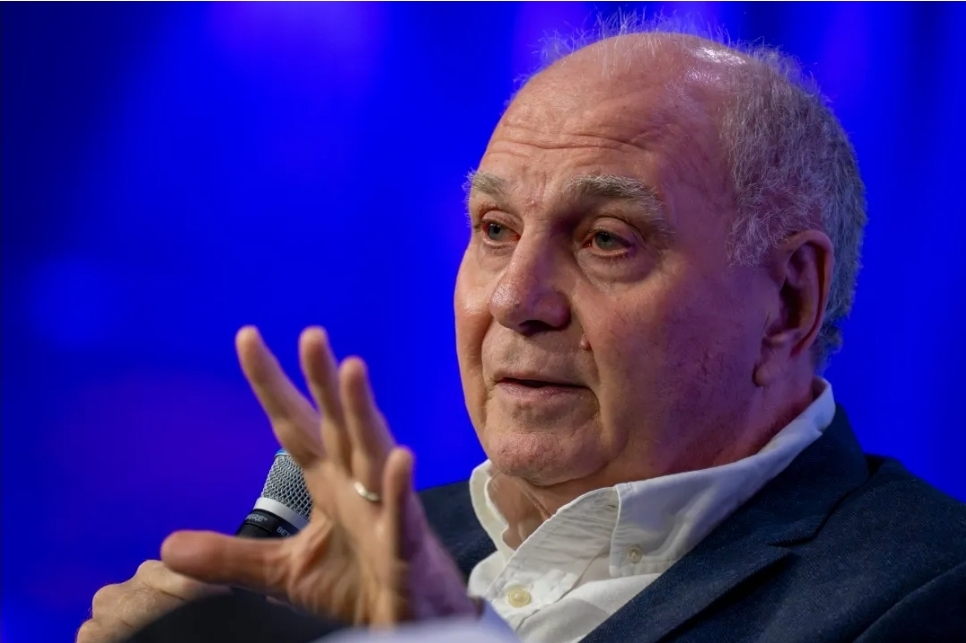
Bayern Munich legend Uli Hoeneß recently delivered a pointed critique of Bundesliga rival club Eintracht Frankfurt, sparking a lively debate about football club management and transfer philosophies. Speaking at an event hosted by the Frankfurt School of Finance & Management alongside Frankfurt CEO Axel Hellmann, Hoeneß candidly outlined his beliefs on how football clubs should be run, particularly emphasizing the dangers of selling key players. His comments came as a response to Frankfurt’s recent trend of making significant player sales, raising questions about the long-term sustainability of this approach.
Uli Hoeneß on Player Sales: A Philosophy Rooted in Stability and Strength
At the heart of Hoeneß’s critique lies his philosophy of club stability, which centers on retaining quality talent rather than frequently selling star players. “Personally, I’m not a big fan of selling good players,” Hoeneß stated, a remark that clearly reflects Bayern Munich’s strategy over the years. Bayern has consistently invested in purchasing top talent, fostering continuity and building a powerful squad that can compete across all competitions.
Hoeneß elaborated on this by addressing Frankfort CEO Axel Hellmann directly: “I always say at FC Bayern: we’re a club that buys players, not one that sells them.” The underlying message here stresses the importance of cultivating a team’s core rather than undermining it through constant player turnover. While immediate financial gain from selling key players might be tempting, Hoeneß warns that each sale results in a loss of substance, ultimately weakening a club’s competitive edge.

Financial Reality vs. Sporting Ambitions: The Challenge for Eintracht Frankfurt
Eintracht Frankfurt, like many other Bundesliga clubs outside the traditional powerhouses, faces a delicate balancing act. The need for financial stability often forces them to sell valuable players to bigger clubs for substantial fees. In recent years, Frankfurt has been able to secure impressive monetary returns on player sales, sometimes bringing in figures as high as 50 or 60 million euros. However, Hoeneß questions the long-term consequences of this trend.
“It’s nice to get 50 or 60 million once in a while, but what are the consequences?” he asked during the event. The key concern is whether the short-term financial boost can be translated into sustainable sporting success. Reinvesting that money wisely is critical, but if a club becomes a perpetual seller, it risks failing to establish or maintain a squad capable of competing at the highest level consistently.
Bayern Munich’s Model: Lessons in Consistency and Vision
Hoeneß’s words weren’t merely criticism; they reflected a distinct club philosophy shaped by decades of success. Bayern Munich has built its reputation on a foundation of consistent investment and long-term planning. By prioritizing the acquisition and retention of high-caliber players, Bayern minimizes the disruptive impact of losing key squad members. This approach has resulted in numerous Bundesliga titles, domestic cups, and European triumphs.
For smaller Bundesliga clubs aspiring to break into the elite, Hoeneß suggests adopting elements of this model. While it’s unrealistic for some clubs to completely avoid selling players—especially given financial pressures—creating a strategic framework focused on stability and progressive growth can pay dividends. Adopting this mindset could help clubs like Eintracht Frankfurt develop squads that not only earn solid profits but also deliver consistent performance on the pitch.
Is There a Middle Ground for Bundesliga Clubs?
The tension between financial prudence and sporting ambition is a defining characteristic of modern football, and the Bundesliga is no exception. Clubs outside the Bayern Munich sphere often rely on the sale of star players to remain viable, but Hoeneß’s critique highlights the possible risks linked with this approach.
Finding a middle ground is crucial. For Eintracht Frankfurt and similar clubs, selling players may be unavoidable but should be balanced by reinvestment aimed at building a competitive team. Utilizing scouting networks, promoting youth talent, and making shrewd acquisitions could mitigate the negative impact of losing key individuals. Frankfurt’s recent performances in both domestic and European competitions show promise but underscore the importance of strategic planning.
Final Thoughts
Uli Hoeneß’s frank comments serve as a timely reminder of the complexities involved in managing a football club successfully. His critique of Eintracht Frankfurt’s player sales strategy touches on the broader challenge facing many Bundesliga clubs: how to remain financially sound while building teams capable of sustained success.
Hoeneß’s philosophy, exemplified by Bayern Munich’s model, emphasizes patience, investment, and long-term vision. For clubs like Frankfurt, the path forward may involve drawing lessons from this approach while navigating the realities of modern football economics. In the end, the delicate balance between selling and buying, profitability and performance, defines the ongoing narrative of Bundesliga rivalries and ambitions.