🚨 MAJOR BREAKING: Bruno Fernandes Refuses Cristiano Ronaldo’s No. 7 Jersey for Portugal
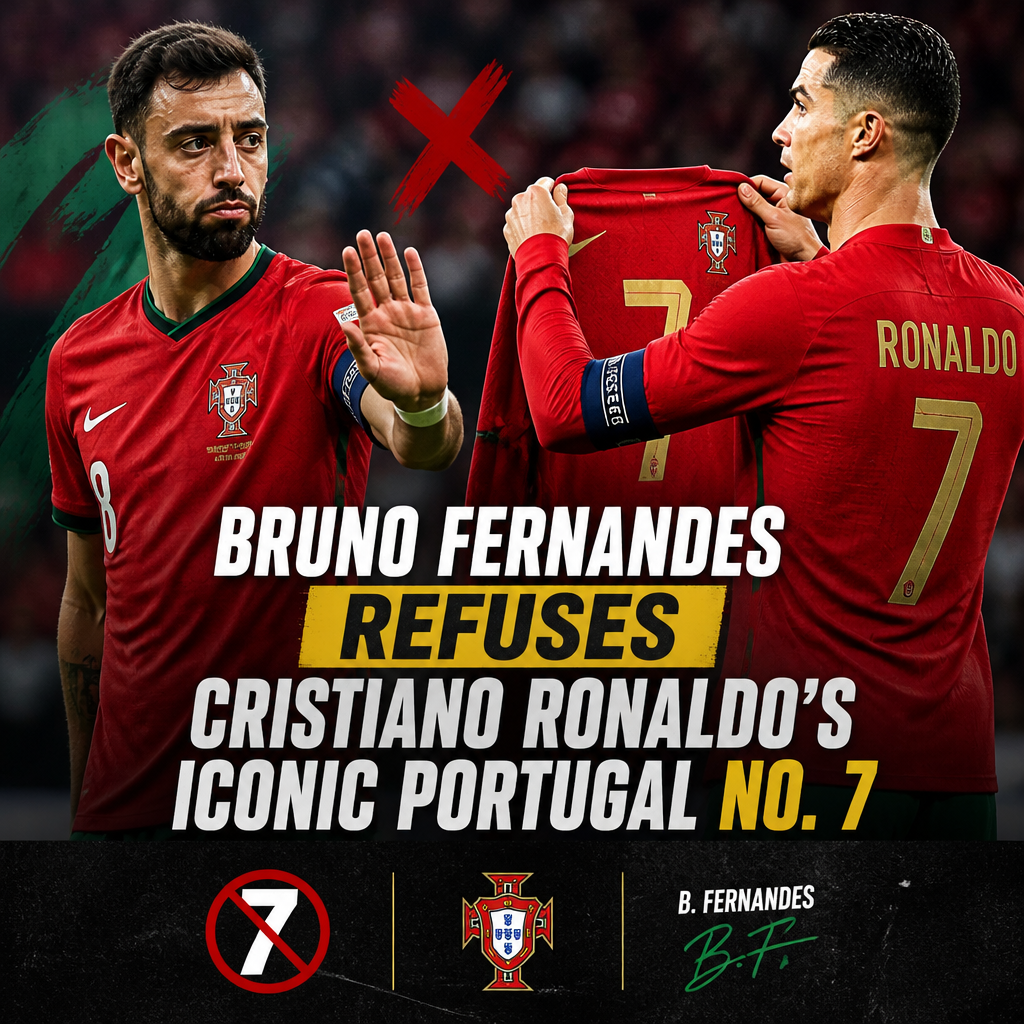
In a surprising turn of events, Bruno Fernandes has reportedly told Portugal’s national team that he wants nothing to do with Cristiano Ronaldo’s iconic No. 7 jersey. Despite being offered the legendary number, Fernandes has firmly refused to wear it, sending shockwaves through the football community.
The Significance of the No. 7 Jersey for Portugal
Cristiano Ronaldo’s No. 7 jersey is more than just a number. It symbolizes a legacy built over years of extraordinary performances, leadership, and incredible achievements both for his country and club teams. Since Ronaldo first donned the shirt, it has become synonymous with greatness in Portuguese football.
Many football fans and experts consider the No. 7 to be a symbol of inspiration and immense responsibility. It carries the expectations of millions who look to the player wearing it for inspiration and heroics on the pitch.

Bruno Fernandes’ Stance on the Iconic Number
Bruno Fernandes has quickly become one of the most influential players for Portugal since his debut. His creativity, goal-scoring ability, and leadership qualities have made him a key figure in the national squad. Despite this, Fernandes has chosen to distance himself from the pressure and legacy tied to the No. 7 jersey.
According to reliable reports:
- The Portuguese Football Federation offered Fernandes the No. 7 jersey after Ronaldo’s departure.
- Fernandes declined the offer, expressing a desire to forge his own path without the comparisons or added scrutiny.
- He prefers to maintain his current squad number, emphasizing his focus on team performance over individual symbolism.
What This Means for Portuguese Football
Fernandes’ refusal highlights a changing dynamic within Portugal’s football identity. Here are a few implications:
1. Respect for Ronaldo’s Legacy
By turning down the No. 7, Fernandes showcases respect for Ronaldo’s contributions, acknowledging that the number belongs to an era that was defined by one of football’s greatest players.
2. Reduced Pressure on the Player
Accepting the number brings with it immense pressure and expectation. By wearing a different number, Fernandes may avoid constant comparisons and can develop his leadership on his own terms.
3. A New Chapter for Portugal
Fernandes’ decision symbolizes a shift towards collective team effort rather than individual stardom. Portugal may look to rebuild its identity with multiple leaders rather than a single iconic figure.
History of the No. 7 Jersey in Football
The number 7 is historically worn by some of the most talented and influential players globally. For Portugal, Cristiano Ronaldo elevated the number to unparalleled heights. Globally, players like George Best, David Beckham, and Eric Cantona have also added prestige to the number.
Wearing the No. 7 often signals a player with flair, creativity, and a winning mentality. Thus, Fernandes’ decision is even more remarkable given the number’s importance.
What Number Does Bruno Fernandes Wear?
Currently, Bruno Fernandes wears the No. 18 jersey for Portugal. This number has become his personal brand within the national team setup, where he continues to be a central figure both in midfield creativity and goal contribution.
Fans’ Reactions and What’s Next
The news has generated mixed reactions:
- Some fans admire Fernandes for showing humility and respect by not assuming the iconic number.
- Others wonder whether it signals a lack of willingness to step into the big shoes left behind by Ronaldo.
- Football analysts view it as a positive move, allowing Fernandes to establish his own legacy.
Moving forward, it will be intriguing to see how Portugal shapes its team strategy and leadership style without the symbolic anchor of the No. 7 jersey.
Conclusion
Bruno Fernandes’ decision to reject Cristiano Ronaldo’s No. 7 jersey is a bold statement that goes beyond symbolism. It highlights the evolving nature of football legacies, respect for greatness, and the desire to build new narratives. For Portugal, it may mark the beginning of a fresh chapter, where new heroes emerge on their own terms, free from the shadows of iconic predecessors.
As the Portuguese national team moves forward, all eyes will be on Fernandes and how he continues to lead with his own identity and influence on the world stage.