English Football’s Finances “Dangerously Exposed,” Warns Independent Regulator
A landmark report by the Independent Football Regulator (IFR) has laid bare the precarious financial state of English football clubs. Despite the Premier League’s economic success, the vast majority of clubs throughout the English football pyramid are living on the edge of financial disaster. The report, titled State of the Game, reveals alarming statistics about losses, insolvency, and over-reliance on owner funding that put clubs and fans at significant risk.
The Financial Reality Across English Football
The IFR’s research paints a worrying picture:

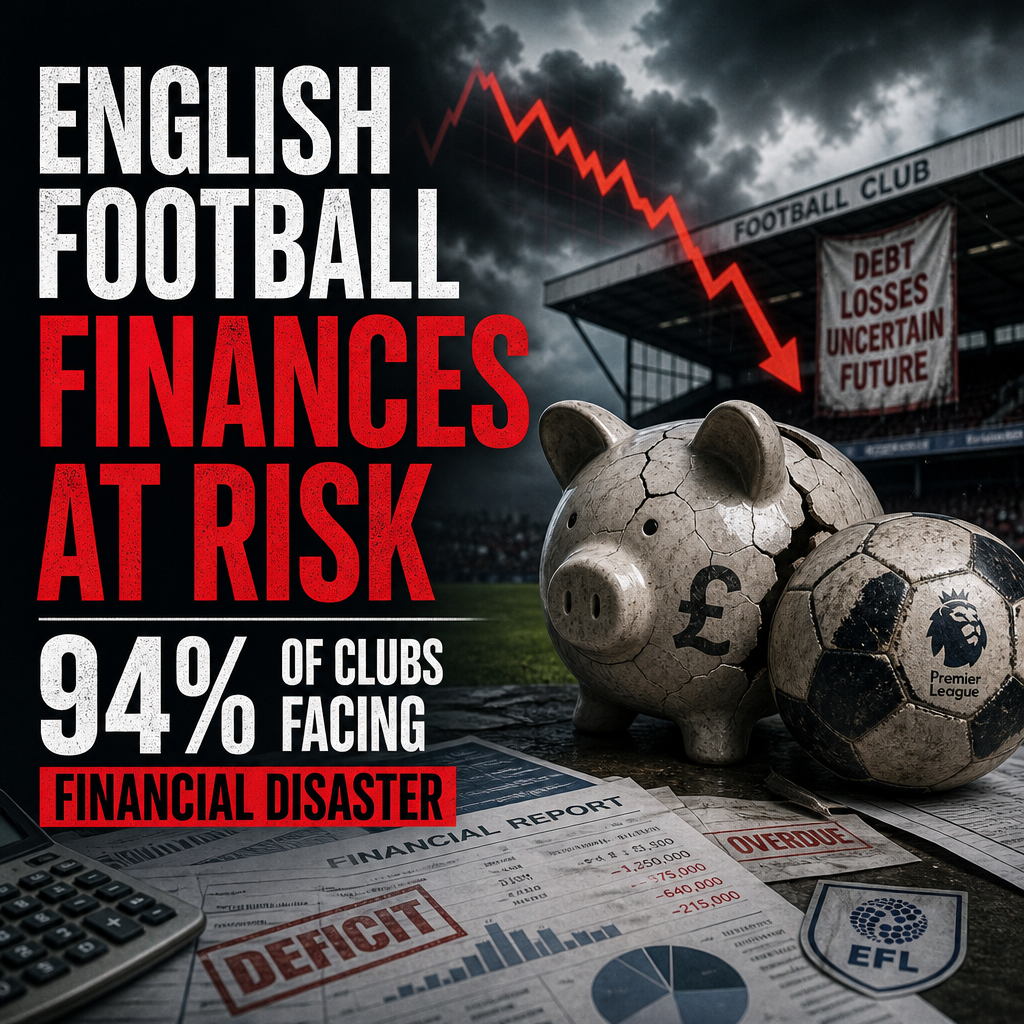
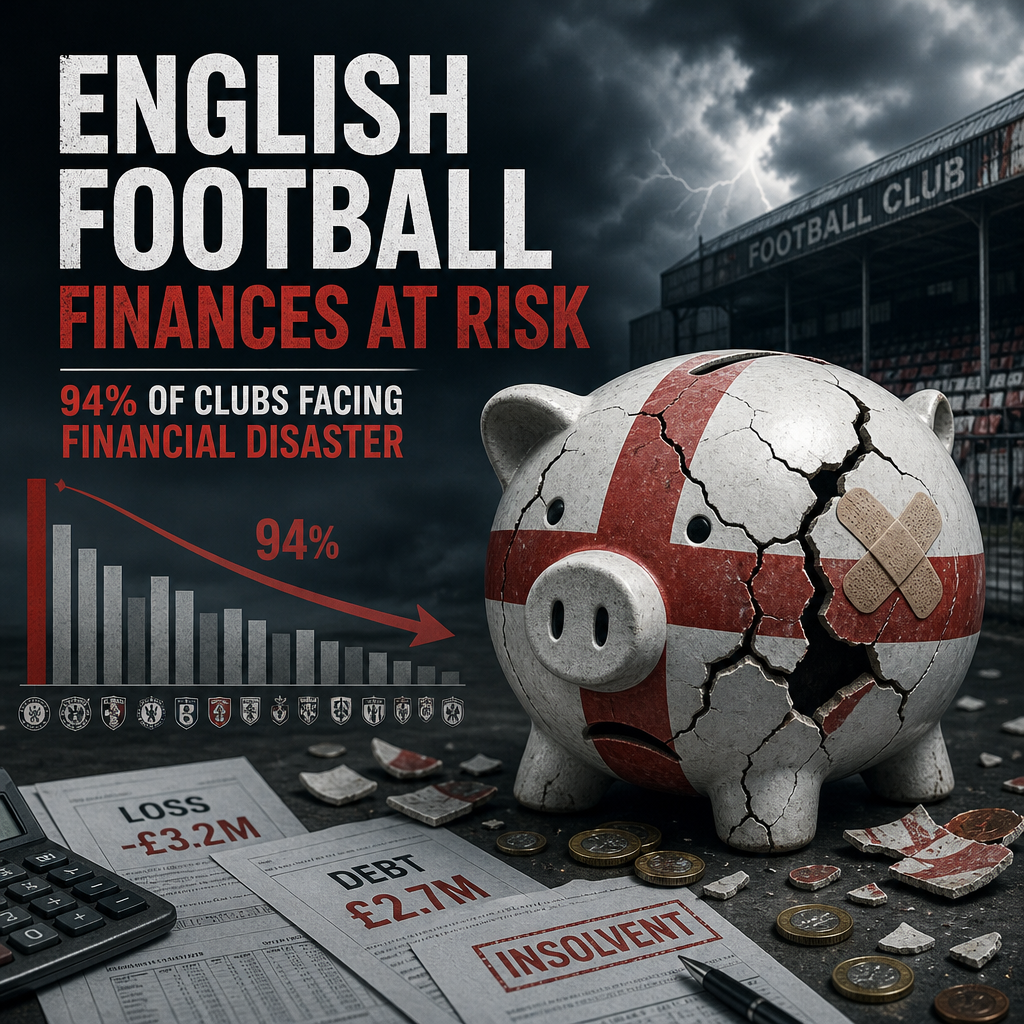
- 94% of clubs in the top five English leagues made financial losses in 2025-26.
- More than 60% of clubs in the English Football League (EFL) and National League are technically insolvent.
- 17 clubs would still be loss-making even if their players played for free, indicating that fixed operational costs alone are unsustainable.
- 66% of clubs could not survive more than 90 days without fresh funding from their owners.
- Nearly one-third (29%) of clubs said they could only last 30 days if owner funding stopped.
- 60% of clubs reportedly have no formal business plan to navigate financial challenges.
IFR Chair David Kogan described this as a “dangerous cocktail of rising debt and over-reliance on owner funding,” stressing the need for urgent reform to protect the future of the game.
The “Dangerous Cocktail” of Debt and Owner Funding
Clubs are increasingly dependent on injections of cash from their owners to stay afloat. When this funding dries up, clubs face immediate financial collapse. As Kogan explained to BBC Sport:
“Thirty-two clubs are operating on only 30 days’ cash. If the owner chooses not to pay cash at the end of the month, those clubs go bust. That is a very, very risky scenario.”
This precarious situation is made worse by rising debt levels and unsustainable wage inflation, especially across the Championship and lower leagues.
Financial Inequality Widens Within the Pyramid
Despite the Premier League’s tremendous financial growth, the report highlights significant disparities:
- Premier League clubs earn more than eight times the average revenue of Championship clubs.
- The parachute payment system, designed to support relegated clubs, is criticized for encouraging overspending and inflating player wages in the Championship.
- Transfer-related debts and deferred payments increasingly link clubs, owners, and lenders in complex financial arrangements, spreading potential risks widely across the game.
These “financial cliff-edges” not only threaten clubs’ survival but also jeopardize the integrity and competitiveness of the leagues.
Lack of Planning, Governance, and Fan Engagement
The IFR’s report also identifies worrying governance and planning issues:
- 60% of clubs lack any kind of business plan, leaving them ill-prepared for financial shocks.
- Clubs are urged to improve boardroom diversity and governance to foster transparency and better decision-making.
- The regulator calls for clubs to demonstrate how they incorporate fan views in financial and operational decisions, reinforcing community engagement.
Calls for Urgent Reform and New Funding Agreements
The IFR sees itself as a guardian tasked with improving football’s financial sustainability. It has outlined six key areas of concern around financial risk and is pushing clubs to develop robust contingency plans in case owner funding is withdrawn suddenly.
One major sticking point remains the Premier League and EFL’s failure to agree on a new funding settlement that would enable the top flight to share more revenue with the rest of the pyramid. The IFR has warned it will use its regulatory powers to enforce changes if football stakeholders cannot find a solution themselves.
“If football can’t find a solution, we will consider our next steps and will not hesitate to use all the powers at our disposal to bring about lasting change,” said the IFR.
A Wake-Up Call for English Football
David Kogan stressed that while football has historically operated in a financially unstable manner, the current scale of risks is unprecedented.
“Nobody in football for 100 years has believed that football was trading in a solvent and effective state. But now where there’s so much more money involved, the extremes get more extreme. We knew the problems were there, but I don’t think anybody realised how dramatic they are.”
The State of the Game report should serve as a wake-up call for all stakeholders—from club owners to policymakers and fans—to confront these financial dangers head-on. Addressing these problems while the economic environment still allows for action is crucial to safeguarding English football’s future.
Summary: Key Financial Risks Facing English Football Clubs
- Most clubs operate at a loss, with over 90% not financially self-sufficient.
- Heavy reliance on owner funding leads to dangerously short cash reserves.
- Growing economic disparities between the Premier League and lower leagues.
- Lack of effective business planning and poor governance structures.
- Urgent need for reform and a more equitable revenue-sharing model.
English football must evolve its financial model quickly to avoid the risk of clubs collapsing and destabilizing the entire football pyramid. The IFR’s call for transparency, better governance, and sustainable business practices is a step in the right direction, but much work lies ahead to secure the game’s long-term health.