Erling Haaland’s Potential Exit Clause: What It Could Mean for Real Madrid and Barcelona

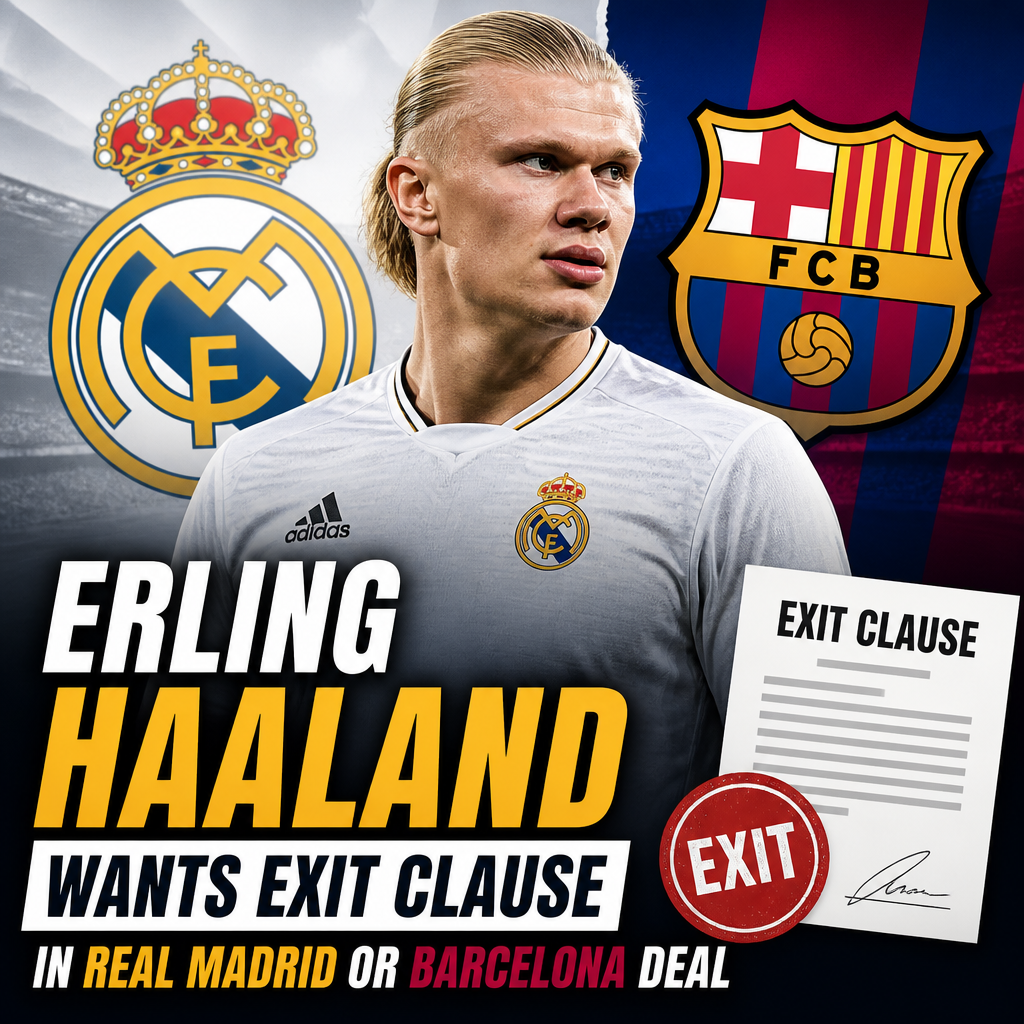
As speculation swirls around Erling Haaland’s next move, one key contractual detail is gaining traction: the need for an exit clause if he joins either Real Madrid or Barcelona. Such a clause could play a significant role in shaping the future of the Norwegian striker’s career and the negotiations between the clubs involved.
Why an Exit Clause Matters to Haaland
Erling Haaland is one of the most sought-after talents in world football. Any club securing his signature addresses not just his current value but also his ambitions and career trajectory. For Haaland, an exit clause would offer:

- Flexibility: Football careers can be unpredictable, and an exit clause ensures Haaland can make a future move without being trapped in a long-term contract.
- Control: An agreed buy-out amount provides a clear and manageable way to leave if he feels it’s time to move on.
- Security: It reassures Haaland that his options remain open, encouraging commitment to a club without fear of being held hostage by an inflexible deal.
How an Exit Clause Works in Football Contracts
An exit clause, also known as a buyout or release clause, stipulates a specific fee that, if paid by another club, allows a player to leave despite the terms of their contract. This clause has several implications:
- Set Fee: The club knows the exact amount required to trigger the clause.
- Negotiable Terms: Conditions such as timing (when the clause can be activated) and exceptions (which leagues or clubs can or cannot pay it) can be specified.
- Balance of Power: It ensures a balance between the player’s desire to leave and the club’s need to protect their investment.
Why Real Madrid and Barcelona Would Need to Negotiate the Clause
If Haaland were to join Real Madrid or Barcelona, both parties would face a delicate balancing act in setting the exit clause terms:
- High but Affordable: The amount must be high enough to discourage frequent activation but affordable enough to provide Haaland a genuine exit option.
- Future-Proofing: The clause might need increments or conditional adjustments tied to Haaland’s performance or the club’s objectives.
- Mutual Benefit: Both clubs want to protect their financial and sporting interests while keeping Haaland motivated.
- Negotiation Dynamics: The player’s representatives would push for more favorable terms, while clubs would aim for maximum security.
Potential Challenges and Considerations
- Market Value Fluctuations: Haaland’s fee might climb significantly during his contract, so a fixed clause might not reflect his true market value in later years.
- Club Rivalries: For Barcelona and Real Madrid, fierce alternatives in La Liga, negotiating with a player who might eventually leave for their direct rival is sensitive.
- Contract Length and Timing: The clause may only be active after certain seasons or under specific conditions to stabilize squad planning.
What It Means for Fans and the Football World
The discussion around an exit clause reflects the modernization of football contracts and the increasing power players wield in shaping their futures. For fans:
- Exciting Prospects: Haaland joining La Liga’s biggest clubs with an exit clause keeps the door open for dynamic career twists.
- Transparency: This clause can sometimes offer clarity on transfer rumors, as any club willing to meet the clause knows exactly the cost.
- Competitive Balance: Both Real Madrid and Barcelona can secure major talent without the risk of sudden, uncontrollable transfers.
Conclusion
If Erling Haaland eventually joins Real Madrid or Barcelona, an exit clause will likely be a crucial element in his contract. This clause, carefully negotiated between the player and the clubs, offers Haaland flexibility while protecting club interests. Balancing a high but affordable fee would give Haaland a viable route to move elsewhere, ensuring his career path stays as adaptable as his dynamic playing style. For football fans and the clubs involved, this clause will represent an important strategic tool in one of the sport’s most anticipated potential transfers.