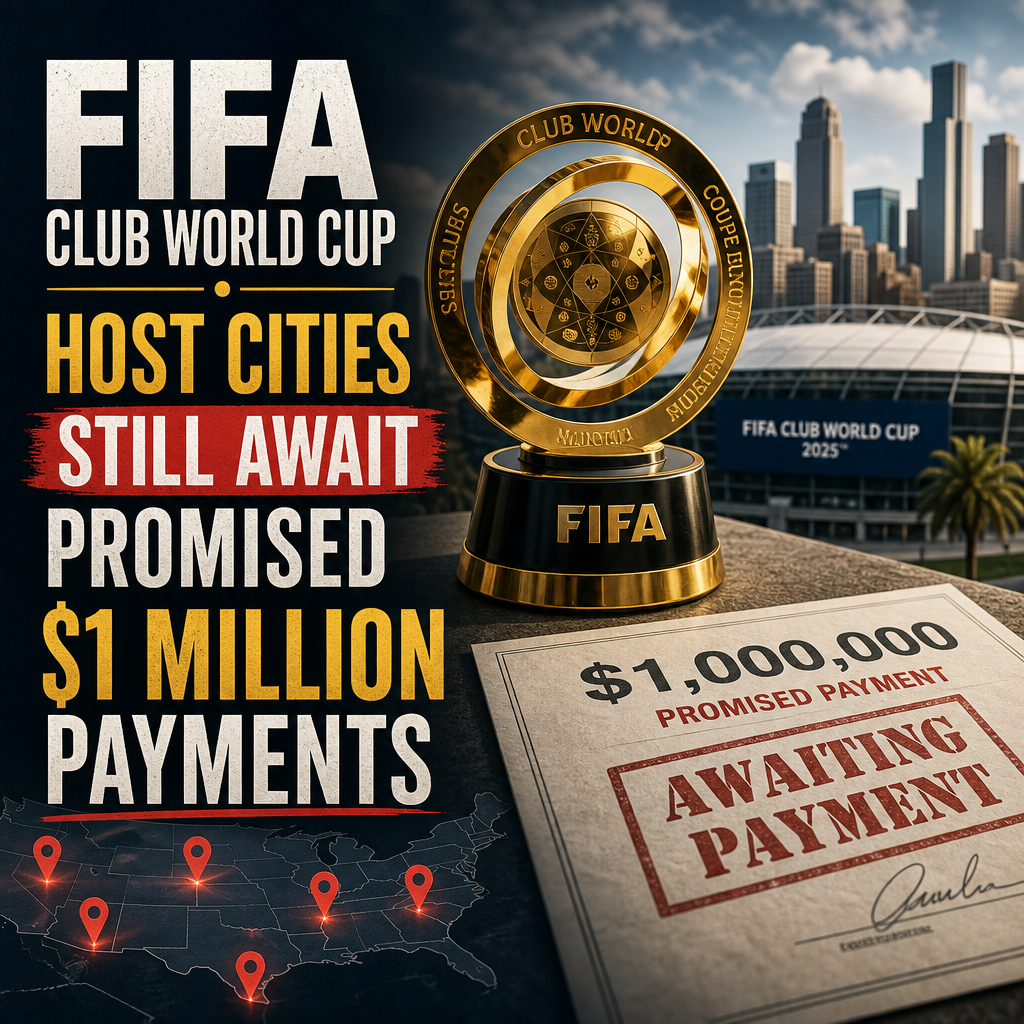
FIFA Club World Cup 2025 Scandal: Host Cities Still Await Promised Payments
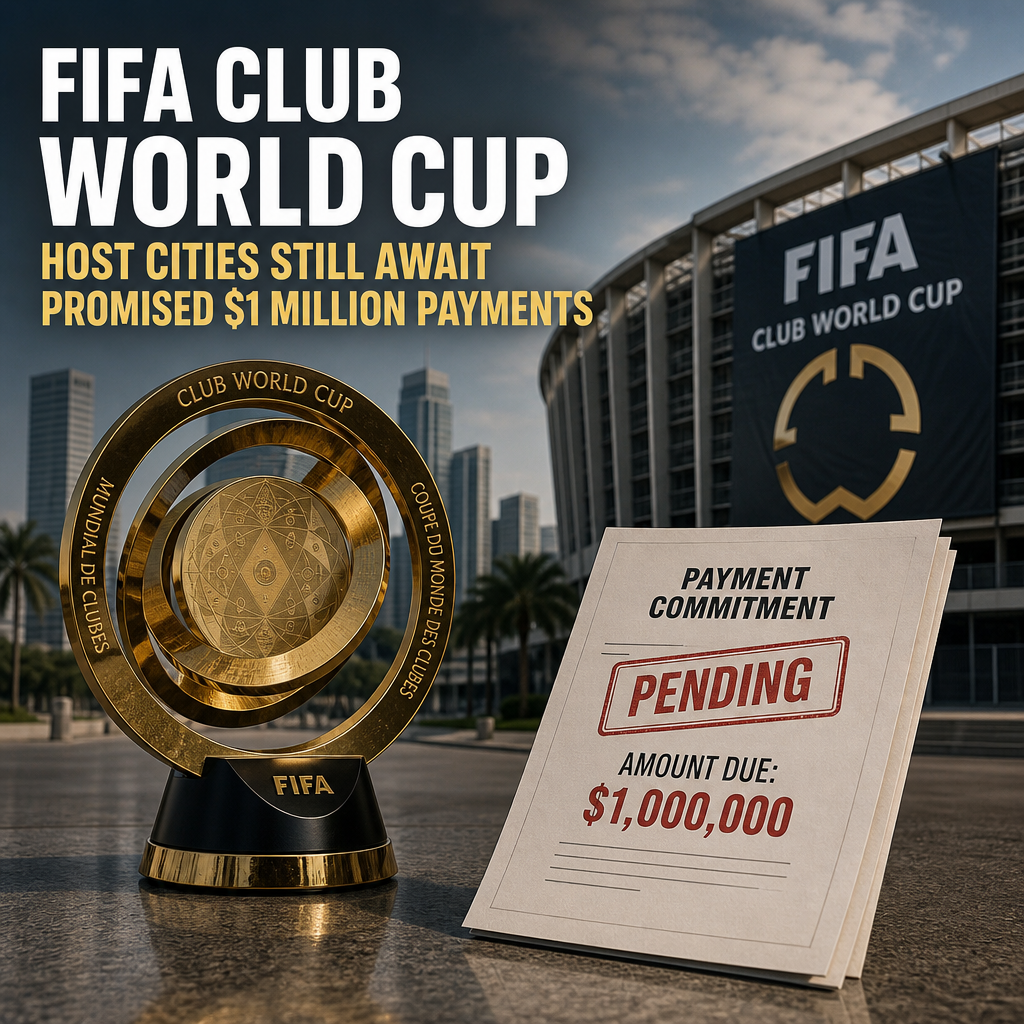
The FIFA Club World Cup held in the USA during the summer of 2025 has recently been embroiled in a fresh scandal. According to a detailed report from The Athletic, many of the tournament’s host cities have yet to receive the millions of dollars FIFA had promised them. This emerging controversy highlights concerns over financial transparency and commitments made by the international governing body for football.
The Initial Promise to Host Cities
Ahead of the Club World Cup, FIFA president Gianni Infantino made headlines by announcing a commitment to support the 11 host cities participating in the tournament. Each of these cities was promised a contribution of $1 million (£743,955) from FIFA, intended to help cover expenses related to staging the tournament.

The 11 cities that hosted Club World Cup matches in 2025 were:
- Seattle
- San Francisco
- Los Angeles
- Dallas
- Houston
- Kansas City
- Atlanta
- Philadelphia
- New York/New Jersey
- Miami
- Boston
These cities, spanning across the United States, played a significant role in organizing and presenting football’s biggest club competition on American soil.
A Larger Financial Expectation for World Cup Hosts
Following Infantino’s initial pledge, the Club World Cup host cities sought clarity on whether they would receive a similar financial arrangement for the FIFA World Cup, which is much larger in scale and cost. Given the substantial logistical and infrastructural demands of staging matches during the World Cup, the cities were understandably eager to secure financial support that matched their increased responsibilities.
According to The Athletic, these World Cup host cities were privately assured by FIFA officials that they too would each receive a $1 million payout, mirroring the Club World Cup agreement. However, this significant announcement was never made public by FIFA, leaving the cities—and the public—without official confirmation.
Economic Impact and Broken Promises
FIFA publicly championed the tournament’s potential to boost the US economy, claiming that approximately $30.5 billion (£22.68 billion) would be injected due to hosting the World Cup. This figure was intended to showcase the tournament as an economic boon, benefiting local businesses, infrastructure, and tourism.
Yet, the ongoing payment dispute casts a shadow over these optimistic projections. Host cities argue that the promised funds have yet to materialize, causing financial strain on municipal budgets that have already been stretched to accommodate the tournament’s requirements.
Why Does This Matter?
The withheld payments come at a time when cities are still recovering from the massive outlays required to prepare for the tournament. Hosting a global event like the FIFA World Cup involves extensive expenditures on stadium upgrades, security, transportation, and hospitality. Many host cities anticipated FIFA’s pledged support as a crucial offset to these costs.
The lack of transparency and fulfillment of these financial promises raises several important concerns:
- Trust and Accountability: FIFA’s reputation suffers when commitments made—especially financial ones—are not honored.
- Municipal Financial Health: Delays or absence of expected funds can impact city budgets and future planning.
- Future International Events: Host cities may be less willing to bid on or support major sporting events without clear, reliable financial guarantees.
What Happens Next?
At this stage, it remains unclear when or if FIFA will resolve the outstanding payment issues with the host cities. Municipal leaders have expressed frustration and some have begun to publicly question FIFA’s handling of financial matters related to the tournament.
Efforts toward official clarification and accountability will likely be demanded by local governments and the public alike. It is in FIFA’s interest to address these concerns promptly to safeguard the credibility of future tournaments and maintain its relationships with host cities worldwide.
Conclusion
The scandal surrounding unpaid promised funds to FIFA World Cup host cities in the USA serves as a reminder of the complex financial dynamics involved in staging giant sporting events. While the global spotlight and economic optimism made the 2025 Club World Cup and subsequent World Cup highly anticipated, the financial promises made by FIFA now risk tarnishing the legacy of both tournaments. Transparency and follow-through on commitments will be essential in mending trust and ensuring the success of future international football competitions.