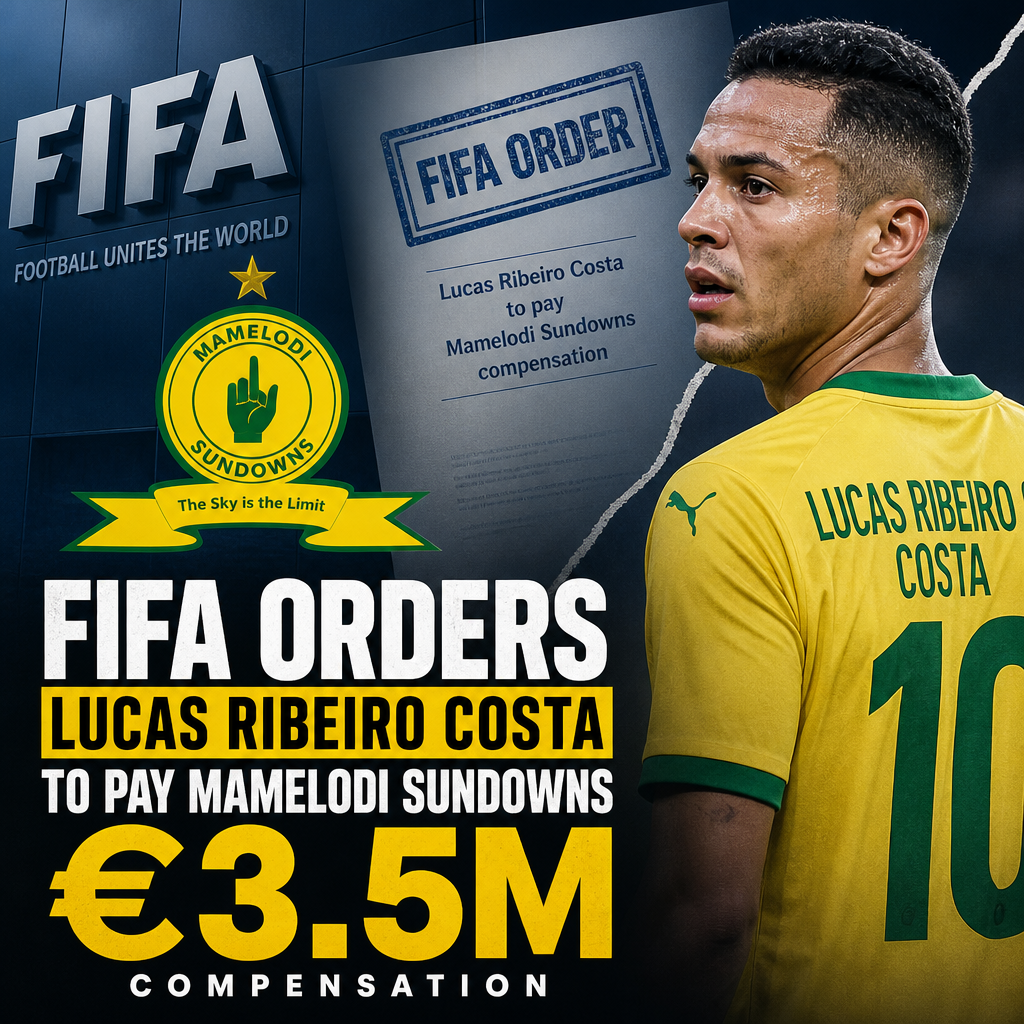
FIFA Orders Lucas Ribeiro Costa to Pay Mamelodi Sundowns €3.5 Million Following Contract Dispute
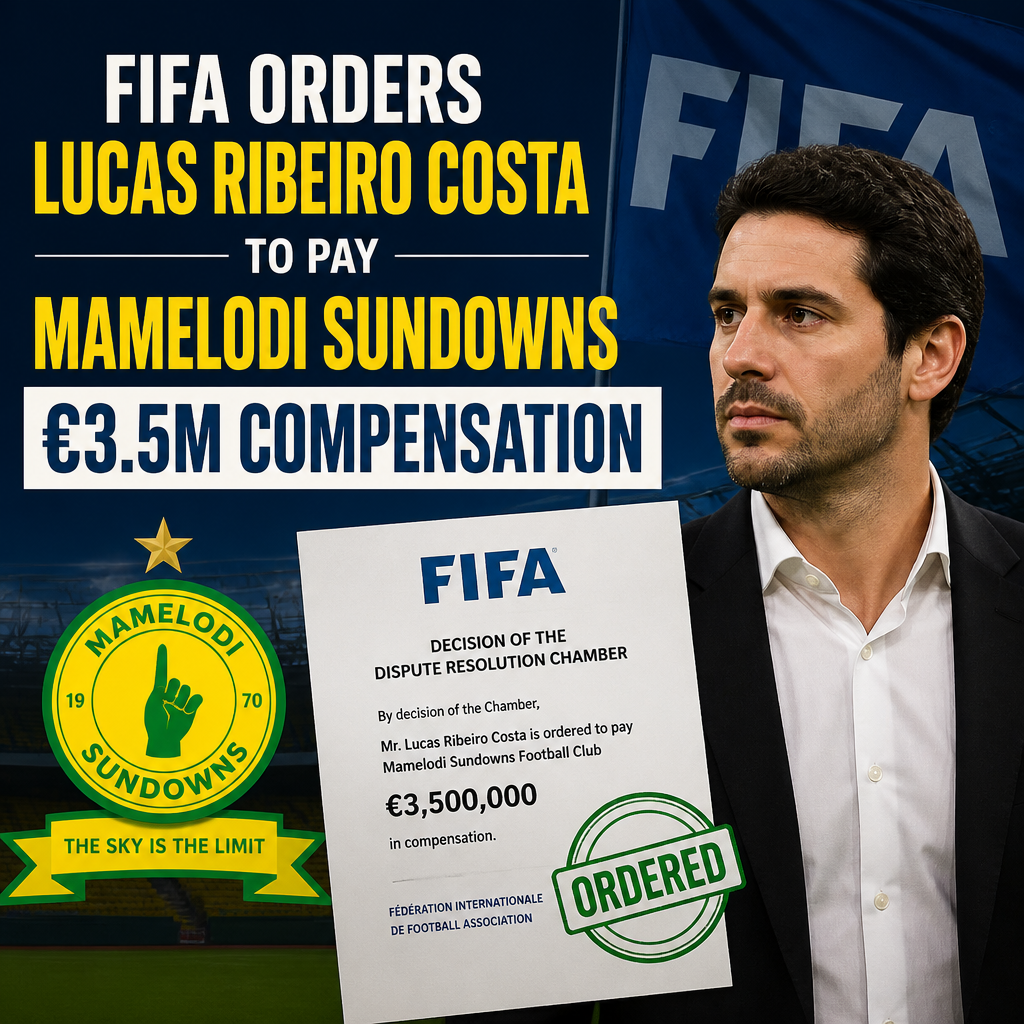
A recent development has emerged in the world of football regarding Brazilian forward Lucas Ribeiro Costa. FIFA’s Football Tribunal has reportedly ruled in favor of Mamelodi Sundowns, ordering Ribeiro Costa to pay a substantial compensation amounting to between €3.5 million and €4 million (approximately R66 million). This decision stems from a contract dispute that has kept football fans and insiders closely watching the situation unfold.
The Ruling: A Significant Financial Penalty
According to reports, FIFA’s tribunal mandated Lucas Ribeiro Costa to compensate Mamelodi Sundowns for terminating his contract prematurely. The dispute centers around Ribeiro’s early unilateral termination of his contract in August 2025, which Sundowns contested. The tribunal’s ruling emphasizes the importance of respecting contractual obligations in professional football and aims to set a precedent for future cases involving early contract termination.

Deadline and Possible Consequences
Lucas Ribeiro Costa now faces a strict deadline. He has 45 days to settle the compensation amount with Mamelodi Sundowns. Failure to comply within this timeframe could result in severe consequences including potential football bans and sanctions against him. These measures underline FIFA’s commitment to enforcing contract regulations and ensuring clubs and players fulfill their legal agreements.
Background of the Contract Dispute
Understanding the background helps clarify why this situation escalated to FIFA’s tribunal:
- Unilateral Contract Termination: In August 2025, Ribeiro Costa terminated his contract citing “just cause” based on revised FIFA regulations.
- FIFA’s Post-Diarra Ruling Adjustments: The cited just cause relates to updated FIFA policies following the Diarra ruling, which altered how contract disputes and terminations are handled.
- Blocked Transfer to Qatar SC: Prior to the termination, Mamelodi Sundowns blocked Ribeiro’s proposed move to Qatar SC, which reportedly contributed to his decision to seek contract termination on grounds of just cause.
Current Status: Playing Abroad Amid Legal Turmoil
Despite the ongoing legal and financial battle, Lucas Ribeiro Costa has continued his career on the pitch. After securing a temporary International Transfer Certificate (ITC), he signed with Spanish club Cultural Leonesa. This move has allowed him to keep playing while the contractual issues remain unresolved.
However, the ruling by FIFA and the financial penalty looming over Ribeiro Costa leave significant uncertainty about his future in professional football. Should Ribeiro fail to meet the compensation demands, his playing rights and transfers could be severely affected.
What This Means for Players and Clubs
This case serves as a critical example for both players and clubs regarding contract termination and transfer negotiations:
- Importance of Contractual Commitment: Players need to be cautious about unilateral contract terminations and ensure their reasons align with FIFA’s regulations to avoid penalties.
- Clubs’ Rights to Protect Interests: Clubs like Mamelodi Sundowns demonstrate that they can successfully defend their contractual rights and seek compensation when contracts are breached.
- Evolving FIFA Regulations: The changing landscape of FIFA’s contract dispute rules means both parties must stay informed and prepared for stricter enforcement.
Conclusion
The FIFA ruling ordering Lucas Ribeiro Costa to pay Mamelodi Sundowns between €3.5 million and €4 million underscores the high stakes of contract disputes in professional football. Ribeiro’s unilateral termination citing just cause, following his blocked transfer to Qatar SC, has led to significant financial and legal consequences.
With a 45-day deadline to make the payment, the situation remains tense and closely monitored by the football community. Ribeiro’s temporary shift to Cultural Leonesa keeps him active on the field, but the potential for bans and sanctions hangs over his career.
This case highlights the critical balance between players’ contract rights and obligations, as well as the mechanisms FIFA employs to ensure fair play off the pitch, emphasizing the adage that football is as much about regulations as it is about talent.
Stay tuned for further updates on this evolving story in the coming weeks.