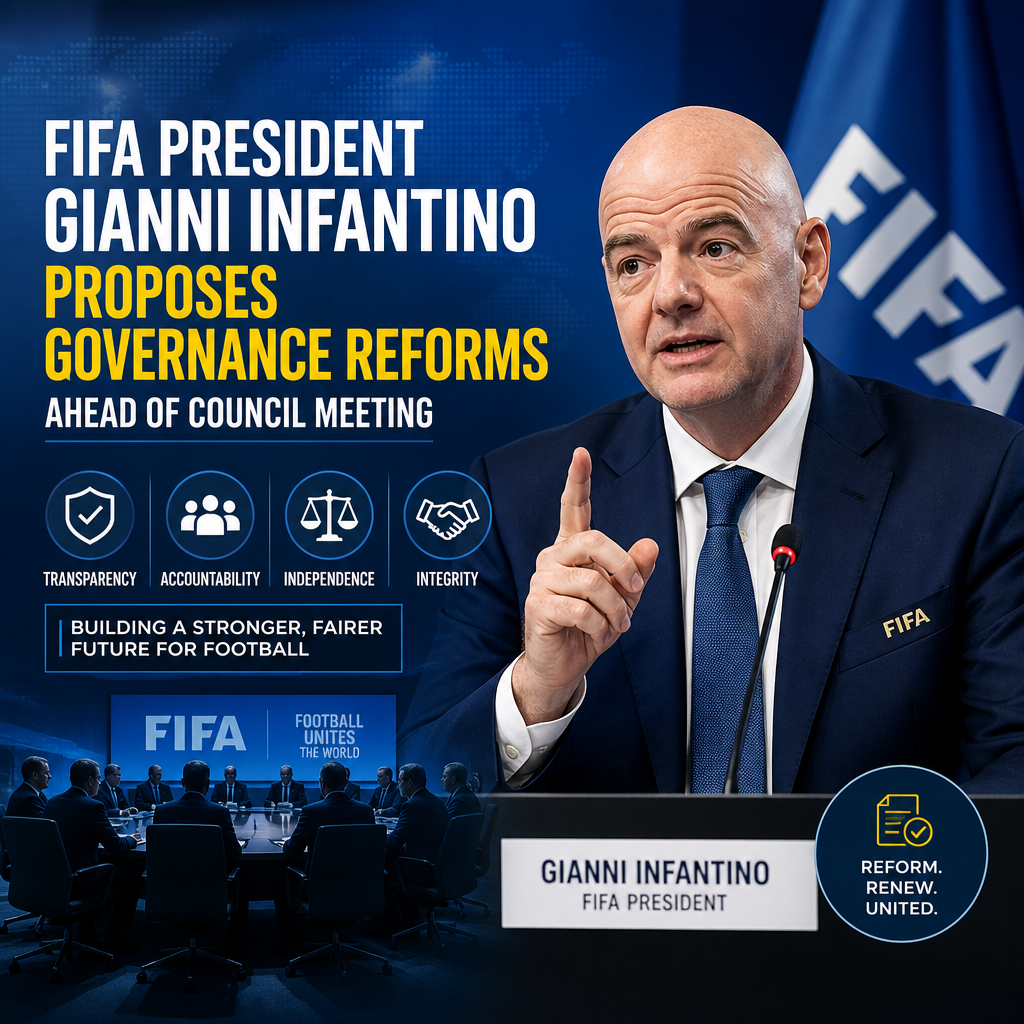
Gianni Infantino Opens Dialogue for FIFA Reform Amid Controversy
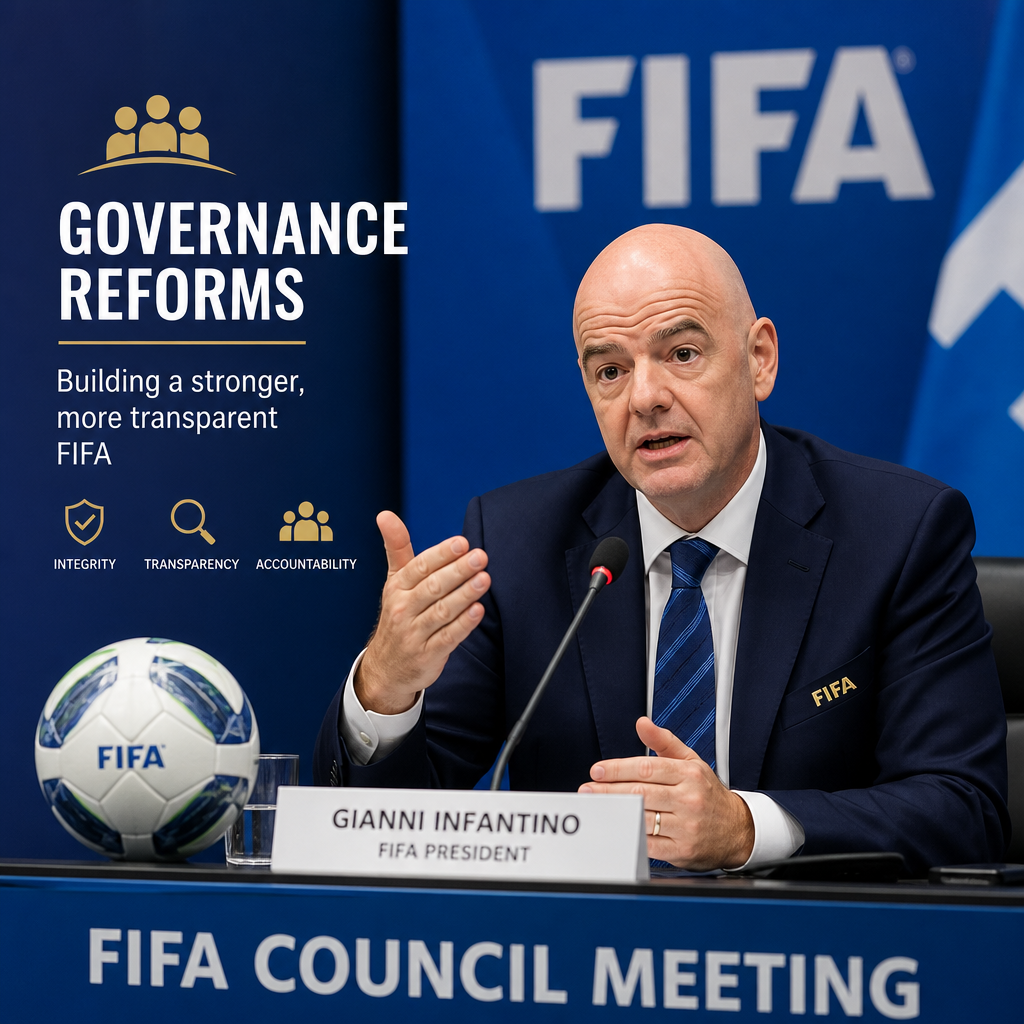
FIFA president Gianni Infantino has signaled his willingness to engage in discussions aimed at reforming world soccer’s governing body. In a recent letter addressed to FIFA Council members and the presidents of all 211 member associations, Infantino outlined his plans for potential governance reforms following the collapse of the controversial FIFA Forward Enterprise (FFE) proposal.
The Context: The Abandoned FIFA Forward Enterprise Proposal
The FFE initiative, which was abandoned before formal approval, proposed selling a 20% stake in FIFA’s commercial and event operations, including the men’s and women’s World Cups, to Thrive Eternal, a U.S.-based investment fund led by Joshua Kushner. The deal was valued at $4.2 billion and would have significantly altered FIFA’s financial landscape. However, the proposal leaked prematurely, stirring concern about transparency and decision-making within FIFA.

Despite the concerns, Infantino insists that the proposal “did not involve relinquishing FIFA’s control or authority over sporting decisions.” The plan was never finalized and was subject to the approval of both the FIFA Council and a majority of member associations before moving forward. Following strong backlash, the proposal was officially withdrawn.
Infantino’s Two-Pronged Reform Proposal
In the letter sent on Monday, which was seen by The Athletic, Infantino laid out two main proposals aimed at reforming FIFA’s governance structure ahead of the scheduled FIFA Council meeting on October 15:
- Independent External Review:
Infantino plans to ask the Council whether they want to commission an independent review of FIFA’s current governance framework for major strategic initiatives. The goal of this review would be to identify areas needing improvement to strengthen internal governance. - Structured, Time-Limited Consultation:
He proposes establishing a direct consultation phase involving confederations, member associations, and relevant stakeholders. This process would focus on clarifying the roles of FIFA’s governing bodies—such as the President, Bureau, Council, and Congress—and seek ways to enhance transparency, participation, and accountability in major decision-making processes.
Emphasis on Transparency and Democratic Processes
Infantino underscored that FIFA’s democratic processes and sporting authority “were never for sale” and stressed that these principles remain central to the organization’s identity. He acknowledged that the premature leak of the FFE proposal caused misunderstandings and concerns but emphasized that no decisions had been finalized.
“A worthwhile objective must be matched by a process that commands confidence,” Infantino wrote.
“Major ideas must be developed, tested, and communicated through clear and trusted institutions.”
This statement reflects an awareness of the need to rebuild trust and improve FIFA’s internal decision-making mechanisms following the controversy.
Ongoing Legal and Political Tensions
The FFE controversy is one of several issues placing Infantino under intense scrutiny. He currently faces a legal filing in the United States in which UEFA, European football’s governing body, accuses him of “criminal mismanagement.” FIFA has responded by accusing UEFA of conducting a “smear campaign” against its president.
Despite public calls from UEFA President Aleksander Ceferin and Concacaf President Victor Montagliani for Infantino to step down, the FIFA chief has reaffirmed his intent to run for re-election in March 2024.
What’s Next for FIFA?
Infantino’s open call for dialogue and governance reform is a critical step in addressing the controversies surrounding FIFA’s operations. The upcoming FIFA Council meeting will be pivotal, as members weigh whether to move forward with Infantino’s proposed review and consultation processes.
Key Points to Watch:
- Independent Review Commissioning: Will the FIFA Council approve an external assessment of governance?
- Consultation Process: How will member associations and confederations be involved in shaping FIFA’s future governance?
- Election Dynamics: How will ongoing legal battles and leadership controversies influence the FIFA presidential election?
Conclusion
Gianni Infantino’s letter highlights a new phase for FIFA—one that recognizes the importance of transparency, accountability, and inclusive governance. While the controversial FFE proposal has been shelved, FIFA’s ambition to invest in global football development remains intact. The challenge lies in renewing confidence through stronger, clearer processes that involve all stakeholders in steering world soccer’s future.
As the controversy unfolds and reforms are debated, FIFA stands at a crossroads, with the potential for significant changes to how the organization operates and interacts with its vast global membership. Fans, players, and officials alike will be closely watching the outcomes of these upcoming discussions.