Highest-Paid National Team Managers in Football
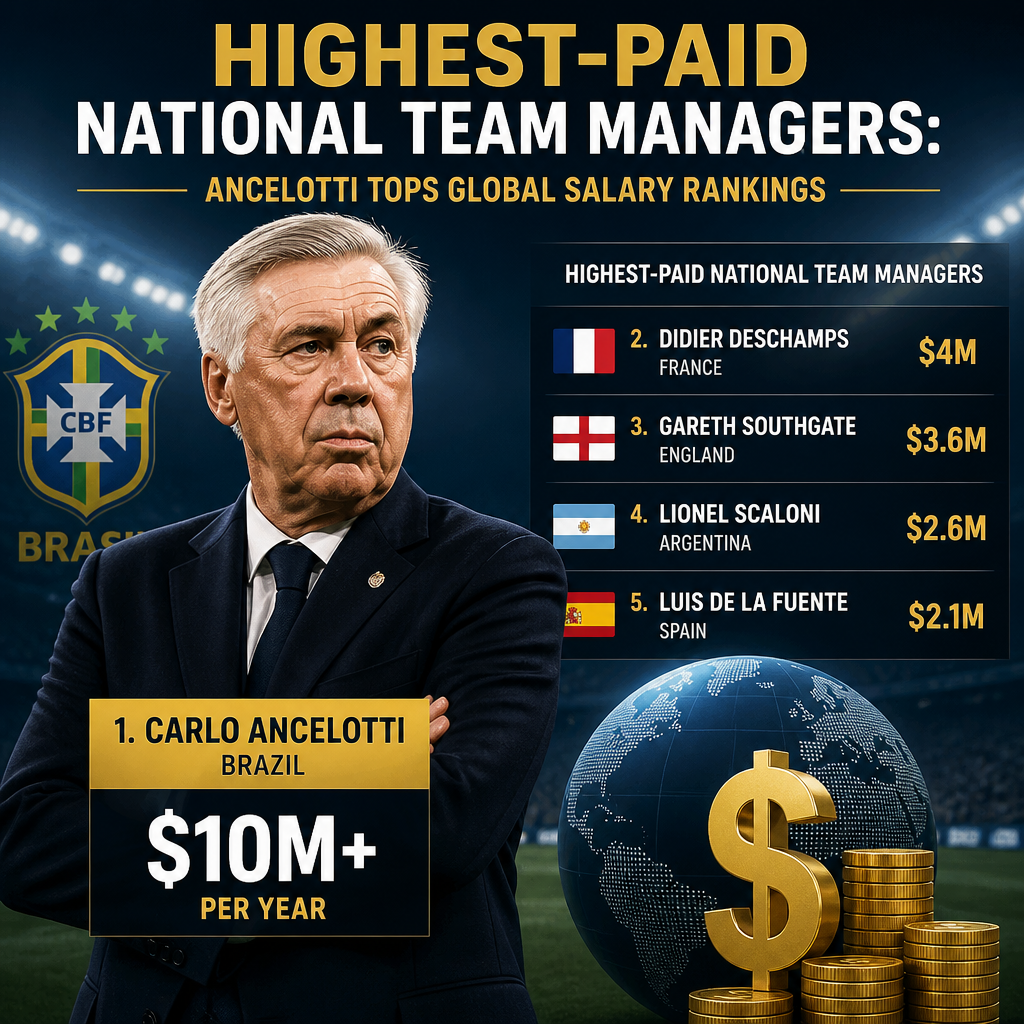
In the world of football, managerial salaries can often mirror the prestige and expectations associated with coaching elite teams. Internationally, the focus is on a handful of standout managers who lead national teams with exceptional pay packages, reflecting their experience, reputation, and the importance their countries place on football success.
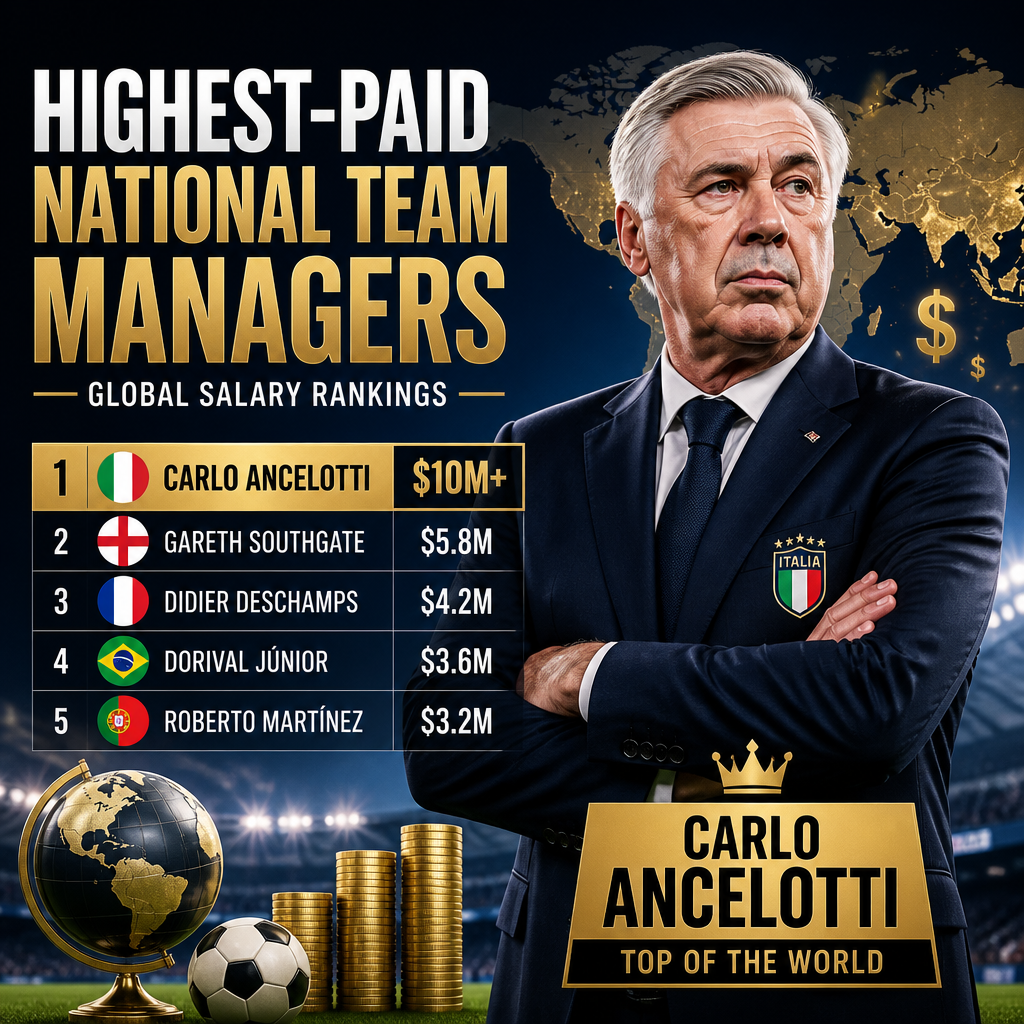
Brazil’s Carlo Ancelotti: The Top-Paid National Team Manager
Currently, Carlo Ancelotti leads the global rankings as the highest-paid national team manager. Coaching Brazil’s national team, Ancelotti earns an impressive annual salary of approximately €10 million (£8.4 million). This significant salary underlines the value Brazil places on football excellence, as they entrust one of the game’s most respected minds to lead them on the international stage.

Germany’s Jürgen Klopp: A Close Second
Following Ancelotti in the rankings is Germany’s Jürgen Klopp, who commands an estimated salary of €7 million (£5.9 million) per year as head coach of the German national team. Klopp’s reputation as a transformative manager in club football has earned him a major role with the national side, and his pay reflects his standing in both the domestic and international arenas.
Comparing National and Club Manager Salaries
While national team managers earn substantial salaries, the football world shows even higher salary figures at the club level. This is especially notable when comparing the earnings of international coaches with the highest-paid club managers, who benefit from multi-million-pound deals at some of the world’s richest football clubs.
Highest-Paid Club Managers: Leading the Payroll
At the club level, Simone Inzaghi stands out as the best-paid football coach globally. Currently managing Al-Hilal, Inzaghi earns an estimated net salary of around £22.3 million (€26 million / $30 million) annually, a salary that dwarfs those offered to many national team managers. His paycheck highlights the rising financial investment in club football, particularly in certain global leagues.
Here’s a quick overview of the top-earning football club managers:
| Coach | Club | Estimated Annual Salary |
|---|---|---|
| Simone Inzaghi | Al-Hilal | £22.3 million |
| Diego Simeone | Atlético Madrid | £20.1 million |
| Pep Guardiola | Manchester City | £20.7 million |
| Mikel Arteta | Arsenal | £15.0 million |
| Luis Enrique | Paris Saint-Germain | £12.0 million |
The Financial Power of Club Football
These staggering salaries reflect club football’s commercial power, fueled by broadcasting rights, sponsorship deals, and global fanbases. Clubs are increasingly willing to offer massive contracts to attract and retain top-tier managers who can deliver trophies and elevate brand value.
Why the Pay Gap Between National and Club Managers?
There are several reasons for the salary difference between national team managers and club managers:
- Revenue Generation: Clubs generate income year-round through ticket sales, merchandising, TV rights, and sponsorships, allowing bigger budgets for staff salaries.
- Continuous Engagement: Club managers oversee teams daily and compete in multiple competitions annually, justifying higher salaries.
- Shorter Contracts: Club contracts are often shorter and heavily performance-based, leading clubs to pay more to secure top talent.
- National Team Schedules: National coaches work fewer matches and training sessions, reducing the financial demand compared to club football.
Conclusion
The landscape of football management salaries is complex and varied. While Carlo Ancelotti and Jürgen Klopp lead the way among national team managers with hefty annual earnings, club football continues to dominate when it comes to paychecks. Managers like Simone Inzaghi, Pep Guardiola, and Diego Simeone have set the bar high, reflecting the lucrative nature of the club side of the game.
As football evolves and leagues grow richer, it will be interesting to see how salary trends for national and club managers develop in the coming years. For now, the divide remains pronounced, with club managers often commanding the highest salaries worldwide.