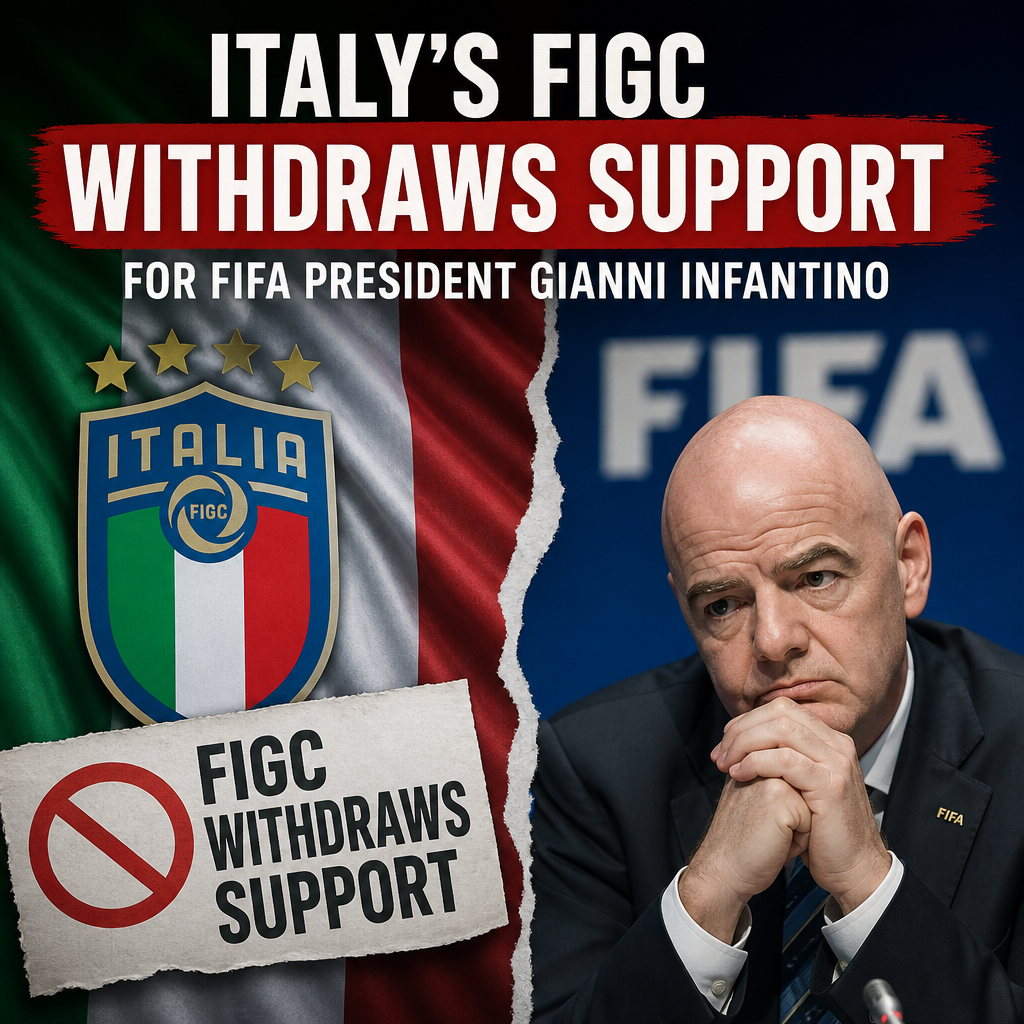
Italy’s Football Federation Withdraws Support for FIFA President Gianni Infantino
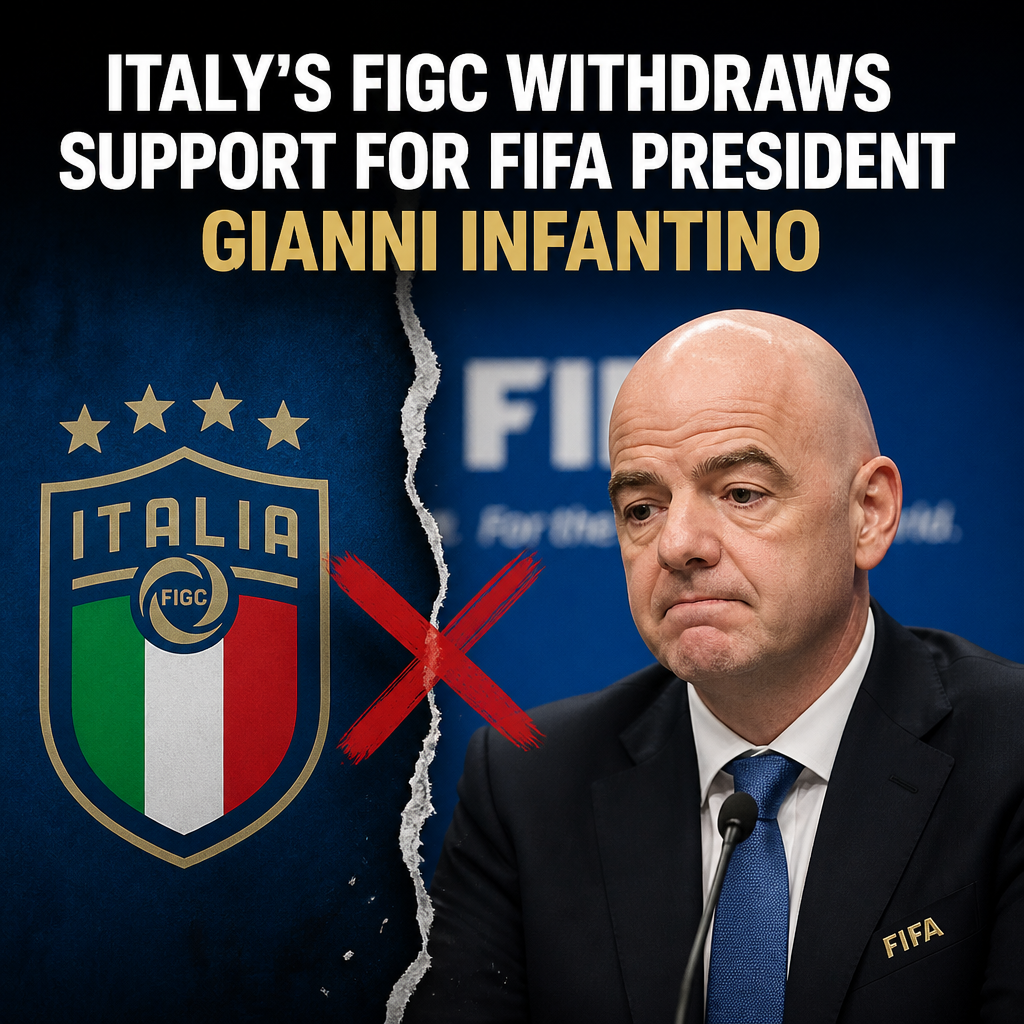
The Italian Football Federation (FIGC) has officially withdrawn its support for FIFA president Gianni Infantino amid growing controversy surrounding his leadership and recent initiatives. This significant move aligns Italy with several other European football associations that have also distanced themselves from Infantino ahead of next year’s FIFA Congress, where he is seeking re-election.
The Background: Controversy over World Cup Stake Sale
Gianni Infantino, who has been at the helm of FIFA since 2016, recently proposed an ambitious plan to introduce private investment into FIFA competitions, including the World Cup. The idea involved selling stakes in the World Cup to private investors, a move intended to secure significant funding for the sport’s development. However, this attempt has been met with widespread criticism and ultimately was abandoned due to opposition from member associations and governing bodies.

The FIGC’s withdrawal of support comes amid this fallout, reflecting broader unease in European football circles about the implications of such commercialization and the governance direction under Infantino.
FIGC’s Statement: A Clear and Transparent Position
In an official statement issued on Wednesday, FIGC outlined the reasons behind its decision:
“This decision is intended to clearly and transparently express the FIGC’s position regarding the recent initiatives promoted by the FIFA president concerning the governance and development of international competitions.”
The federation stressed the importance of maintaining football’s core principles while advancing the sport sustainably and transparently. Italy’s football leadership emphasized the need for a governance model based on dialogue and shared responsibility, rather than controversial commercial ventures.
European Federations Rally Against Infantino
Italy’s decision follows a trend among several prominent European football associations that have already withdrawn their support for Infantino. Notable countries include:
- England
- Ireland
- Wales
Many of these federations have voiced concerns over FIFA’s recent governance approach and the potential risks posed by Infantino’s plans to privatize elements of FIFA’s flagship events.
UEFA’s Position and the Threat of Boycott
UEFA, the governing body of European football, has also taken a firm stance against Infantino’s proposals. In light of the escalating tensions, UEFA has threatened a boycott of FIFA competitions, signaling serious discord between European football’s continental authority and FIFA’s global leadership.
Giovanni Malagò, head of FIGC, underscored a commitment to UEFA’s vision:
“We will continue to work alongside UEFA and the other European federations to promote a vision of football based on merit, solidarity, sustainability, and the central role of the fans.”
Malagò highlighted the importance of football’s founding principles and insisted that Italy’s federation remains dedicated to a collaborative and inclusive governance model.
Infantino’s Leadership and Legacy
Gianni Infantino, 56, rose to prominence as UEFA’s secretary general before succeeding Sepp Blatter as FIFA president in 2016. Initially enjoying broad support from European nations, his tenure has recently come under scrutiny, raising questions about the long-term direction of global football governance.
The fallout over the proposed sale of World Cup stakes has intensified calls for accountability and greater transparency within FIFA. With major European federations withdrawing their backing, Infantino faces mounting challenges to his leadership and prospects for re-election.
What Lies Ahead?
The withdrawal of support by FIGC and other European associations marks a pivotal moment for FIFA and the future of international football governance:
- Re-Election Uncertainty: Infantino’s bid for a new term at next year’s FIFA Congress now faces significant opposition.
- Governance Reforms: Calls for reforming FIFA’s governance structure are likely to intensify.
- Fan and Member Association Influence: There is growing emphasis on placing fans and member associations at the heart of football’s development.
- Collaboration with UEFA: The relationship between FIFA and UEFA will remain critical, as European football plays a vital role in the sport’s global ecosystem.
Italy’s national football federation’s decision reflects a broader shift in European football attitudes, signaling heightened demand for transparent leadership and governance that honors football’s traditions while embracing sustainable growth. The coming months will reveal how these dynamics unfold on the global stage and what future path FIFA will take under or beyond Gianni Infantino’s leadership.