The Historic Ball from Argentina’s 1986 Quarter-Final Victory Sells for £2.5 Million
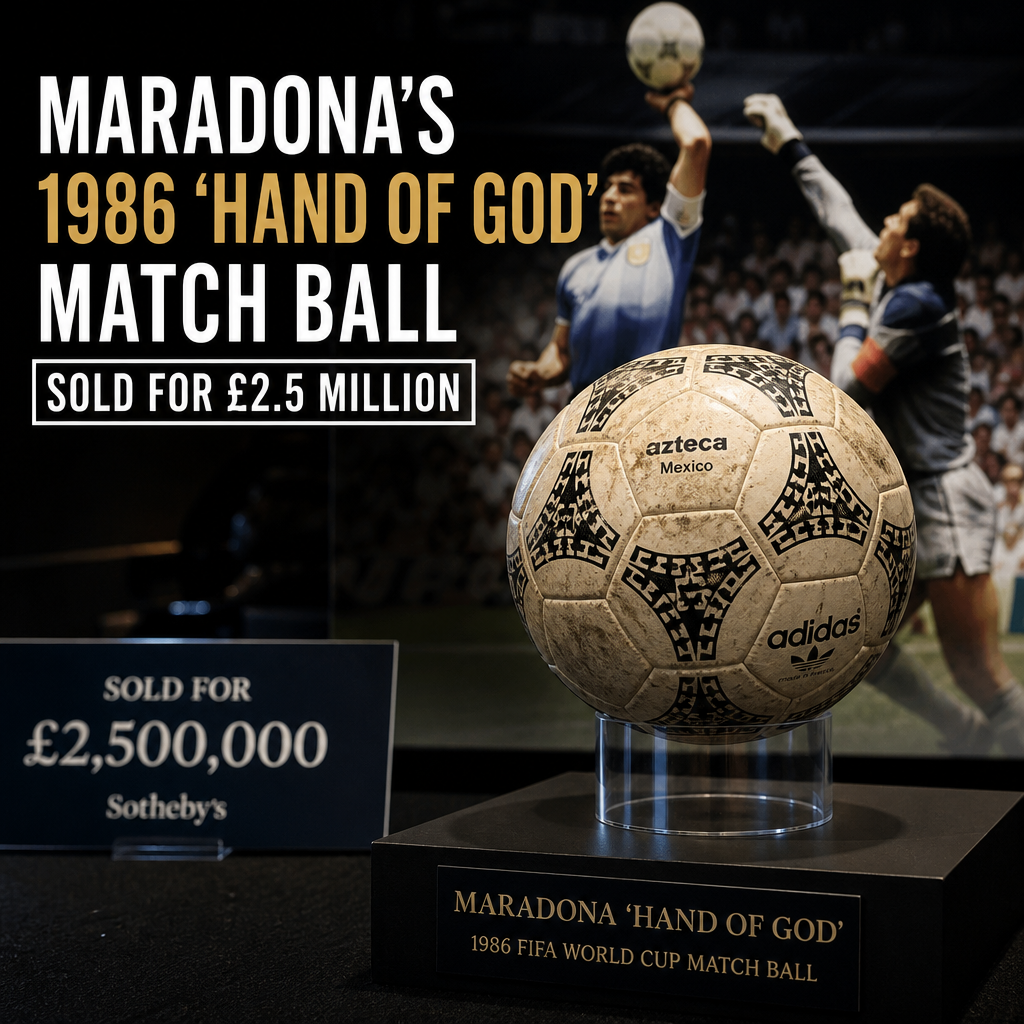
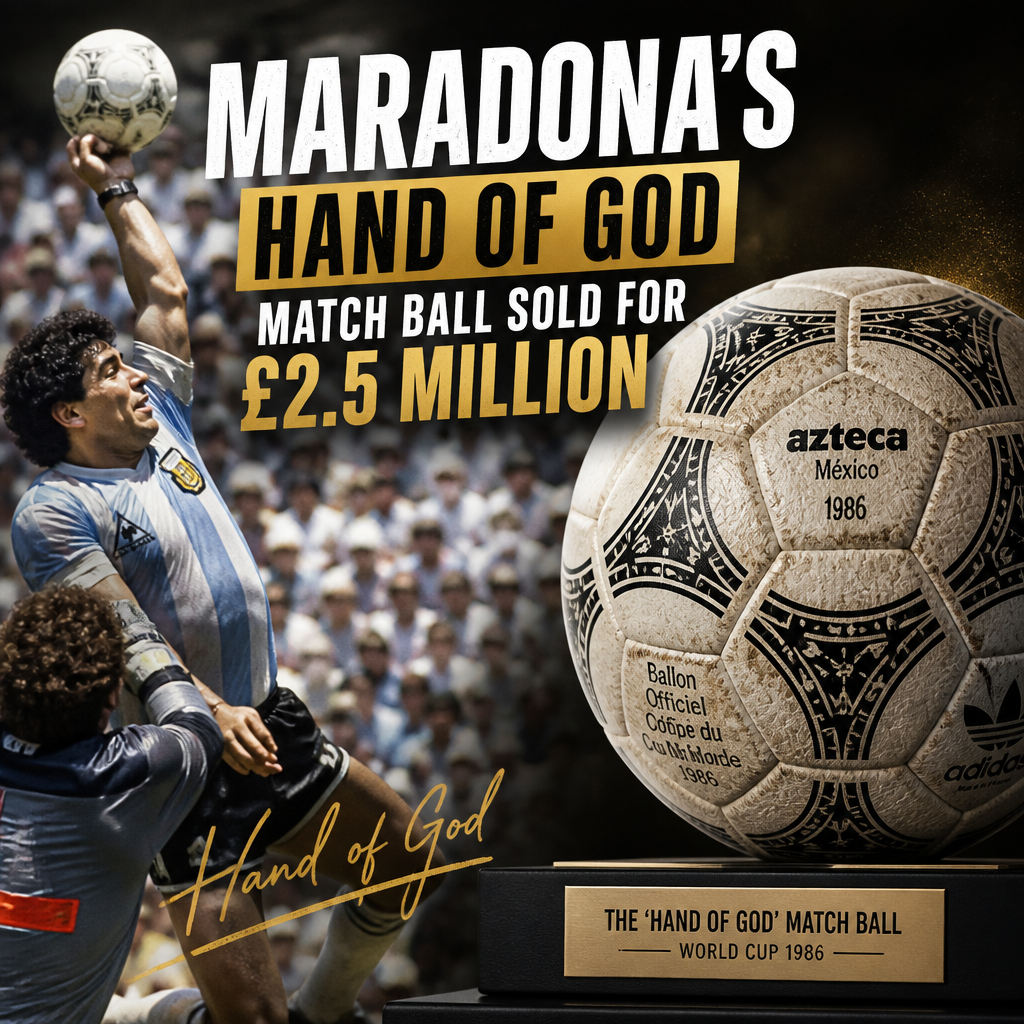
One of the most iconic moments in football history was sealed with a single ball — the very ball used in Argentina’s unforgettable 2-1 win over England on 22 June 1986. This ball, forever linked to Diego Maradona’s legendary “Hand of God” goal and his breathtaking solo “Goal of the Century,” has now been sold for an astonishing £2.5 million at Heritage Auctions in the United States.
A Ball Steeped in Football Legend
The quarter-final match between Argentina and England in the 1986 FIFA World Cup is etched into football folklore. Just four minutes apart, Maradona scored two of the most debated and celebrated goals in the sport’s history. The infamous “Hand of God” goal saw him use his hand to punch the ball into the net — an action unseen by Tunisian referee Ali Bin Nasser, who kept the ball after the match.

Soon after, Maradona scored what is widely regarded as the “Goal of the Century,” dribbling past five English players in a spectacular solo run before shooting the ball into the net. The ball used in both of these moments occupies a special place in the hearts of football fans worldwide.
From the Referee’s Possession to the Auction Block
After the match, Ali Bin Nasser held onto the ball for 36 years, preserving a piece of football history. The referee eventually sold the ball at auction in 2022 for around £2 million. Fast-forward four years, and the ball was resold for $3.35 million (£2.5 million) — though it was initially expected to fetch as much as $10 million (£7.3 million) according to the BBC.
How Does This Sale Compare?
While the ball’s price tag is staggering, it still falls short of some notable sports memorabilia records. For instance:
- Maradona’s shirt from the same game, worn during these iconic goals, sold for nearly $9.3 million (£6.8 million) in 2022.
- Shohei Ohtani’s 50th home-run ball fetched $4.4 million (£3.2 million) in 2024, setting a record for a sports ball.
Despite not breaking these records, the ball remains one of the most valuable sports collectibles ever auctioned and is expected to increase in value over the coming decade.
What Makes the Ball So Valuable?
Heritage Auctions’ production manager Mike Provenzale, an expert with two decades of experience at the company, explained the ball’s unique significance in a conversation with The Athletic.
“I worked at Heritage for 20 years and there’s been a lot of items that when they arrived, they just shut down the whole department. This is on that list.”
What makes this ball truly exceptional is not just the association with Maradona’s two goals but the detailed provenance that connects it directly to both moments. The ball was photo-matched to confirm it was the exact match ball used for those historic strikes.
“It’s an item so iconic, even people who don’t know anything about soccer or know the event can realise the value behind the ball. Having it photo matched to both goals is just the cherry on top,” Provenzale added.
Speaking to Reuters before the auction, he also described the ball as:
“A true one-of-one item. Arguably the most significant soccer item that exists.”
The Legacy of the 1986 Match and Its Memorabilia
The 1986 quarter-final match left a lasting impact on football culture, and its memorabilia continue to attract collectors and fans alike. The “Hand of God” goal remains one of the most talked-about moments, sparking debates over sportsmanship, controversy, and sheer genius.
Collecting iconic sports memorabilia like this ball offers fans a tangible connection to moments that define the sport. Owning such items isn’t just about value — it’s about preserving history.
Looking Ahead: The Future Value of Iconic Football Memorabilia
Football memorabilia has grown massively in popularity and value in recent years, driven by a booming sports collectibles market. This ball’s sale price is already impressive, but experts predict its value could soar in future decades as the legend of Maradona and the 1986 World Cup continues to captivate new generations.
Conclusion
The ball from Argentina’s 2-1 quarter-final victory over England in the 1986 World Cup is more than just a piece of leather; it’s a symbol of sporting history, controversy, and brilliance. Its recent sale for £2.5 million underscores the incredible appeal of such memorabilia — captivating even those who might never have watched a game of soccer. As the legend lives on, so too does the enduring value of the ball that helped write it.