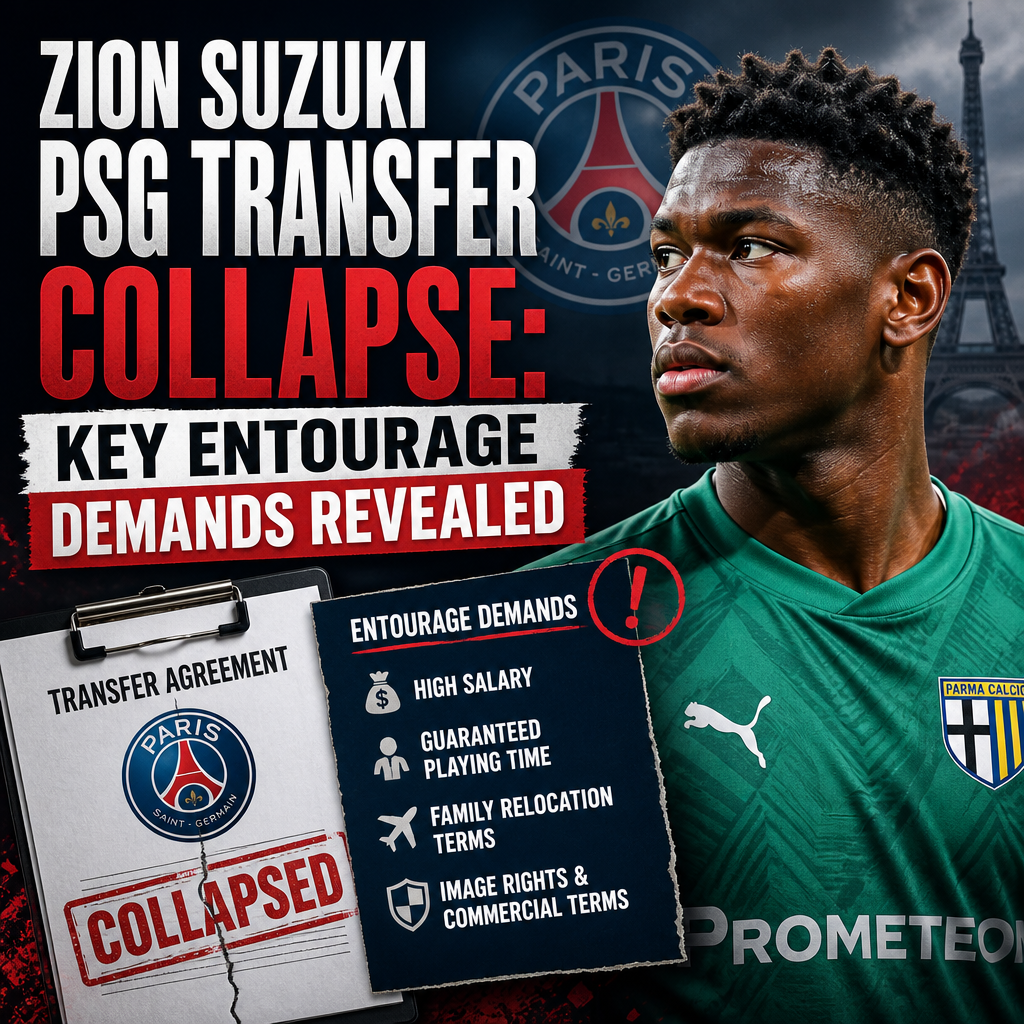
The Three Demands That Sank Zion Suzuki’s Move to PSG
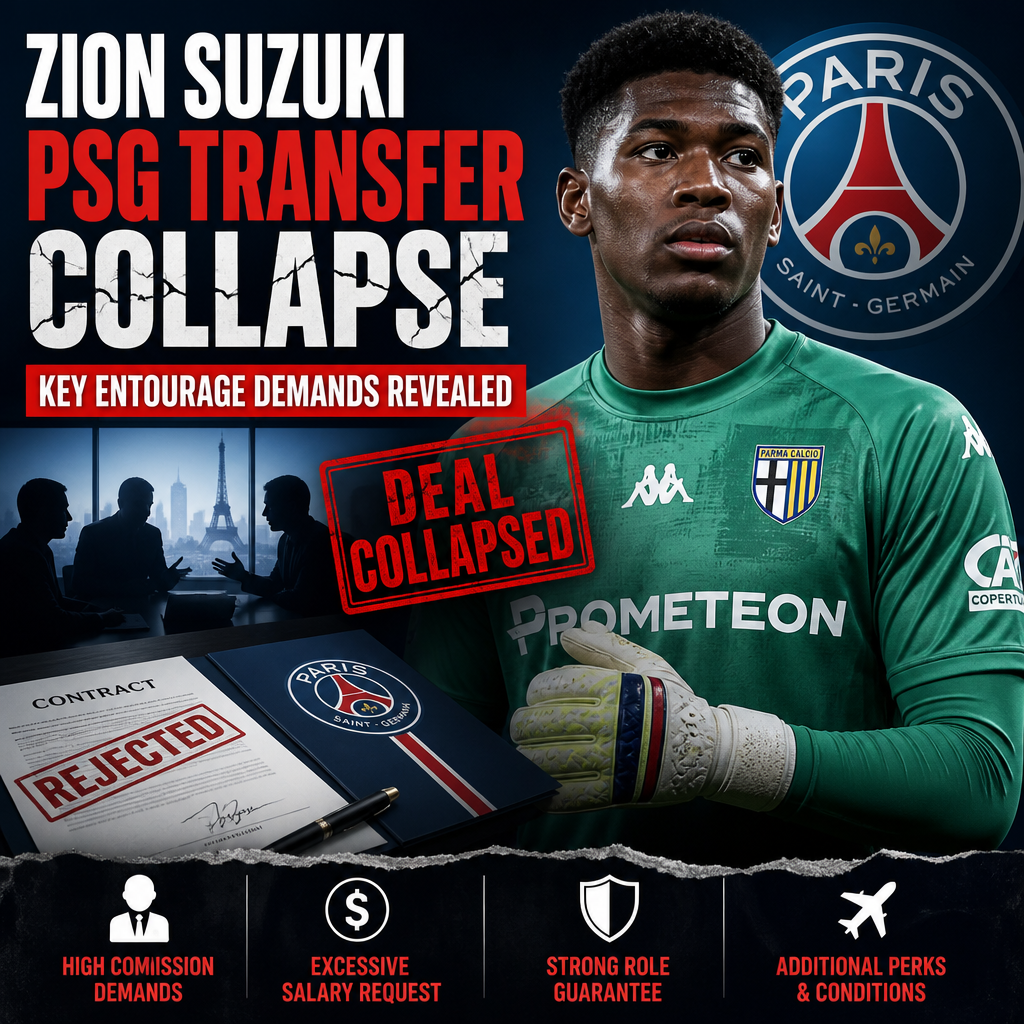
In the high-stakes world of football transfers, negotiations can often collapse over seemingly straightforward conditions. One recent example is the failed transfer of Japanese goalkeeper Zion Suzuki to Paris Saint-Germain (PSG). Despite initial enthusiasm, the deal ultimately fell through due to three key demands from Suzuki’s entourage. These demands not only complicated negotiations but also led PSG to walk away from the potential signing.
Let’s break down the three major demands that caused the collapse of Zion Suzuki’s move to PSG.

1. €5 Million Agent Fees upon Signing
The first stumbling block in the transfer process was the significant agent fee requested by Suzuki’s representatives.
- Demand: A hefty €5 million in agent fees to be paid immediately upon signing.
- Impact: This sum significantly increased the overall cost of the deal for PSG.
- PSG’s perspective: While agent fees are common in football transfers, this amount was unusually high and added financial pressure on the club, which was already managing a strict wage and transfer budget.
Agent fees are often negotiable, but in this case, the €5 million demand acted as a red flag for PSG, raising concerns about the overall financial viability of the transfer.
2. Guaranteed No.1 Status from 2027
The second demand centered around Suzuki’s future role in the team.
- Demand: A guarantee that Suzuki would be PSG’s No.1 goalkeeper starting in 2027.
- Implication: This meant that for at least two years, Suzuki would not necessarily be the first choice but would be assured the top spot thereafter.
- Why this matters: A guaranteed starting position is rare, especially at a club like PSG where competition for spots is fierce and based on performance.
- PSG’s challenge: Committing to a long-term guaranteed role for a young player limited the club’s flexibility to manage their goalkeeping roster and adapt based on future performance.
This demand reflected Suzuki’s ambition and the entourage’s desire to secure the player’s future role but clashed with PSG’s strategic team-building approach.
3. Any Loan Move Must Be to a Champions League Club
The third and final demand was related to potential loan arrangements.
- Demand: If Suzuki were to be loaned out, it had to be exclusively to a club competing in the UEFA Champions League.
- Reasoning: This clause aimed to ensure that even if Suzuki was not immediately part of PSG’s starting eleven, he would continue playing at the highest level of European football.
- Consequences: Such a restrictive loan condition drastically reduced the pool of possible clubs available for Suzuki’s development.
PSG found this demand too limiting because:
- It hindered their ability to loan Suzuki to clubs where he might get more guaranteed playing time but aren’t involved in the Champions League.
- The restriction reduced opportunities for Suzuki to gain experience and develop without being benched at elite clubs.
Why PSG Walked Away
After reviewing these demands, PSG decided the transfer was no longer in their best interest. The financial strain of the €5 million agent fee, combined with the restrictive sporting conditions around Suzuki’s playing time and loans, made the deal untenable.
PSG’s ultimate decision highlights several key points about modern football transfers:
- Negotiations involve more than just transfer fees: Agent demands and contract clauses can heavily impact final decisions.
- Clubs need flexibility: Guaranteeing future starting roles or limiting loan destinations can disrupt team strategy and player development plans.
- Financial prudence remains crucial: Clubs must balance ambition with realistic budgets, especially when demands inflate the cost significantly.
What This Means for Zion Suzuki
While the collapse of the PSG move might be disappointing, these demands also demonstrate the confidence Suzuki’s camp has in the player’s potential.
- By pushing for long-term starting guarantees and Champions League-level playing time, Suzuki’s entourage is positioning him as a future top goalkeeper on the biggest stages.
- However, finding the right balance between ambition and practicality will be essential for Suzuki’s next career step.
For PSG, this experience serves as a reminder of the complexities involved in recruiting young talent from abroad, especially when entourages play a sizable role in negotiations.
Conclusion
The failed transfer of Zion Suzuki to PSG underscores how the intricacies of contract demands and agent fees can derail even promising moves. The trio of demands — €5 million agent fees upfront, guaranteed No.1 status from 2027, and exclusive Champions League loan clauses — created an unsustainable deal for PSG, culminating in their decision to walk away.
As the transfer market evolves, clubs and players alike must navigate these challenges carefully to find agreements that support both sporting ambitions and financial realities. For Zion Suzuki, the story is far from over, and it will be interesting to see where his career heads next.