Real Madrid Presidential Race Heats Up Over Controversial Club Ownership Proposal
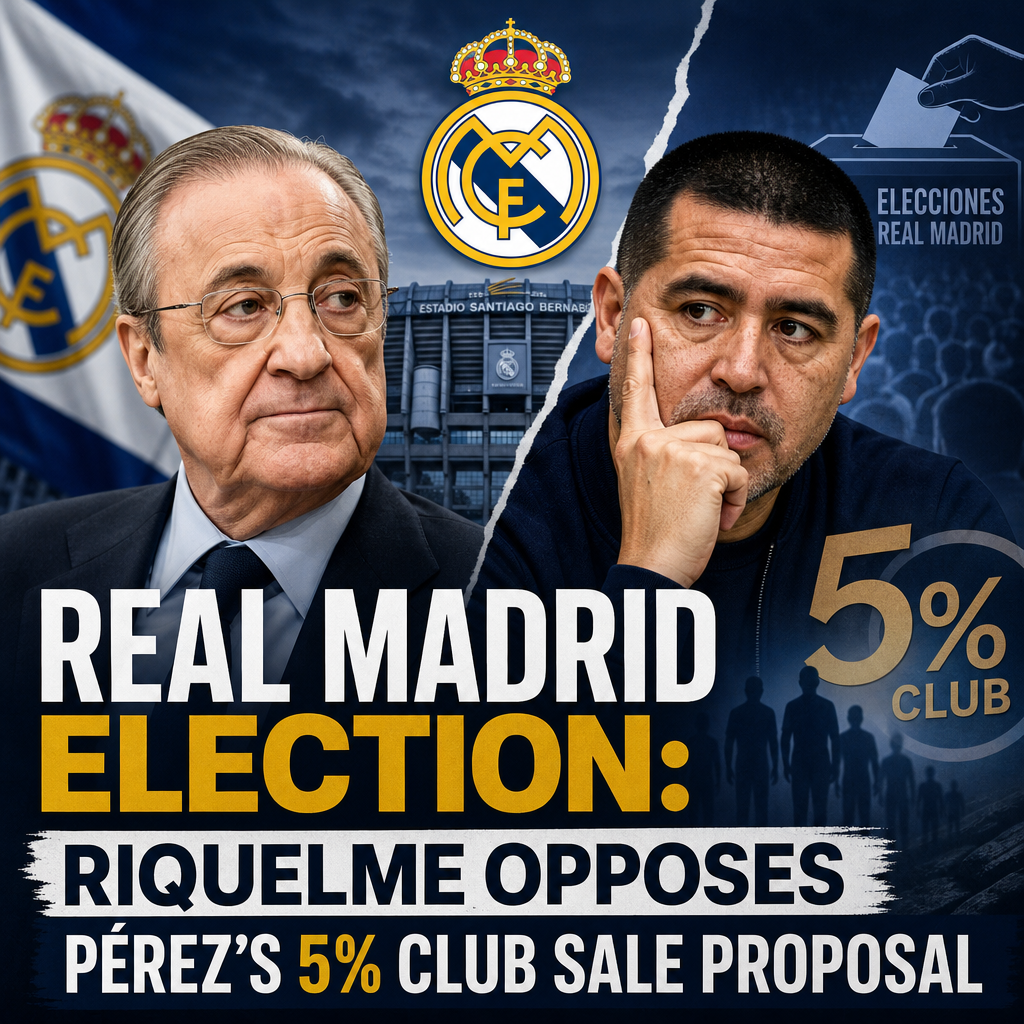
As Real Madrid prepares for one of its most consequential presidential elections in recent history, the spotlight has turned fiercely onto proposals that could reshape the future ownership and financial landscape of the club. The upcoming vote pits incumbent Florentino Pérez against challenger Enrique Riquelme, with the key point of contention being Pérez’s controversial plan to sell a portion of the club to an external investor.
The Candidates and The Stakes
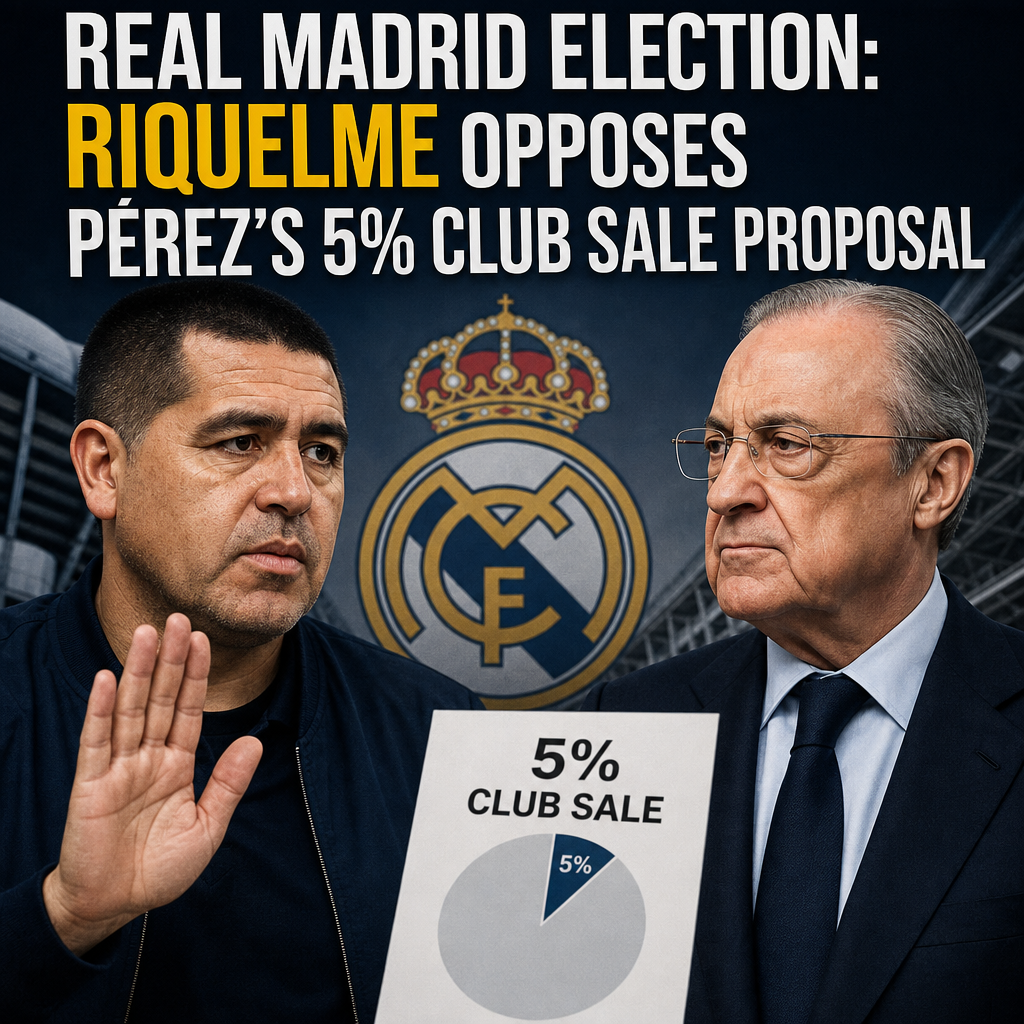
Real Madrid’s presidential election, scheduled for Sunday, marks the first contested vote since 2006. Florentino Pérez, 79, has held the presidency uninterrupted since 2009 and seeks another term. His challenger, Enrique Riquelme, 37, is a renewable energy entrepreneur and a relative newcomer to Real Madrid’s political arena.

Both candidates bring vastly different visions for the club’s future, especially in terms of ownership and financial strategy. The attention centers primarily on Pérez’s proposal to sell 5% of the club to an investor, a suggestion that Riquelme vehemently opposes.
Florentino Pérez’s Proposal: Selling 5% of Real Madrid
Pérez’s plan, first introduced in a speech to club members last November, aims to institutionalize external investment while retaining member ownership.
- The Proposal: Allow a 5% stake in Real Madrid to be purchased by an external partner.
- Rationale: Pérez argues this would “help fix a value” for the club, provide fresh capital, and reinforce the club’s economic stability.
- Structure: The external investment would be held in a subsidiary owned by club members, implying that the club itself remains member-owned.
Pérez insists this change is necessary to keep Real Madrid competitive in a rapidly evolving football business landscape. He emphasizes that investors would be carefully selected to respect Real Madrid’s deeply rooted values.
In a recent interview with El País, Pérez reinforced his commitment to this plan, underscoring the importance of adapting the club’s ownership model for long-term sustainability.
Enrique Riquelme’s Response: “Crossed a Red Line”
In contrast, Enrique Riquelme has taken a strong stance against any dilution of the club’s member ownership.
- Strong Rejection: Riquelme stated that Pérez “has crossed a red line” with the proposal.
- Public Commitment: He plans to visit a notary to publicly commit to never selling any part of Real Madrid to third parties.
- Call to Pérez: Riquelme has invited Pérez to join him in making this commitment.
- Alternative Plans: He proposes other ways to increase income and reduce costs without compromising the club’s ownership model.
Riquelme represents the traditionalist view held by many club members, favoring Real Madrid’s historic status as a member-run institution. Real Madrid is one of four Spanish clubs—alongside Barcelona, Athletic Club, and Osasuna—operating under this structure rather than as publicly traded companies.
The Broader Context: Ownership Models in Spanish Football
The debate goes beyond internal club politics, touching on wider discussions about the future of football club ownership in Spain and Europe.
Member-Owned Clubs
- Real Madrid, Barcelona, Athletic Club, Osasuna: Run by club members (socios), with elected presidents.
- Advantages: Preservation of club heritage, democratic governance.
- Challenges: Limited access to external capital, financial constraints.
Public Limited Companies
- Most Other Professional Clubs: Operate as Sociedad Anónima Deportiva (S.A.D) – football public limited companies.
- Advantages: Easier to attract investments, flexible financial management.
- Challenges: Risk of losing connection with the fanbase and member influence.
Pérez’s suggestion to partially open Real Madrid to outside investors signals a potential shift, seeking a hybrid model that balances financial needs with member ownership.
What Does This Mean for Real Madrid?
The election result will have a profound impact on the future governance and financial direction of one of the world’s most prestigious football clubs.
- If Pérez Wins: The club may take a cautious step toward opening up ownership, potentially fixing its valuation and increasing capital reserves for sporting excellence and infrastructure.
- If Riquelme Wins: Real Madrid will maintain its pure member-owned model, focusing on internal financial reforms without external investment.
Both candidates attended Real Madrid’s women’s team 2-0 victory over Granada on Sunday, reflecting their shared desire to represent the club’s interests at all levels.
Conclusion
The Real Madrid presidential election is more than a contest of personalities. It is a defining decision on how the club balances tradition with transformation in an increasingly commercialized football world. As members prepare to cast their votes, the debate over the sale of a 5% stake encapsulates the fundamental question: should Real Madrid evolve its ownership structure to embrace investment, or preserve its cherished member-run heritage at all costs?
Whatever the outcome, this election will mark a critical chapter in the history of Real Madrid, shaping its path for years to come.