Davey Calls for Argentina Players to Be Banned After Falkland Islands Banner Incident
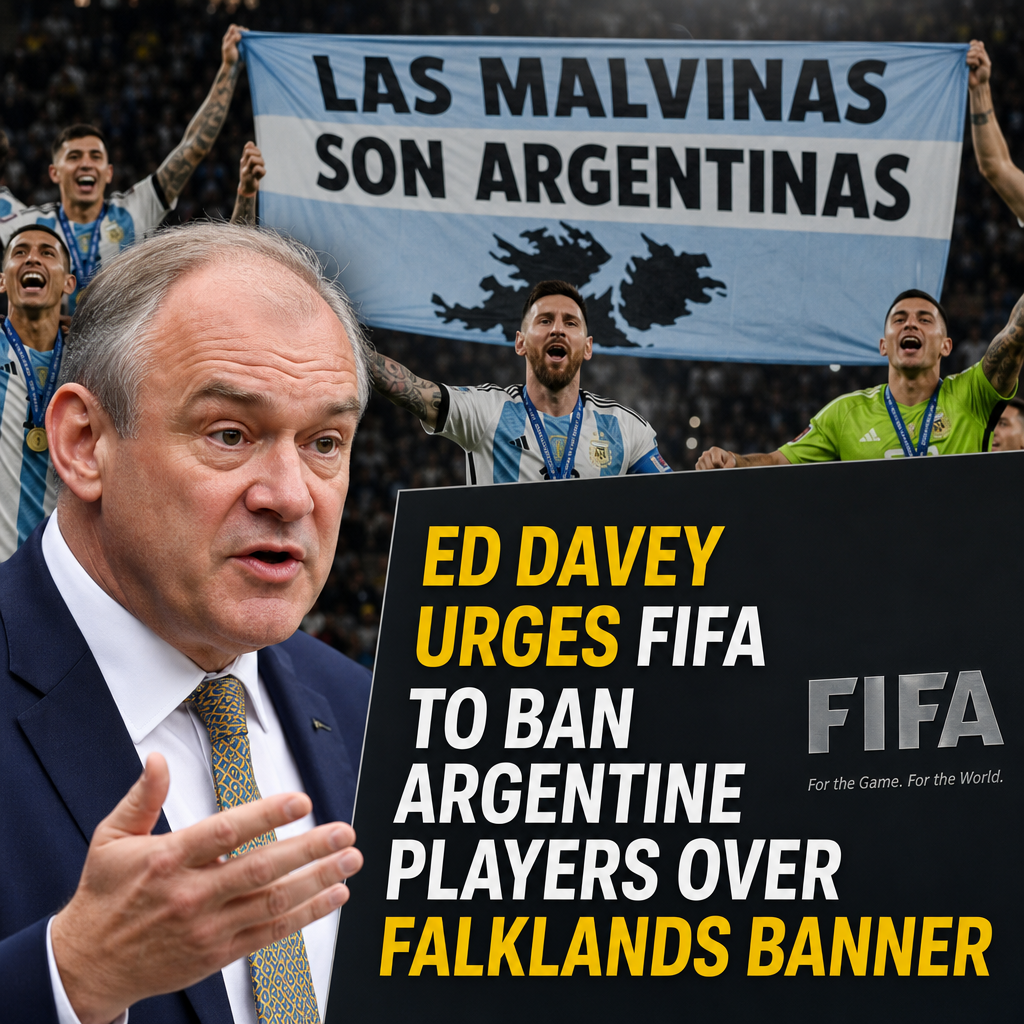
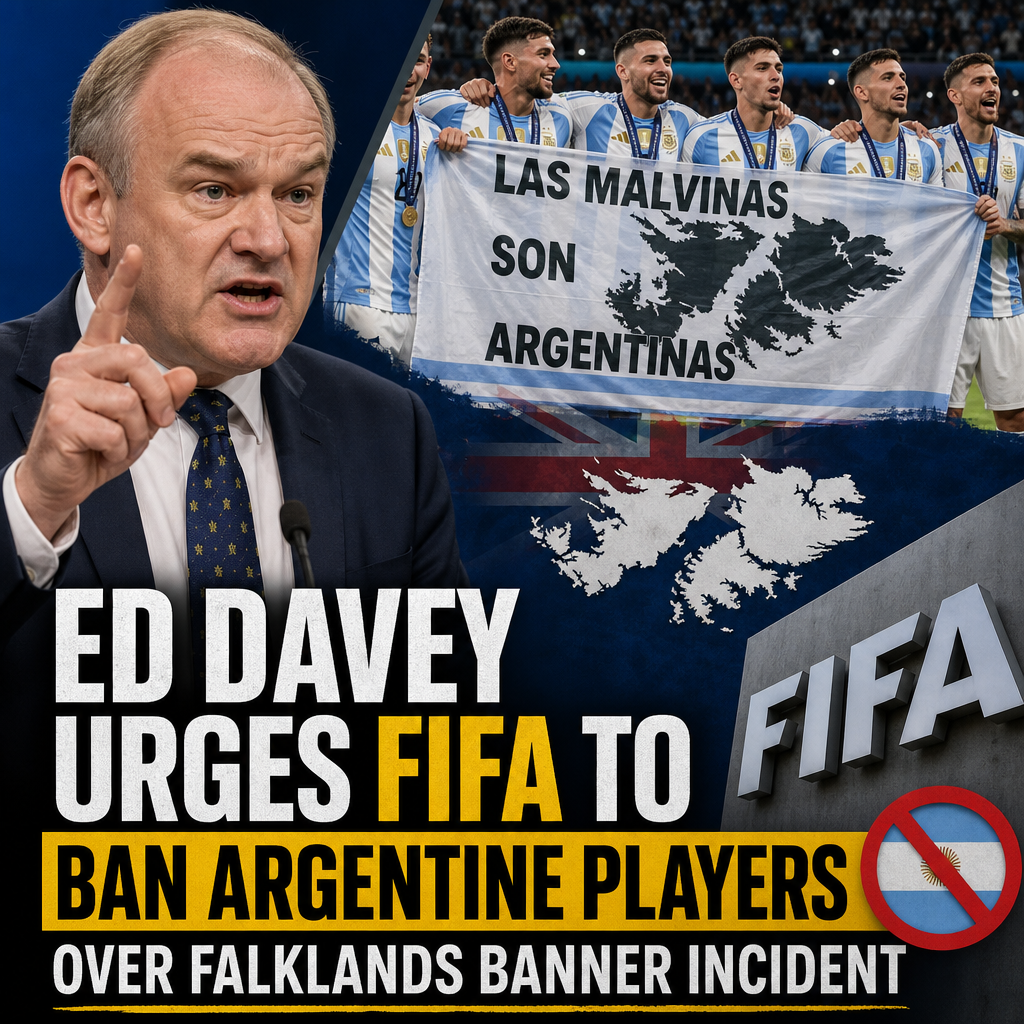
Liberal Democrats leader Ed Davey has ignited a heated debate surrounding sportsmanship and political expression in football. The controversy stems from an incident involving six Argentine players who celebrated with a banner stating “Falklands are Argentine” after their recent match. Davey has publicly called for these players to be banned from playing in the upcoming FIFA World Cup final.
The Incident: A Political Statement on the Football Pitch
The banner, which asserts Argentina’s claim over the Falkland Islands, a territory long disputed between the UK and Argentina, was displayed prominently by the players following their victory. This move sparked outrage, particularly in the Falkland Islands and among veterans’ communities, as the statement touches on a sensitive and painful chapter of history—the 1982 Falklands War.

Ed Davey described the banner as “deeply insulting to the people of the Falkland Islands and to the families of the veterans who gave their lives against that illegal invasion.” The display was widely interpreted as a political message, which has brought FIFA’s regulations on political statements during matches into sharp focus.
Ed Davey’s Call to FIFA
In response to this event, Ed Davey has taken action by writing directly to FIFA president Gianni Infantino. He emphasized the need for FIFA to enforce its existing rules against political statements in order to maintain neutrality and respect within the sport.
Davey stated:
“Well I’ve written to the president of FIFA because these are the rules he is supposed to implement and make sure are adhered to. It’s a clear breach of FIFA’s rules what happened with those Argentine players making a political statement with that banner.”
Understanding FIFA’s Rules on Political Statements
FIFA has long maintained strict guidelines prohibiting political, religious, or personal slogans or statements during official matches. These rules aim to keep football a neutral ground, free from conflicts outside sport. According to FIFA’s disciplinary code:
- Any form of political protest or statement, including banners, gestures, or chants, is prohibited.
- Players or officials found guilty of violating these regulations can face sanctions, including fines, suspensions, or even bans.
Given this framework, Davey argues that the players who held the banner should face appropriate consequences, possibly including bans that would prevent them from playing in Sunday’s final.
The Impact of Political Expressions in Sport
The intersection of sports and politics is always a delicate balance. While players are individuals with personal views and opinions about global issues, football often serves as a unifying platform designed to transcend different national and political divides.
Arguments For Banning the Players
- Preserving Sportsmanship: Sport should remain a ground of fair play and neutrality, free from divisive political messaging.
- Respect for Historical Sensitivities: Given the history and sacrifices involved, displaying contentious political slogans can be deeply hurtful.
- Upholding Rules: FIFA’s rules exist for a reason and enforcing them consistently is critical to maintaining order.
Arguments Against Banning the Players
- Freedom of Expression: Some see the banner as a legitimate expression of national identity.
- Slippery Slope: Banning players could open the door to many other political disputes being brought into sport.
- Focus on Football: Critics argue that football should not be politicized and such issues can overshadow the game itself.
What Happens Next?
With the World Cup final imminent, FIFA’s response will be closely watched by fans, officials, and political leaders alike. Should FIFA stick firmly to its rulebook, the six Argentine players might face suspension or disqualification, potentially affecting the composition of the team and the dynamics of the final match.
Alternatively, FIFA could issue fines or warnings without banning players, aiming for a middle ground in this sensitive situation.
Conclusion
The call by Ed Davey for Argentina players to be banned after the Falkland Islands banner incident highlights the ongoing challenges of maintaining a strict divide between sports and politics. As international tournaments capture global attention, the actions of players off the ball can resonate far beyond the stadium, reminding us that football is never truly isolated from the world’s broader political landscape.
FIFA now finds itself at a crossroads, tasked with balancing enforcement of its rules, respect for sensitive historical issues, and the protection of freedom of expression on one of sport’s biggest stages. The next few days will be crucial in setting a precedent for how similar incidents are handled in the future.