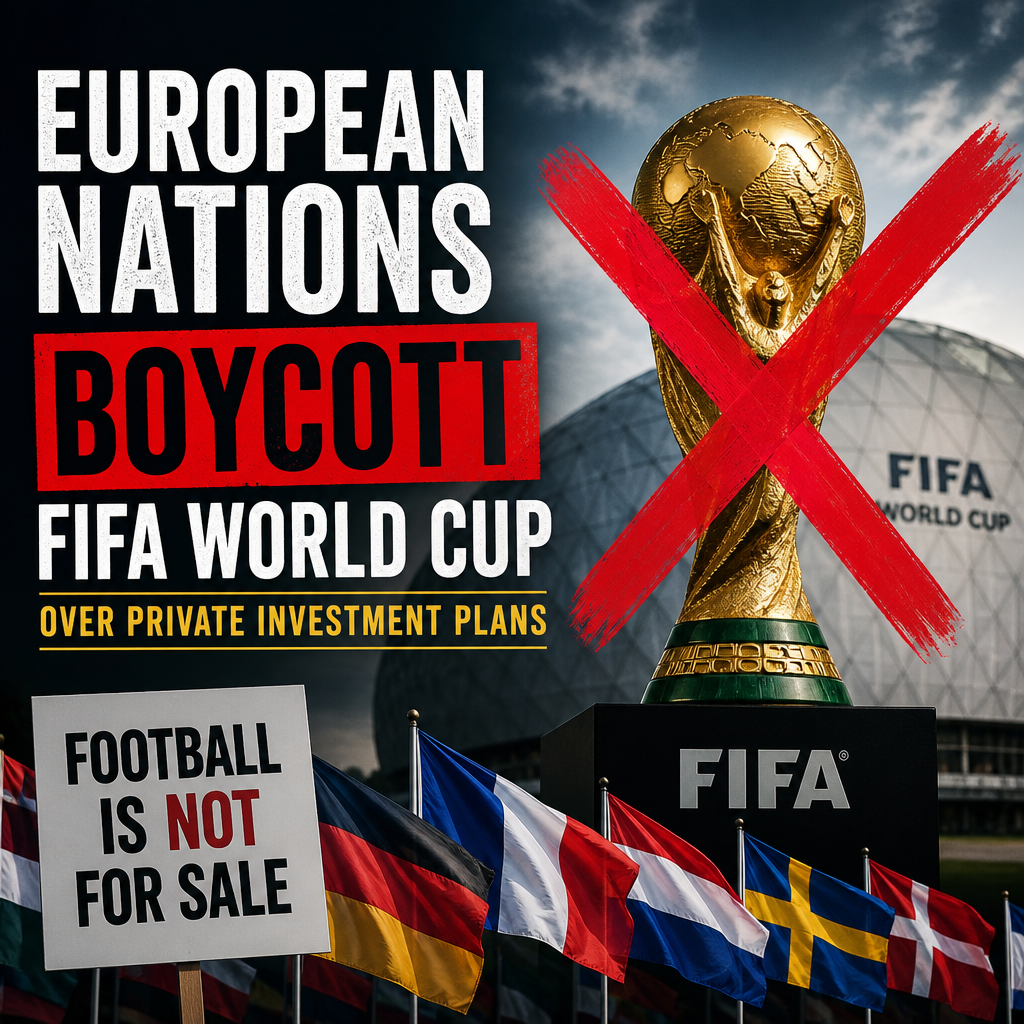
European Nations to Boycott World Cup Over FIFA’s Private Investment Plans
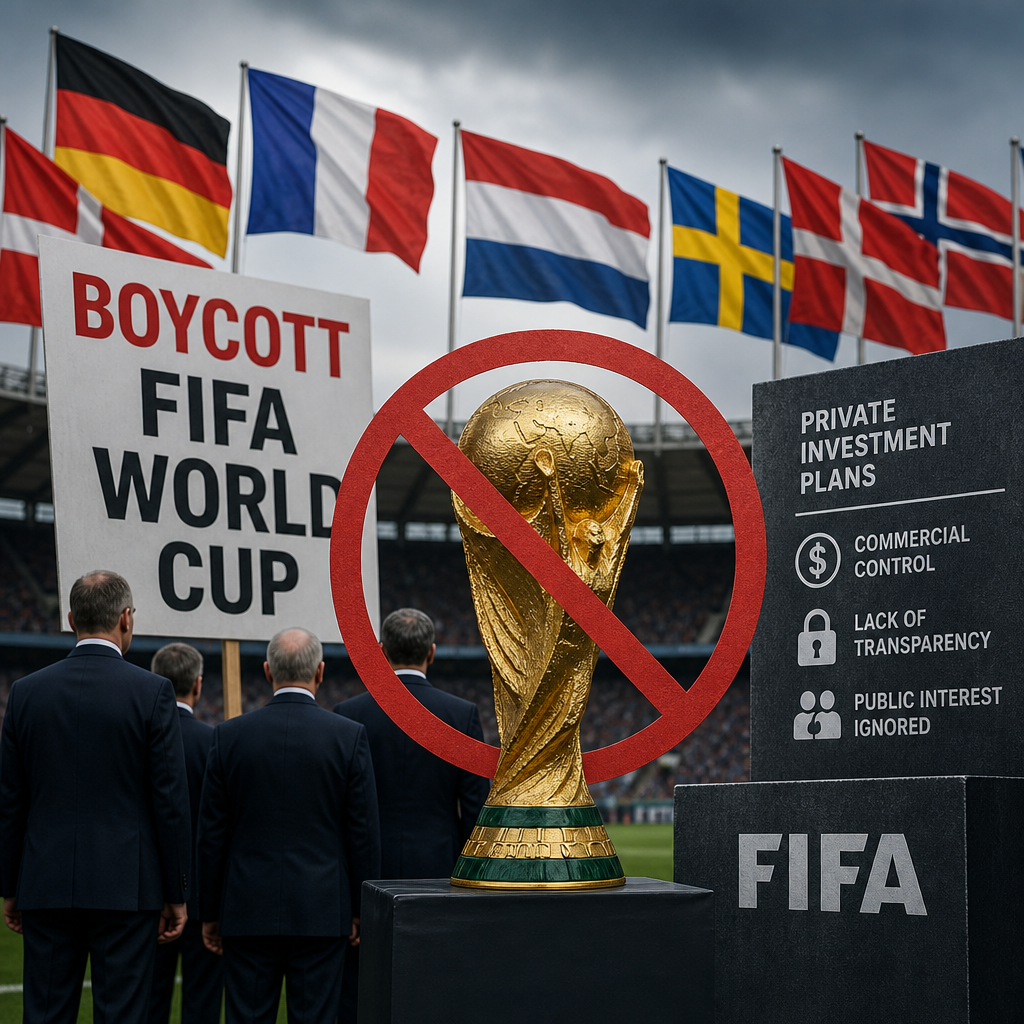
European football is at a crossroads as UEFA and its 55 member associations take a firm stand against FIFA’s controversial proposal to sell stakes in the World Cup and other key competitions to private investors. This unprecedented move has sparked widespread debate, with UEFA declaring a boycott on any FIFA-run competition until the proposed ownership changes are fully abandoned.
The Decision to Boycott
The decision emerged from a virtual meeting of UEFA’s national associations held on Thursday, following the revelation of FIFA’s plans earlier in the week. Sources familiar with the discussions confirmed that the boycott was adopted unanimously and unequivocally.

UEFA’s statement made it clear:
“No UEFA national teams will participate in any FIFA competition for so long as these proposals remain alive, unless this proposal has been abandoned in its entirety and binding assurances have been given that FIFA will never again open its governance or competitions to private ownership.”
This strong opposition reflects concerns not only about governance and ownership but also about the integrity and future direction of international football.
What Are FIFA’s New Plans?
On Tuesday, FIFA announced its intention to create a new commercial entity named FIFA Forward Enterprises (FFE). This for-profit company will manage FIFA’s flagship competitions, including the men’s and women’s World Cups and the Club World Cup.
Key details of the proposal include:
- FIFA, currently a non-profit organization, will retain a majority stake in FFE.
- Up to 21% of FFE will be sold to private investors.
- The goal is to raise approximately $4.2 billion (£3.2 billion) in investment.
- The funds raised would be made immediately available to FIFA’s member associations.
FIFA insists that this restructuring will provide the financial resources necessary for football’s global development. However, many within UEFA and other confederations view the move as a dangerous commercialization and a threat to football’s traditional governance framework.
Why Is UEFA Opposed?
Several core concerns underpin UEFA’s rejection of FIFA’s plan:
- Loss of Control: Private investors owning a stake in FIFA competitions could prioritize profits over the sport’s integrity and the interests of fans and players.
- Governance Issues: UEFA fears that this marks the beginning of privatization in football governance, which could influence how competitions are run.
- Lack of Transparency: The process of introducing the proposal has been criticized for its secretive nature and insufficient consultation with member associations.
- Financial Questions: Many question why FIFA, already a cash-rich organization, needs to seek external funds at all.
The boycott reflects not only opposition to the idea of private ownership but also a demand for greater transparency and democratic governance within FIFA.
Reactions Beyond Europe
UEFA is not alone in its criticism. The Confederation of North, Central America and Caribbean Association Football (Concacaf), comprising 41 members, has scheduled a meeting to discuss FIFA’s plans. Concacaf representatives have already voiced strong condemnation against how FIFA introduced the proposal, expressing similar concerns around governance and process.
As the global football community digests these developments, consensus is yet to be reached on how to move forward. The upcoming FIFA World Cups—the women’s tournament in Brazil in 2027 and the men’s tournament in Spain, Portugal, and Morocco in 2030—hang in the balance.
Implications for Upcoming Competitions
The immediate impact of this standoff may affect upcoming World Cup qualifiers, which continental confederations organize. UEFA’s boycott, if maintained, would mean that European national teams would abstain from competing in FIFA events until FIFA retracts the ownership plans.
Such a boycott raises critical questions:
- Will FIFA amend or scrap its plans following the strong pushback?
- How might private investment change the landscape of international football competitions?
- What precedent does this set for other global sports organizations facing similar pressures?
Conclusion
The planned boycott by European nations against FIFA highlights a pivotal moment in the governance of world football. By rejecting FIFA’s proposal to sell stakes in the World Cup to private investors, UEFA has drawn a clear line in the sand, demanding that football’s future remain in the hands of its traditional stakeholders—not commercial owners.
As FIFA and the global football community navigate this tense period, the outcomes will likely shape the governance, commercial strategy, and competitive spirit of football for decades to come. For now, the world watches closely as football’s custodians debate the true cost of private investment in the beautiful game.