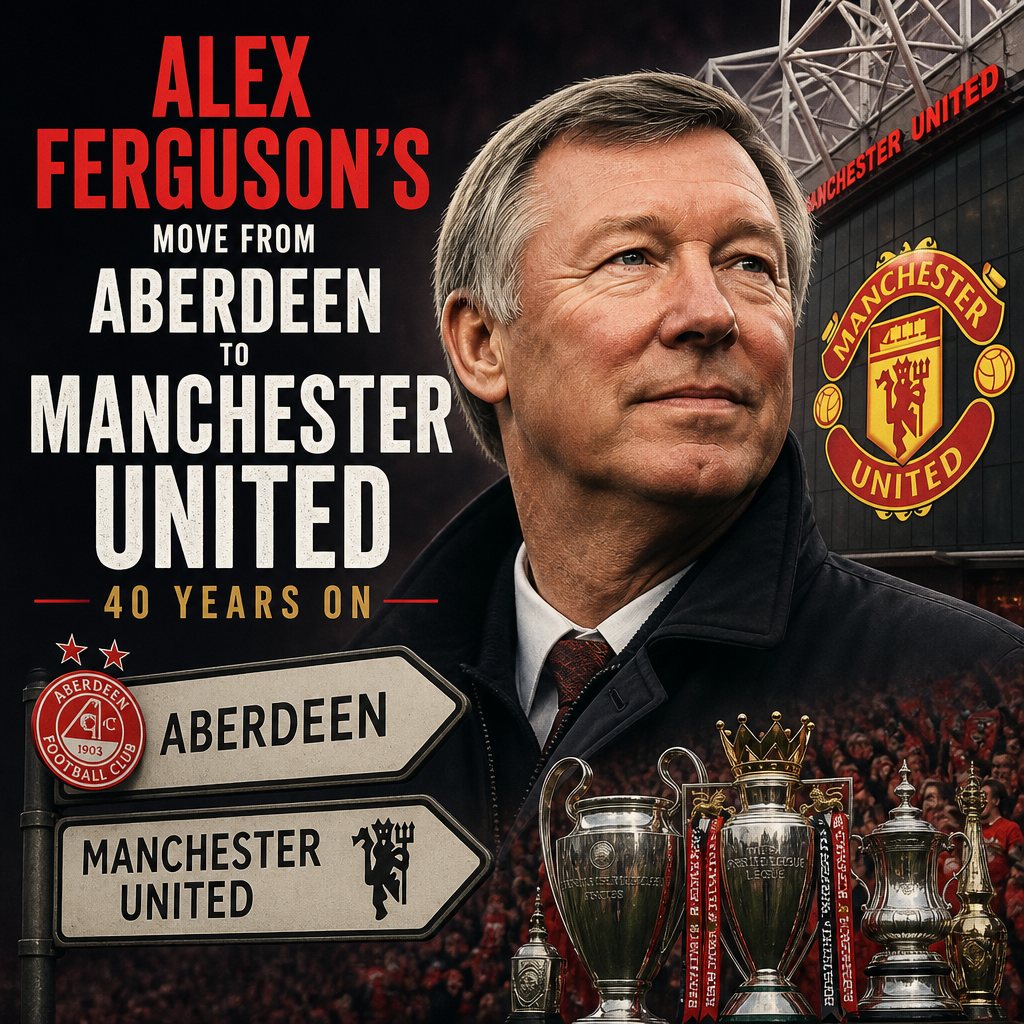
The Day Alex Ferguson Joined Manchester United: Reflections on a Football Legend’s Move
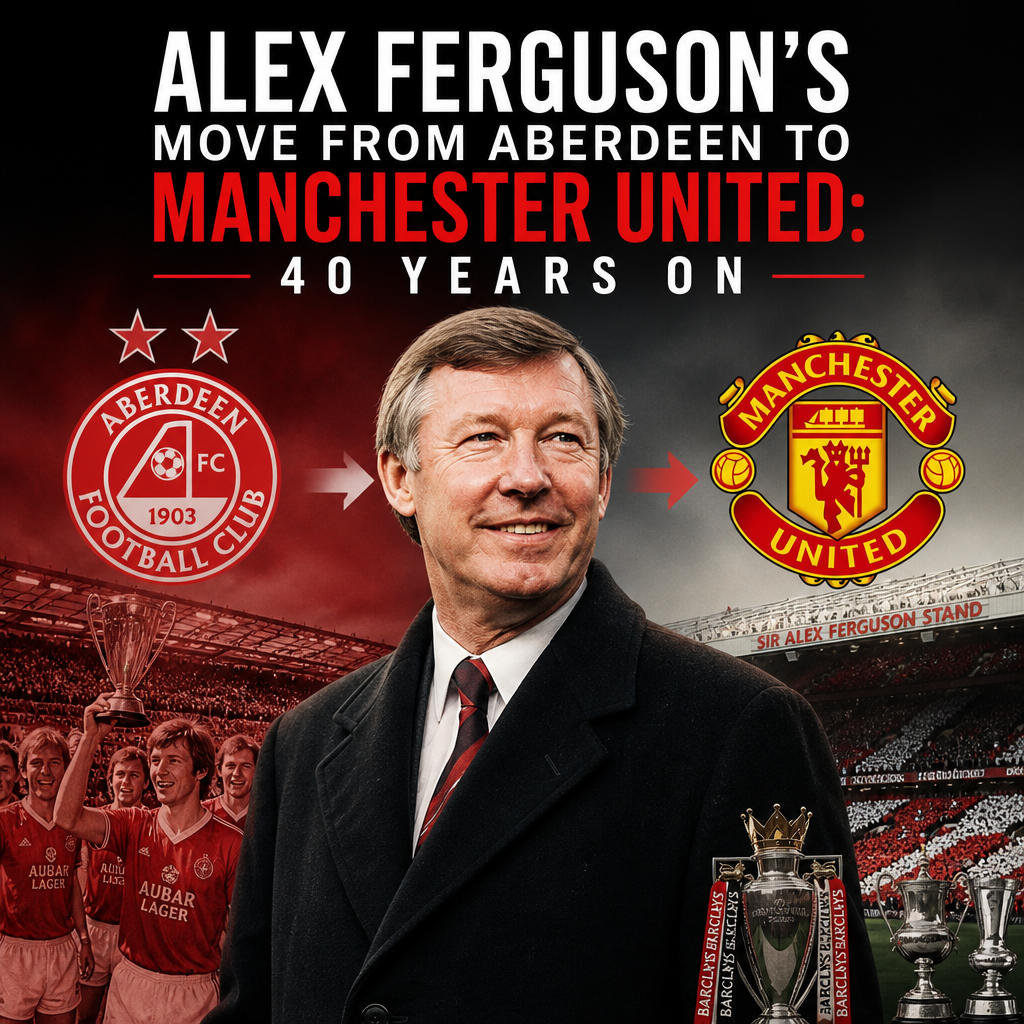
On 6 November 1986, a seismic shift in British football history took place when Alex Ferguson announced he was leaving Aberdeen after eight trophy-laden years to become the new manager of Manchester United. At the time, the decision shocked many fans who had grown accustomed to his remarkable achievements at Aberdeen: three Scottish league titles, four Scottish Cups, the Cup Winners’ Cup, and the UEFA Super Cup. This bold move seemed uncertain to many—but it would ultimately mark the beginning of one of the most successful managerial careers in football history.
The Context: Ferguson’s Aberdeen Glory Years
Before the move, Alex Ferguson was synonymous with Aberdeen’s golden era. Under his leadership, the “Dons” not only dominated Scottish football but also achieved European success, turning the club into a respected name internationally. His departure stirred a complex mix of emotions among the Aberdeen faithful, from anger and disappointment to disbelief.

One fan interviewed by BBC Reporting Scotland went as far as to say, “I think he’s making the wrong move, I think he will regret it.” Another supporter lamented the perceived betrayal, recalling Ferguson’s previous sermons about loyalty among players while he was now setting an example by leaving.
Breaking the News: Roddy Forsyth’s Scoop
The story of Ferguson’s move was broken first by BBC Scotland’s football broadcaster Roddy Forsyth. Forsyth had been sent to Aberdeen to investigate rumors linking Ferguson with Manchester United. Remarkably, this breakthrough came amid a major news event—the Chinook helicopter disaster in Shetland—where 43 lives were lost.
Forsyth’s chance encounter found Ferguson and Manchester United chairman Martin Edwards sharing a celebratory bottle of champagne at an Aberdeen airport hotel. After confirming the news, Forsyth immediately relayed the story to his newsroom. Although the tragic helicopter disaster understandably dominated headlines, the announcement of Ferguson as Manchester United’s new boss was a major highlight of the sports news that day.
The Initial Reaction: Shock and Skepticism
Fans and players alike wrestled with the news. For many, Ferguson’s departure left a void of uncertainty.
Sandy Smith, 72, a lifelong Aberdeen supporter, recalls the reaction: “It was totally gutting… after all he did for the club, I was gutted.” He concedes there was little comparison between Aberdeen and Manchester United at the time, and although Ferguson’s early years at United were challenging, he eventually proved himself.
Willie Miller, Aberdeen’s captain then, described Ferguson’s departure as a time of “uncertainty.” Despite Ferguson’s famously fiery temper and intense management style—throwing cups in dressing rooms was part of what defined his tenure—the players missed his presence deeply.
“You would not get away with it now,” Miller reflected, “It was probably what we expected back then… He did not just want to win things, he wanted to win them with style.”
From Doubt to Legend: The Legacy of Ferguson’s Move
When Ferguson arrived at Old Trafford, Manchester United was struggling to regain the dominance they had enjoyed in previous decades. His 26-year tenure redefined the club’s modern history, delivering an astonishing 38 trophies, including 13 Premier League titles and two Champions League trophies.
Looking back on the 40th anniversary of his decision to switch clubs, many view the move as pivotal not only for Ferguson but for British football as a whole. What once seemed a risky departure became the foundation of a legacy few managers have matched worldwide.
Lessons from Ferguson’s Transition
- Bold risk-taking can lead to unprecedented success: Leaving a secure and celebrated position at Aberdeen, Ferguson embraced the challenge of reviving Manchester United.
- Building a winning culture takes time: Early years were tough, but persistence and vision laid the groundwork for sustained success.
- Leadership transcends loyalty debates: While initially criticized for abandoning Aberdeen, Ferguson demonstrated that evolution in one’s career can inspire greatness elsewhere.
Conclusion
Alex Ferguson’s announcement on that November day in 1986 marked the end of an era for Aberdeen but also kindled a new dawn at Manchester United. The shock felt by fans then gives way to respect and admiration now, as his achievements have cemented him as a footballing icon. Reflecting on those moments reminds us how impactful bold decisions can be, reshaping not only individual careers but the landscape of sport itself.