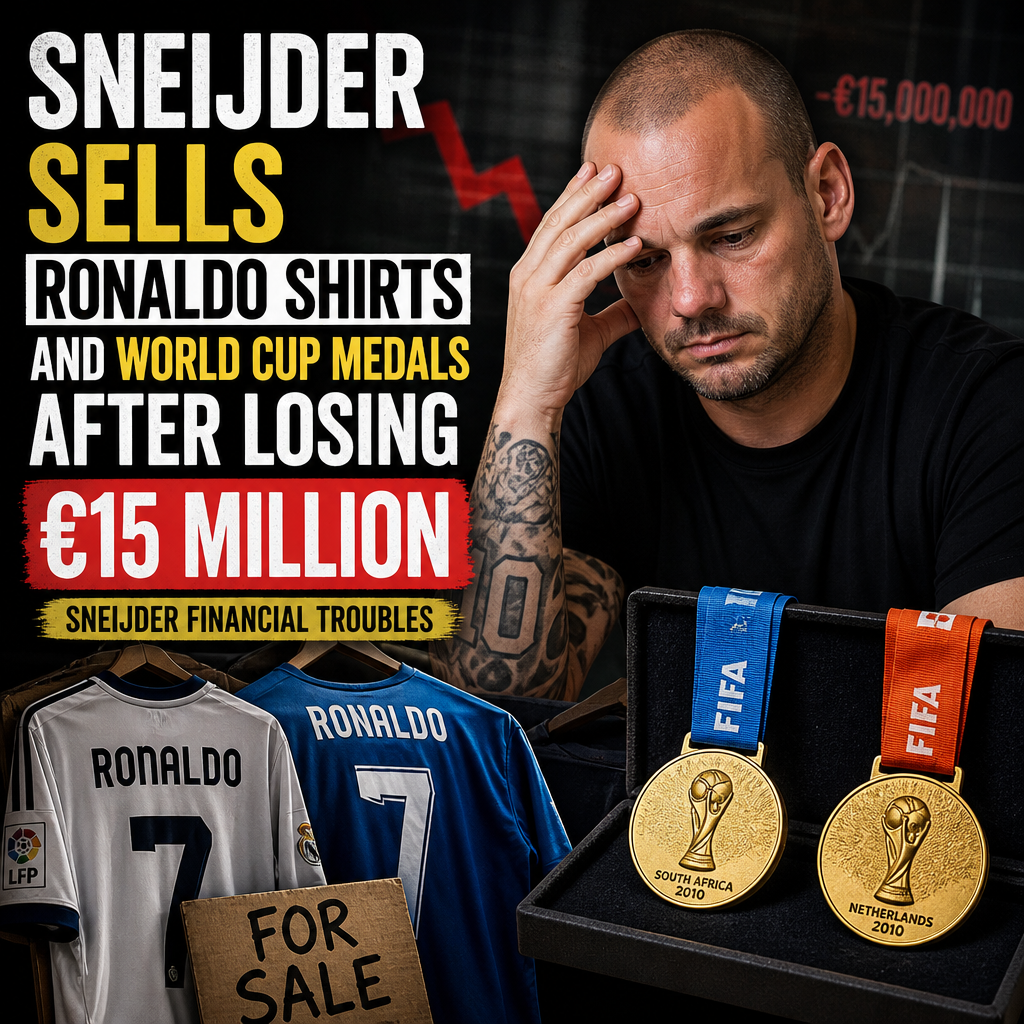
Sneijder’s Financial Journey: From Football Glory to Selling Memorabilia
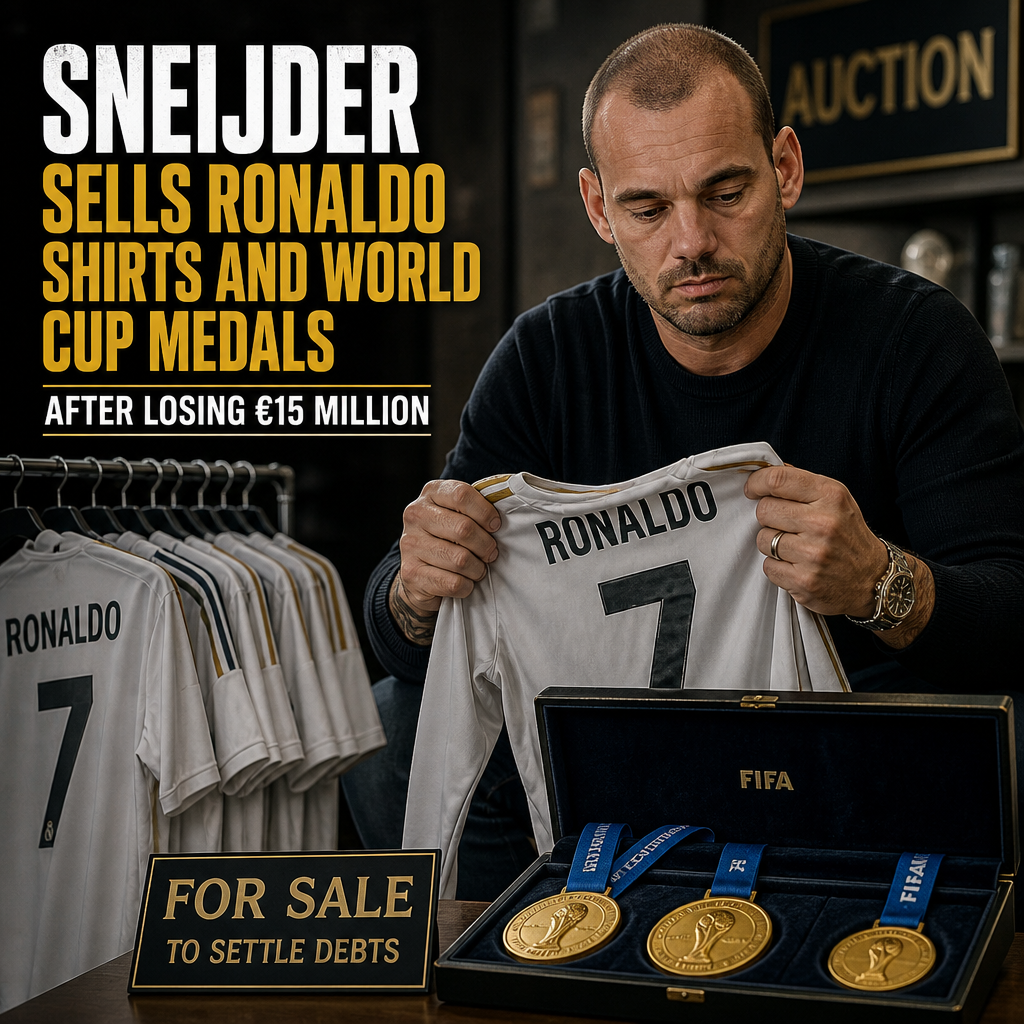
Wesley Sneijder, once a celebrated footballer known for his skill and achievements on the pitch, has faced significant financial turmoil in the years following his retirement. After amassing considerable wealth during his career, Sneijder’s story took a turn that saw him parting ways with some of football’s most prized memorabilia, including jerseys worn by Ronaldo and medals earned in World Cup tournaments.
From a Successful Career to Retirement
Sneijder retired from professional football in 2019. Over his career, he earned approximately €60 million, not including additional income from sponsorship deals and bonuses. His earnings reflected his long-standing presence in top European clubs and his crucial role in the Dutch national team. On the field, his legacy was marked by talents that many admired, but off the pitch, the journey was more complicated.

Financial Setbacks and Losses After Retirement
By 2020, Sneijder’s financial stability began to waver. Several factors contributed to a reported loss of around €15 million within a year:
- Failed Business Venture: Sneijder invested in a restaurant business in Ibiza, which unfortunately did not succeed.
- Real Estate Scams: He was a victim of real estate investment scams in Istanbul, leading to substantial monetary losses.
- Generosity to Friends and Family: In addition to these woes, Sneijder generously gave away money to people close to him, further impacting his financial standing.
The combination of these setbacks forced Sneijder into a challenging financial position, quite unlike the wealthy athlete many fans had imagined him to be.
Selling Off Football Memorabilia to Bounce Back
By 2026, Sneijder began liquidating parts of his valuable football memorabilia collection. This included items of immense sentimental and monetary value, symbolizing both a bittersweet farewell and a financial necessity.
Highlights from the Auction:
- Ronaldo Jerseys: Two shirts worn by Cristiano Ronaldo sold for a remarkable €210,000.
- Sergio Ramos Shirt: The shirt Ramos wore during the 2010 World Cup Final fetched €65,000.
- World Cup Medals: Even Sneijder’s personal decorations – his 2010 World Cup Silver Ball and his 2014 World Cup bronze medal – went to auction.
The Financial Impact of Memorabilia Sales
The cumulative proceeds from the sale of these personal and historic items have already exceeded €300,000. While this amount is a fraction of what he initially earned during his career, it offers a glimpse into Sneijder’s attempts to rebuild his financial footing by leveraging his priceless football history.
Reflecting on a Cautionary Tale
Sneijder’s journey underscores the volatility athletes can face when transitioning out of professional sports. Despite substantial earnings, poor investments and unfortunate circumstances can dramatically alter financial situations. Selling off memorabilia is an emotional route taken by many athletes not just for monetary reasons, but also as a way of preserving and honoring their legacies while adjusting to new realities.
Lessons from Sneijder’s Experience
- Diversify Investments Carefully: Business ventures need thorough research and management.
- Be Cautious with Real Estate: Avoid unverified investments to protect assets.
- Financial Planning Post-Retirement: Seeking professional advice is crucial for long-term stability.
Wesley Sneijder’s story is a reminder that financial success in sports can be fleeting and that prudent management is vital for lasting security. His decision to sell Ronaldo’s shirts and his own World Cup medals reflects both the personal cost of his financial challenges and the enduring value of the memories and achievements those items represent.