
Barcelona’s Tactical Response to Striker Shortage After Ferran Torres Transfer
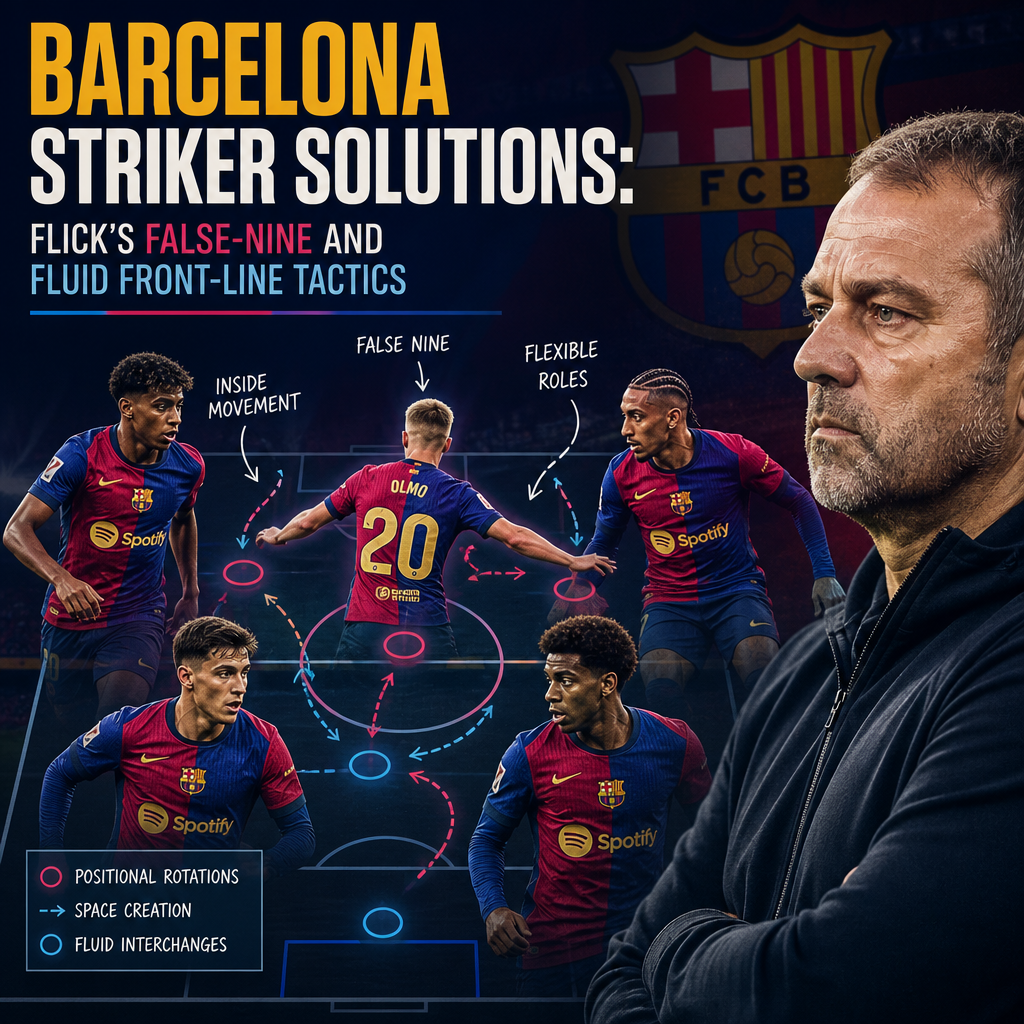
With the high-profile €50 million transfer of Ferran Torres to Paris Saint-Germain, Barcelona faces an urgent challenge: a sudden striker shortage that has left the squad without a natural senior centre-forward following Robert Lewandowski’s earlier departure to Chicago Fire. Manager Hansi Flick is creatively adapting his tactics, testing fluid front-line rotations and false-nine systems to address this void using the versatile attackers currently available.
The Striker Crisis and Barcelona’s Search for Solutions
Barcelona’s striking options dwindled rapidly with the loss of two pivotal forwards in the same transfer window. This has forced Flick to explore innovative approaches on the pitch. While club management actively targets Atlético Madrid’s Julián Álvarez as their primary acquisition to bolster the frontline, Flick needs immediate alternatives from within the squad.

Five key internal options have emerged as tactical experiments designed to stabilize Barcelona’s attack.
1. The Lamine Yamal False-Nine Experiment
One of the boldest ideas under Flick’s guidance has been deploying teenager Lamine Yamal as a central false-nine. Unlike a traditional target man waiting to receive balls upfront, this system empowers Yamal to drop deep, link play, and control game tempo.
- Role flexibility: Yamal is free to roam, drawing out centre-backs and creating pockets of space for teammates.
- Tactical nuance: This method demands exceptional positional intelligence from Yamal, encouraging creativity over physicality.
- Pre-season trials show promising signs of success, hinting at a fresh attacking identity for Barcelona’s young talent.
2. Fluid Front-Three Rotations: Maximizing Unpredictability
Hansi Flick is also experimenting with a dynamic 4-2-1-3 formation, revolving around an explosive front three of Anthony Gordon, Karim Adeyemi, and Lamine Yamal.
How it works:
- No player remains fixed in one position.
- When Yamal drifts inside, Adeyemi surges into the vacated central space.
- Gordon aggressively cuts in from the opposite flank, creating a constantly shifting attack.
Benefits:
- Maintains high vertical speed with unpredictable attacking angles.
- Forces opposing defenders to continuously adjust, increasing errors and breakdowns in defense.
This relentless rotation harnesses the strengths of multiple attackers and offers Barcelona a highly mobile, fluid offensive system.
3. Karim Adeyemi as a Direct Central Threat
While primarily signed as a winger, Karim Adeyemi is being developed to operate through the middle as a direct striker alternative.
- Adeyemi’s elite acceleration and penetrative running style suit Flick’s fast-paced counter-attack philosophy.
- Positioned centrally, Adeyemi can lead quick transitions, running onto vertical through balls behind defensive backlines.
- This change in role also adds another vertical outlet in attacking phases and challenges defenders in one-on-one scenarios.
4. Dani Olmo: The Advanced Central Playmaker
The adaptable Dani Olmo offers Barcelona yet another option to plug the striker gap.
- His excellent spatial awareness enables smooth shifts between an advanced attacking midfielder and a centre-forward role.
- He helps maintain positional fluidity, enabling seamless interchanges with wide players.
- This flexibility permits Barcelona to adjust tactics mid-game without restructuring the lineup completely.
5. Integrating La Masia Youth: Long-Term Solutions
In addition to established first-team players, Flick is integrating promising talents from Barcelona’s famed academy, La Masia, as experimental offensive options:
- Shane Kluivert (18 years old): Trialled as a number 9 in pre-season against Udinese, showcasing a mix of speed and intelligent link-up play.
- Ebrima Tunkara (16 years old): Given minutes in a false-nine role during summer drills, revealing technical ability despite his youth.
- Hamza Abdelkarim: Actively involved in first-team training post-Torres era, although still developing for regular matchday inclusion.
These youth players provide exciting long-term solutions and depth to the squad amid striker shortages.
Conclusion
Barcelona’s striker crisis following Ferran Torres’s departure has compelled Hansi Flick to innovate aggressively. From deploying Lamine Yamal as a false-nine to employing fluid front-line rotations and adapting players like Karim Adeyemi and Dani Olmo centrally, the manager is maximizing current squad versatility. Meanwhile, the club awaits new signings and continues to nurture La Masia’s talents as sustainable attacking options for the future.
This tactical flexibility not only addresses immediate challenges but also reinforces Barcelona’s tradition of adaptive, possession-based attacking football. Fans can expect a season of exciting experimentation and promising evolution ahead.