
So, you understand the theory. You know that “value betting” isn’t about picking winners, but about finding odds that are bigger than they should be. You’ve read the guides, you’ve seen the formula, but one big question remains: how do you actually do it?
How do you move from the theory of a coin toss to the complex reality of a Premier League match and consistently find profitable bets?
This is not a guide about what value betting is. This is a practical, step-by-step workshop on how to find it.
Before you continue: This is an advanced guide. If you’re not 100% confident with the core concept of value, we strongly recommend reading our foundational article first: What is Value Betting: The Ultimate Guide to Finding Profitable Odds
The Core Principle: It’s All About Expected Value (+EV)
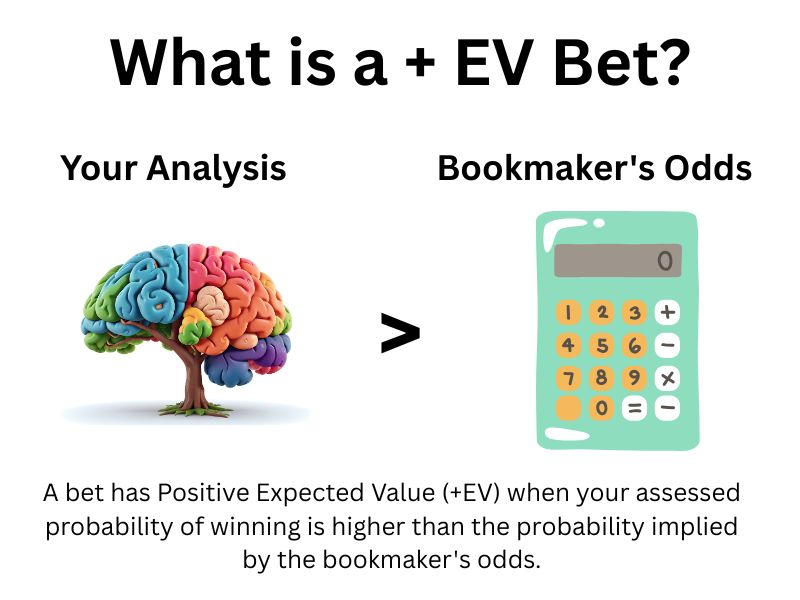
First, let’s reframe the goal. Your mission is to find bets with Positive Expected Value (+EV). In simple terms, this is a bet where, on average, you will make a profit if you were to place it hundreds of times. The bookmaker’s odds represent an implied probability. A +EV bet exists when you believe the true probability of an event happening is higher than the probability implied by the bookie’s odds.
Let’s Break It Down with a Simple Coin Toss
Imagine someone offered you a bet on a fair coin toss (which has a 50% chance of landing on Heads).
- They offer you odds of 2.10 for Heads.
- You bet £1.
If you placed this bet twice, statistics say you would win once and lose once:
- Win: You get back £2.10 (your £1 stake + £1.10 profit).
- Loss: You lose your £1 stake.
After two bets (£2 total staked), you would have £2.10 in your pocket. You’ve made a profit of £0.10 over two flips. This £0.10 profit is your Positive Expected Value (+EV). You found a price (2.10) that was better than the true probability (which corresponds to fair odds of 2.00). Our goal in football is to do the exact same thing.
A 4-Step Method to Find Value Bets in Football
Finding value is a skill. Like any skill, it requires a structured process. Here is a simple, repeatable 4-step method you can use for any football match.

Step 1: Forget the Odds – Create Your Own Probability
This is the most critical step. Before you even look at the odds, you must perform your own analysis and assign a percentage probability to an outcome (e.g., Home Win, Over 2.5 Goals).
Your goal is to be more accurate than the market. You can achieve this by combining:
- Quantitative Analysis (The Stats): Look beyond the league table. Use the incredible data available on free resources like Understat (to analyse Expected Goals/xG) and Sofascore (for detailed in-play stats like shots on target and heatmaps).
- Qualitative Analysis (The Context): This is where your football knowledge shines. Consider factors like team morale, key injuries, manager tactics, motivation (is it a cup final or a meaningless end-of-season game?), and even the weather.
Combine these factors to arrive at a simple percentage. For example: “Based on my analysis, I believe Team A has a 40% chance of winning.”
Step 2: Convert Your Probability into “Fair Odds”
Now, you convert your percentage into the odds you would offer if you were the bookmaker. These are your “fair odds”.
The formula is simple:
Fair Odds = 100 / Your Probability %
So, if you decided Team A has a 40% chance of winning:
Fair Odds = 100 / 40 = 2.50
This means you believe the fair price for Team A to win is 2.50.
Step 3: Compare Your Fair Odds to the Market
Only now do you look at the bookmaker’s odds. Go to an odds comparison site like OddsPortal. It aggregates prices from dozens of bookmakers, ensuring you can easily spot the best odds available on the market.
Let’s say the market offers odds of 2.80.
Step 4: Identify the Value
This is the moment of truth. Compare the two figures:
- Your Fair Odds: 2.50
- Bookmaker’s Odds: 2.80
The rule is simple: If the bookmaker’s odds are HIGHER than your fair odds, you have found a value bet.
In this case, 2.80 is higher than 2.50. The market is offering a better price than you think is fair. This is your signal to place the bet. If the bookie’s odds were lower (e.g., 2.30), there would be no value, and you should not bet.
Practical Example: Finding a Value Bet in a Premier League Match
Let’s walk through a real-world scenario.
Fixture: Manchester United vs. Liverpool at Old Trafford.
Step 1: Analysis & Probability
We analyse the match for a Manchester United win (1X2 market).
- Stats: Man Utd’s home xG is strong (avg. 1.8), but they concede often. Liverpool’s away form is inconsistent, with a poor defensive record but high xG created. Head-to-head at Old Trafford slightly favours Man Utd.
- Context: Liverpool has a key midfielder injured. Man Utd are playing after a tough midweek European game. The motivation is extremely high for both sides.
- Conclusion: After weighing everything, we assess that the true probability of a Manchester United win is 35%.
Step 2: Calculate Fair Odds
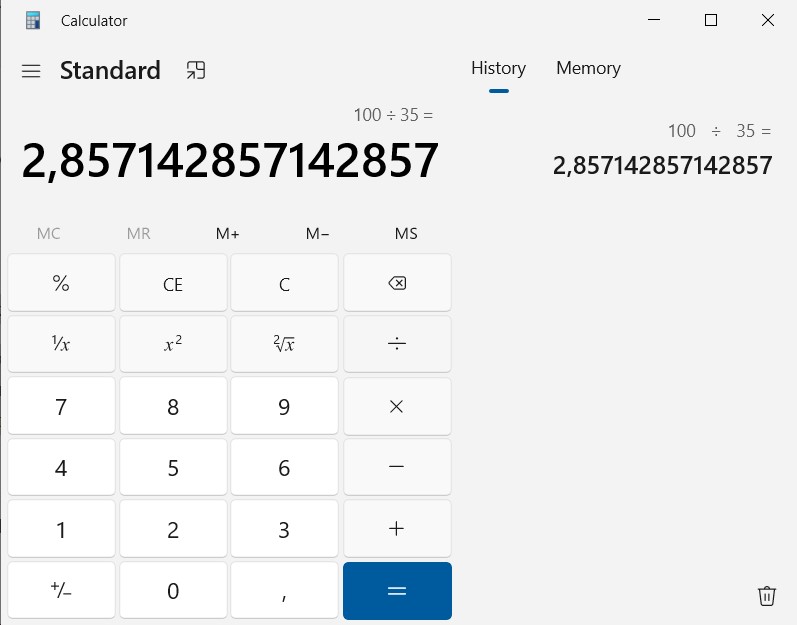
We convert our 35% probability into fair odds.
Fair Odds = 100 / 35 = 2.86
Our fair price for a Man Utd win is 2.86.
Step 3: Compare to the Market
We check an odds comparison website. The best price available for a Manchester United win is 3.10.
Step 4: Identify Value
- Our Fair Odds: 2.86
- Bookmaker’s Odds: 3.10
3.10 > 2.86. The bookmaker is offering odds that imply a probability of just 32.3% (100 / 3.10), while we believe the true chance is 35%. This is a clear value bet.
Frequently Asked Questions (FAQ)
Is value betting a guaranteed way to profit? No. It is not a get-rich-quick scheme. You will still lose many value bets. The goal is to have a mathematical edge that guarantees profit over the long term (hundreds or thousands of bets) by consistently finding odds that are in your favour.
How is this different from just backing favourites? Completely different. A heavy favourite on odds of 1.20 might have a true chance of winning of 80% (fair odds 1.25). In this case, the 1.20 odds represent negative value. Value can be found on favourites, underdogs, or draws – it is entirely independent of who is “supposed” to win.
What do Reddit users say about finding value bets? Common themes on subreddits like r/sportsbook revolve around two main approaches: deep statistical modelling (for those who love data) and specialising in niche leagues (e.g., lower divisions) where bookmakers may have less accurate information, making it easier to find value.
Conclusion: From Guessing to Investing
Finding value bets transforms you from a casual punter into a systematic investor. It requires discipline, consistent analysis, and a long-term mindset. You will not win every bet, but by following a structured process like the one above, you give yourself a tangible mathematical edge.
Start with one league you know well. Practise analysing matches and calculating your own odds without betting real money. Track your results. Over time, you will train your analytical “muscle” and learn to spot value instinctively.