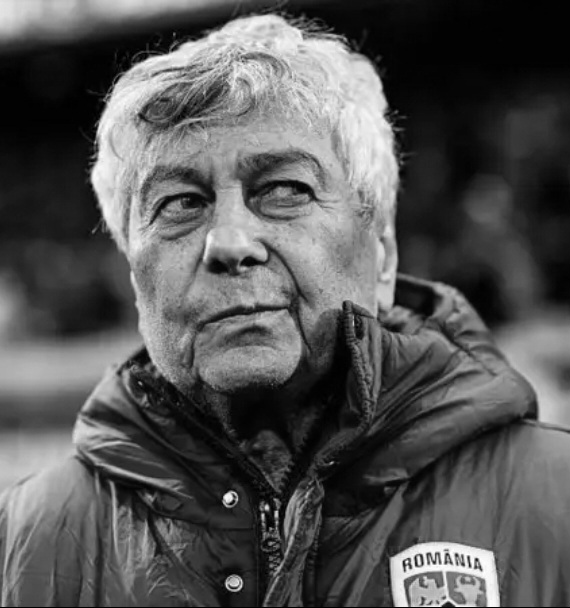
Legendary manager Mircea Lucescu has died at the age of 80, leaving an indelible mark on world football that will be remembered for generations. His recent resignation as Romania’s head coach, just five days before his passing, marked the end of a remarkable era defined by tactical brilliance, visionary leadership, and unfaltering dedication to the beautiful game.
Mircea Lucescu’s Illness and Resignation: A Sudden End to a Storied Career
The football world was shaken when Mircea Lucescu resigned on Thursday after falling ill prior to a training session. Reports later confirmed that he suffered a heart attack on Friday morning and was promptly hospitalized. His passing has been mourned deeply by clubs, fans, and football institutions alike. The Romanian Football Federation’s statement reflected the gravity of the loss: “Our football loses not only a brilliant tactician, but a mentor, a visionary, and a national symbol who carried the tricolour to the highest peaks of global success.”
A Career Defined by Triumph and Dedication
Mircea Lucescu’s career as a manager spanned nearly five decades, beginning in 1977 when he took charge of Corvinul Hunedoara. Over this extensive period, he led many top clubs and national teams, demonstrating incredible adaptability and a profound understanding of the game. His managerial resume reads like a footballing world tour, including stints at Inter Milan, Galatasaray, Besiktas, Shakhtar Donetsk, Zenit St. Petersburg, Dynamo Kyiv, and Turkey.

His ability to transform teams and win trophies became his hallmark. One of his most lauded achievements came during his time at Shakhtar Donetsk, where he built a dynasty that clinched multiple Ukrainian league titles and the UEFA Cup in 2009 — a historic moment for Ukrainian football. His record also boasts a staggering 15 Turkish league titles combined from his time managing Galatasaray, Besiktas, and later clubs in Turkey, making him one of the most successful managers in the Turkish league’s history.
Mircea Lucescu’s Impact on Romanian Football
Lucescu first took charge of Romania’s national team between 1981 and 1986, before returning to lead the side again in 2024. His return was seen as a homecoming for Romanian football, a nation eager to reclaim its past footballing glory. Although his last game ended in a disappointing 1-0 play-off defeat against Turkey, which dashed Romania’s hopes of qualifying for the 2026 World Cup, his commitment to his country’s football remained unwavering until the very end.
As a player, Lucescu represented Romania 64 times and had the honor of captaining his country at the 1970 World Cup. This deep-rooted connection to Romanian football inspired generations of players both on and off the field. Romanian Football Federation president Razvan Burleanu poignantly described him as “not just a coach, but a life teacher for entire generations of players,” emphasizing his role beyond tactics—a man who lived and breathed football.
Tributes from Around the Football World
The loss of Mircea Lucescu prompted an outpouring of grief across the football community. Galatasaray took to social media to honor the “winning manager of our UEFA Super Cup and 15th Turkish league titles,” reaffirming that Lucescu’s legacy at the club, and Turkish football as a whole, will never be forgotten. Inter Milan extended their condolences, highlighting the affection and respect he commanded across Europe.
Beyond club successes, his professionalism and passion earned him respect even among international peers. Lucescu’s ability to mentor players and inspire teams through challenging times showcased his unique leadership style — one forged over years of dedication and a genuine love for the sport.
Remembering a Visionary and Mentor
Mircea Lucescu’s passing is not just a significant loss for Romanian football but for the global game. His visionary tactics, innovative approach to management, and mentorship left a tremendous impact on football culture. He was a trailblazer who nurtured talent and fostered team spirit, all while upholding the highest standards of professionalism.
Lucescu’s life epitomized football’s power to unite, inspire, and transcend borders. His story is a testament to how the game can shape lives and become an enduring legacy. As fans, players, and fellow coaches remember his immense contributions, one thing is clear: Mircea Lucescu’s spirit will forever remain embedded in the heart of football, illuminating the path for future champions to follow.
Final Words
In the words of the Romanian Football Federation, “It is a black day for Romania and for world football. A man who lived through and for football in every second of his existence has left us.” His death at the age of 80 serves as a solemn reminder of a life devoted entirely to football — a legend whose memory will inspire generations to come.
The Romanian Football Federation released a heartfelt statement mourning his loss:
“Our football loses not only a brilliant tactician, but a mentor, a visionary, and a national symbol who carried the tricolour to the highest peaks of global success.”