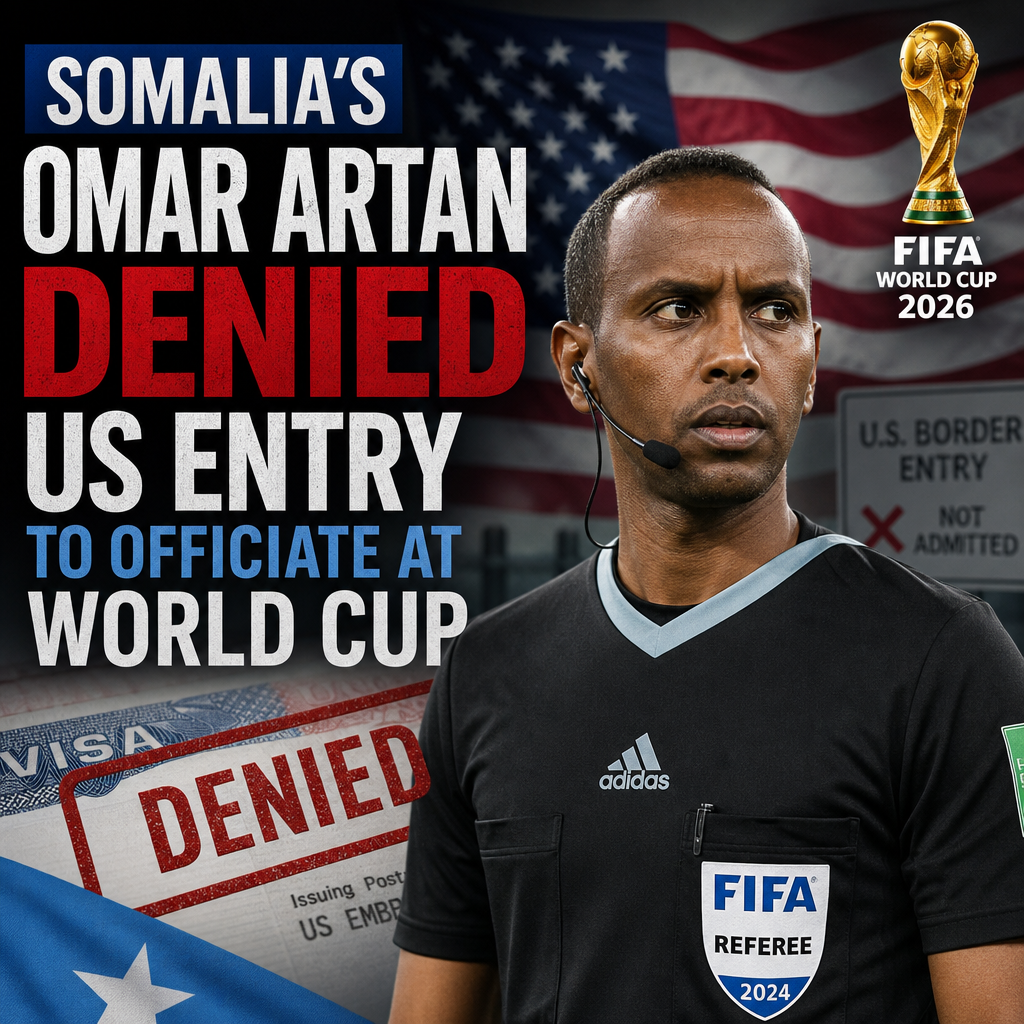
Africa’s Top Referee Denied Entry to the United States Ahead of World Cup
Omar Artan, Africa’s leading football referee, faced an unexpected and disappointing setback upon arriving in the United States to officiate at the upcoming World Cup. Despite being on the verge of making history as the first referee from Somalia to participate in a World Cup, Artan was refused entry at Miami International Airport and forced to return to Istanbul.
Omar Artan’s Historic Milestone
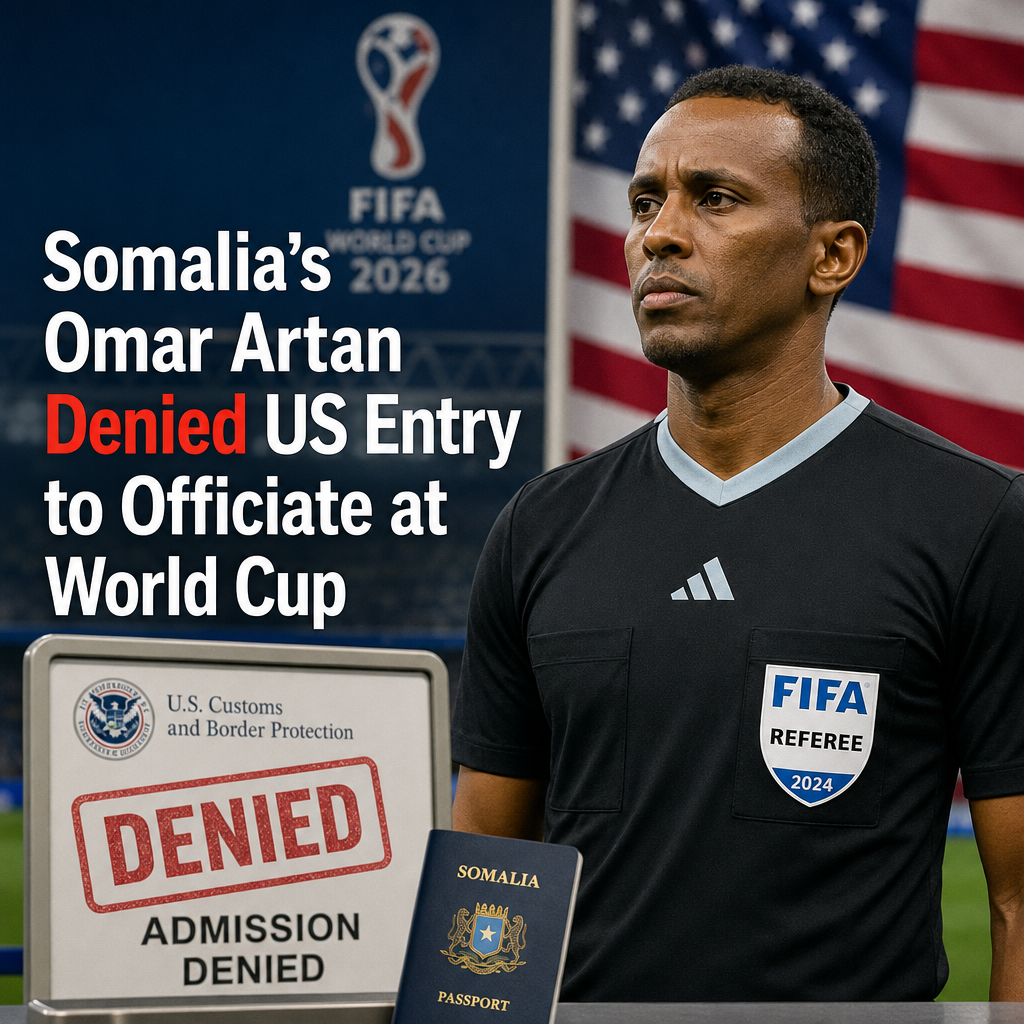
Artan’s appointment as one of the 170 officials selected for the World Cup was a significant milestone for Somalia and African football at large. Having been a referee since 2018, Artan’s credentials include:

- Voted Confederation of African Football’s (CAF) 2025 Referee of the Year.
- A strong track record of officiating important matches across Africa.
- Recognition as one of the continent’s most respected and skilled referees.
His involvement in the World Cup not only marked a personal achievement but also represented a breakthrough moment for Somali sports on the global stage.
The Visa Controversy and Travel Ban
The core of the issue lies in the US travel ban, which currently includes Somalia among the restricted countries. Although Artan believed he held a valid visa permitting him to work in the United States, border officials at Miami International Airport denied him entry. This unexpected rejection came despite the efforts to comply with visa regulations, highlighting ongoing challenges for travelers from several banned countries, even for professional purposes such as sporting events.
Key Facts About the Travel Ban Situation:
- Somalia is on the US list of countries affected by certain travel restrictions.
- Omar Artan had a visa he believed was valid for his work at the World Cup.
- After denial, he was compelled to fly back to Istanbul without officiating.
This incident reflects broader tensions regarding international travel policies and their impact on global sports inclusivity.
Somalia Government’s Response
The refusal to allow Artan to participate did not go unnoticed in Somalia. The Ministry of Sports advisory official, Ciise Aden Abshir, spoke out against the decision, stressing the negative implications beyond just the individual referee.
“Omar is among Africa’s most respected referees and deserves the support of the entire football community.”
“Denying him entry and preventing him from officiating harms not only him personally but also undermines football’s commitment to fairness, merit, and the spirit of fair play.”
This statement underscores the importance of ensuring equal opportunities in sports, regardless of nationality or origin, in keeping with football’s ethos.
Impact on the World Cup and Football Integrity
Artan’s exclusion from the tournament raises important questions about fairness and meritocracy in sports, especially on an event as globally significant as the FIFA World Cup. Some of the broader implications include:
- Loss for the World Cup: The tournament misses out on one of Africa’s best referees, which would have enhanced match officiating quality.
- Message to the Football Community: Excluding qualified officials based on nationality or travel restrictions can discourage talent from emerging regions.
- Challenge to Fair Play Principles: Football prides itself on fairness and equal opportunities – decisions like this seem to contradict these values.
Moving Forward: What Needs to be Done?
This situation should prompt governing bodies and governments to reevaluate how travel restrictions affect international sports professionals. Steps that can be taken include:
- Establishing clear exceptions for sports officials and athletes in visa and travel policies.
- Increasing cooperation between FIFA, national football associations, and governments to ensure smoother entry for participants.
- Advocating for the rights of referees and players from restricted countries to promote diversity and inclusion.
Supporting African Referees on the Global Stage
Omar Artan’s case highlights the need to back African referees who are reaching new heights in their careers. Keeping pathways open for such talents to participate in international competitions is crucial for:
- Encouraging young referees in Africa.
- Improving the quality and representation of officiating teams globally.
- Promoting global unity and sport diplomacy.
Conclusion
The denial of entry to Africa’s top referee, Omar Artan, at a critical moment in his career is a sobering reminder of how geopolitical issues can impact sports and individual lives. Artan’s story is not only a call for reconsideration of travel and visa policies affecting sports but also a plea to preserve the principles of fairness and merit that football stands for worldwide.
As the world watches the World Cup unfold, there is hope that lessons from this incident will inspire more inclusive policies, ensuring that the best talent, regardless of background or nationality, has the opportunity to shine on the global stage.