Real Madrid’s Decision to Forgo Signing a New Central Midfielder
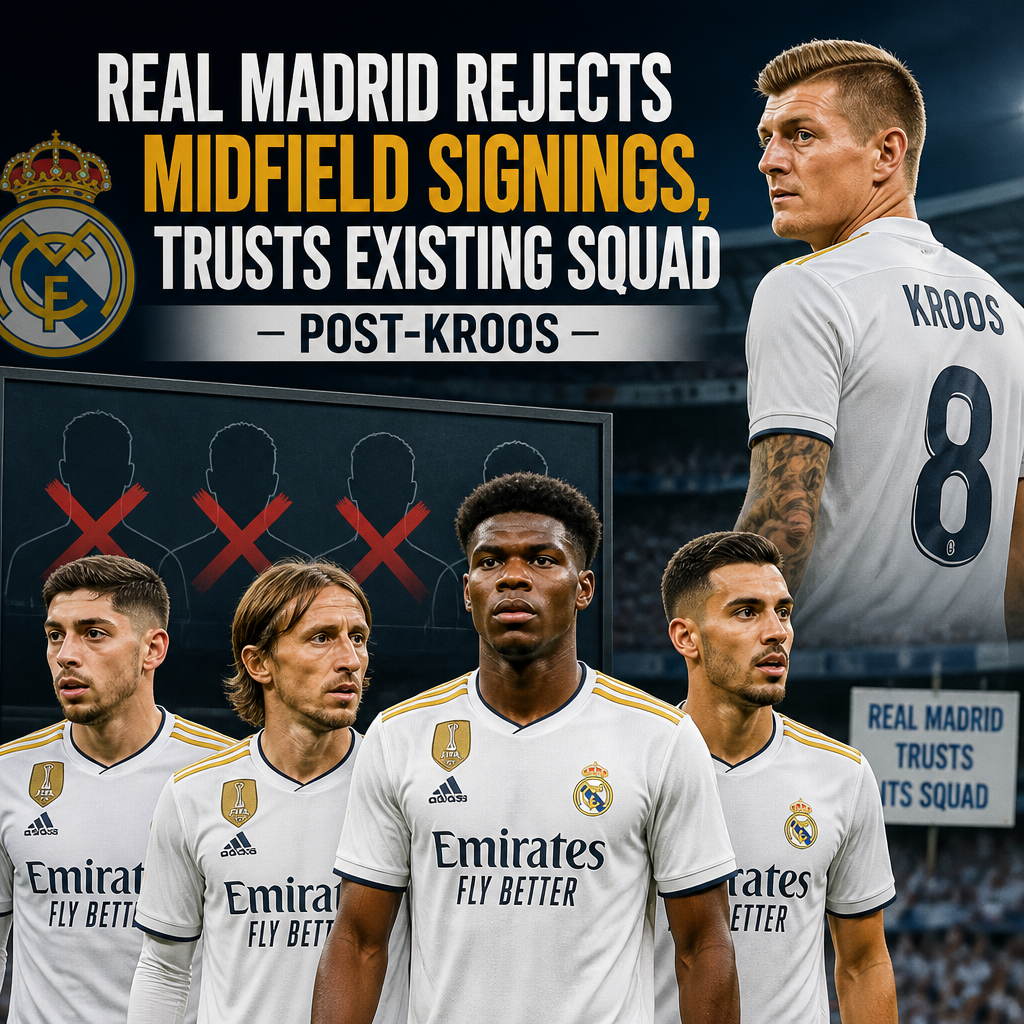
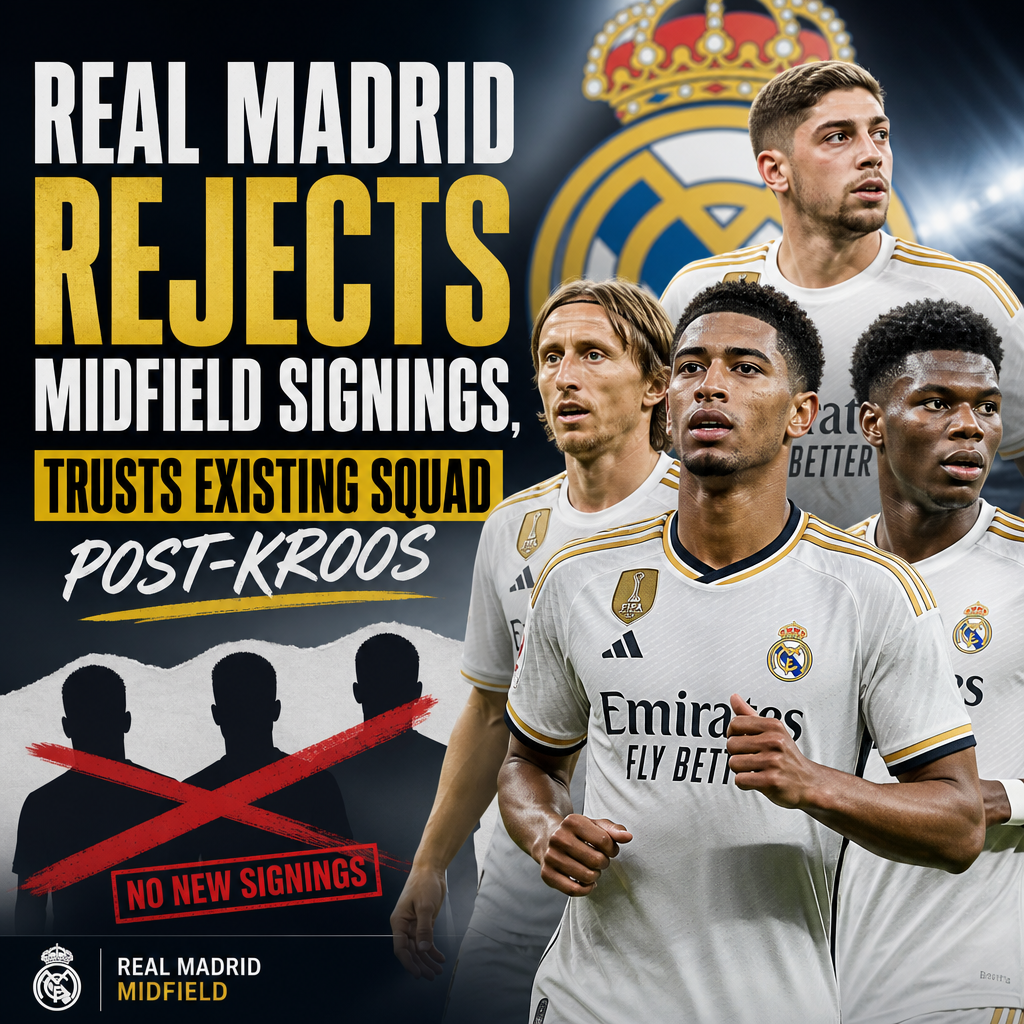
Real Madrid has officially decided against signing a new, dedicated central midfielder to fill the creative gaps left by Toni Kroos’s retirement and Luka Modrić’s departure. After an intense pursuit for Manchester City’s Rodri collapsed, the club has opted to rely on its existing versatile midfield options rather than investing heavily in a new “engine-room” playmaker.
Why Real Madrid Halted the Search
The Rodri Setback
Real Madrid’s primary plan to address the tempo-controlling void was to sign Rodri, the Spanish midfielder reportedly favored to become the new anchor in their midfield. However, the deal fell apart as Rodri leaned toward a move to rivals Barcelona, combined with disagreements over valuation and terms. This collapse forced a reevaluation, and rather than rushing into another expensive signing, the club decided to pause their search.

Alternative Targets Dismissed
Following this setback, Real Madrid considered other midfield options including Adam Wharton from Crystal Palace, Chelsea’s Enzo Fernández, and a promising youngster Ayyoub Bouaddi. Despite internal debates, these names were ultimately ruled out due to the high financial demands and uncertainty about their market value. The club’s sporting structure showed little conviction in pursuing these targets, prioritizing financial prudence and squad harmony over quick fixes.
Belief in In-House Depth
Instead of turning to the transfer market again, Real Madrid’s management and coaching staff have shown strong confidence in their current midfield core. Players such as Jude Bellingham, Federico Valverde, Aurélien Tchouaméni, Eduardo Camavinga, Arda Güler, and the summer signing Bernardo Silva are all expected to share the creative responsibilities. This diverse group offers the club tactical flexibility and balance without overspending on a single profile.
The Tactical Plan Moving Forward
Dynamic, High-Intensity Football
Without signing a traditional deep-lying playmaker like Kroos, manager José Mourinho plans to implement a more dynamic and high-intensity tactical system. This approach relies on fluidity and shared responsibilities among midfielders rather than a single orchestrator.
Eduardo Camavinga’s Expanded Role
Eduardo Camavinga is set to take on a larger part in the new tactical setup. His ball-carrying ability, vision, and tenacity make him well-suited to orchestrate the first phase of build-up play, guiding transitions from defense to attack with greater responsibility.
Arda Güler’s Creative Injection
Meanwhile, Arda Güler is expected to receive increased minutes to bring vertical creativity in the final third. His flair and skillset will be essential in unlocking tight defenses and generating scoring opportunities in the absence of a classic deep-lying playmaker.
Conclusion
Real Madrid’s decision to halt their search for a new central midfielder reflects a strategic choice to trust and develop their existing squad rather than make a hurried and costly signing. With a blend of experienced talents and promising youngsters, the club is poised to adapt tactically under Mourinho’s guidance. The focus now lies on maximizing the collective potential of players like Bellingham, Valverde, Camavinga, and others to maintain midfield creativity and control in the post-Kroos and Modrić era.
By leaning on versatile in-house options and a fresh tactical approach, Real Madrid demonstrates confidence in their squad’s ability to fill one of the most challenging voids of recent years without the need for a marquee signing.