Real Madrid and Barcelona: Enemies Again After the End of Their Institutional Truce
In recent years, Real Madrid and Barcelona have walked side by side on many occasions, united by a shared vision — the creation of the European Super League (ESL). This unprecedented project promised to revolutionize European football, and for a time, it forged an unlikely institutional truce between two of the sport’s fiercest rivals. However, the delicate balance between the clubs has since shattered, with Barcelona gradually distancing itself from the ESL and realigning closer to UEFA, marking the end of this truce and reigniting deep-rooted animosity, as reported by Diario AS.
The Rise and Fall of the Real Madrid and Barcelona Truce
Historically, Real Madrid and Barcelona’s rivalry has been marked by fierce competition, on and off the pitch. Their famous clashes — known as El Clásico — have stirred passions among millions. Yet, behind the scenes, both clubs occasionally found common ground, especially in recent years with the ESL project. The ESL was meant to be a breakaway tournament featuring Europe’s elite clubs, bypassing traditional competitions like the UEFA Champions League. This shared goal temporarily overshadowed their historic rivalry.
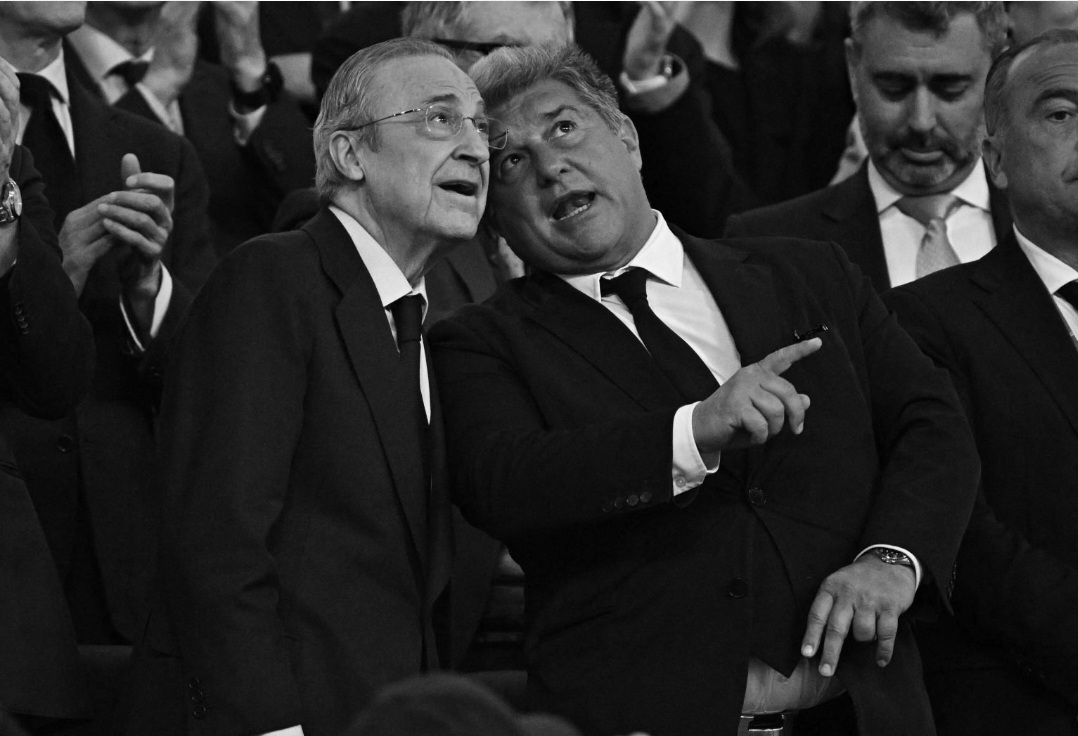
Real Madrid, led by President Florentino Pérez, was among the ESL’s architects, and Barcelona, under President Joan Laporta, initially supported the idea as well. The logic was straightforward: greater revenues, global exposure, and a platform controlled by the clubs rather than intermediary organizations.

However, the ESL began to unravel amid fierce backlash from fans, governments, and UEFA itself. Barcelona’s strategic pivot away from the ESL toward a more conventional relationship with UEFA was the first clear sign of a widening rift. This move was seen by Pérez and Real Madrid as a betrayal, breaking the fragile truce and reopening a path to old hostilities.
Florentino Pérez’s Aggressive Stance: The End of Shared Interests
The institutional truce ended decisively following the emergence of the ‘Negreira Case’. This controversial refereeing scandal centered on allegations of corruption involving payments to refereeing officials. Real Madrid took a hard stance, with Pérez publicly announcing intentions to pursue legal action against those implicated.
Barcelona’s response was far less aggressive, which only fueled tensions. Pérez’s subsequent speeches, especially at the recent General Assembly, laid bare the fractured relationship. He did not hesitate to openly criticize Barcelona’s allies in football governance, namely UEFA President Aleksander Ceferin and LaLiga President Javier Tebas, framing them as adversaries rather than partners.
By associating Laporta’s trusted allies with corruption and negligence, Pérez accentuated the divide. His rhetoric underscored Real Madrid’s desire for absolute independence, painting a picture of a club that owes no allegiances to established institutions and is willing to stand alone in its fight for justice and autonomy.
The UEFA Connection and Its Impact on Real Madrid and Barcelona Relations
Barcelona’s closer ties to UEFA represent more than just a strategic shift; they symbolize divergent paths in football governance philosophies. While Barcelona is rebuilding bridges by fostering relationships with UEFA and LaLiga authorities, Real Madrid is doubling down on its stance of autonomy and resistance to these bodies.
For Pérez, UEFA and LaLiga are not allies but obstacles — institutions to be challenged rather than embraced. This fundamental disagreement highlights a geopolitical divide in Spanish and European football, making cooperation between the two clubs far more difficult.
The implication is that Real Madrid’s vision for football governance now stands in stark contrast to Barcelona’s approach, creating a schism that reverberates well beyond sporting results.
The Latest Clasico: A Reflection of Renewed Hostility
The renewed antagonism between the two clubs was camouflaged in the excitement and spectacle of the latest El Clásico. What was once a celebration punctuated by mutual respect and occasional camaraderie has descended into a rivalry tinged with palpable tension.
Fans and observers witnessed the absence of the earlier years’ lighthearted exchanges and appeared instead to see a match reflecting bitter conquest and retribution. The enthusiasm was undeniable, but so was the cold reality: Barça and Real Madrid are enemies again.
What This Means for the Future of Spanish and European Football
The dissolution of the institutional truce between Real Madrid and Barcelona signifies more than just a fallout between two clubs. It affects the broader landscape of football governance, competition, and commercial strategy.
The ESL project, once a joint dream, remains defunct but still looms as a reminder of possible futures. Barcelona’s re-alignment with UEFA could stabilize some aspects of Spanish football politics but may alienate Real Madrid, complicating efforts for unity.
If this new phase of rivalry continues with such intensity, it could lead to increased fragmentation in the football world, affecting negotiations on broadcasting rights, player transfers, and tournament structures.
Conclusion
The shared era of cooperation between Real Madrid and Barcelona has ended, replaced by a period of open hostility and institutional conflict. The fallout over the European Super League and the Negreira case underscores fundamental differences in vision and approach between the two giants. As both clubs prepare for future clashes on the pitch and in the boardroom, fans are left to witness a rivalry that has once again transcended football, reflecting the deep political and institutional battles shaping the sport’s future.### Real Madrid and Barcelona: Enemies Again in the Post-European Super League Era
In recent years, Barcelona and Real Madrid have walked side by side on a lot of occasions, united by a shared vision of transforming European football through the European Super League (ESL) project. Their alliance marked a rare period of institutional truce between two of Spain’s and indeed football’s biggest rivals. However, the dynamics between the two clubs have taken a dramatic turn. Barcelona’s recent attempts to distance itself from the ESL and tighten ties with UEFA have exposed cracks in this fragile truce. According to a detailed report from Diario AS, these developments have reopened old wounds, setting the stage for renewed hostilities.
The Rise and Fall of the Barcelona-Real Madrid Alliance
Historically, Real Madrid and Barcelona’s rivalry transcends football, steeped deeply in regional pride and political undertones. Yet, in the world of football management and business, the advent of the European Super League brought the two clubs into a temporary partnership. Both clubs shared the belief that the ESL could radically increase revenue, influence, and control over European competition. This common goal fostered a mutual understanding and cooperation, bridging the rivalry at the institutional level for the first time in decades.
But as the ESL dream faltered under fan protests, regulatory pushback, and internal dissent, cracks started to appear. Barcelona, embroiled in financial troubles and facing pressure from UEFA and broader European football governance, began making moves to realign themselves closer to official institutions. This repositioning triggered tensions that had been simmering beneath the surface during the ESL era.
Real Madrid and Barcelona: Enemies Again After the Negreira Case
The long-maintained institutional truce between Barcelona and Real Madrid has definitively fractured. The split gained significant momentum after the emergence of the ‘Negreira Case’—a scandal involving alleged refereeing corruption that put both clubs under