Concacaf President Victor Montagliani’s Controversial Compensation: Over $3 Million for Five Hours a Week?
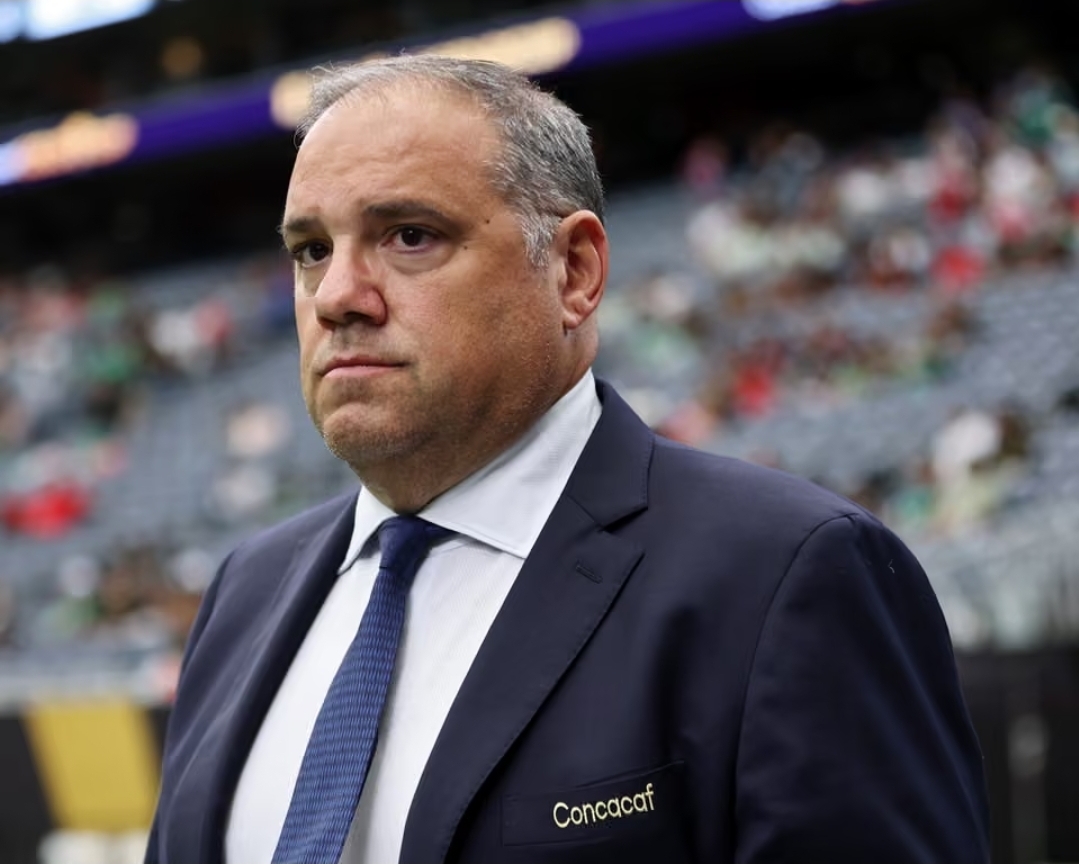
Victor Montagliani, the president of Concacaf, reportedly earns more than $3 million annually while the organization claims he only works five hours per week, according to the most recent tax filings submitted to the Internal Revenue Service (IRS). This revelation, brought to light by publicly available documents first reported by ProPublica, has sparked curiosity and debate around the compensation structures within soccer’s governing bodies, especially non-profit entities like Concacaf.
Breakdown of Victor Montagliani’s Compensation
For the 2024 tax year, Montagliani’s earnings amounted to $2.1 million in base compensation. In addition, he received an unspecified bonus and incentives totaling $893,750, bringing his total income from Concacaf to just shy of $3 million. The filing also indicates a deferred or retirement benefit of $15,780. This compensation package makes Montagliani the highest paid official within Concacaf.
In comparison, Phillipe Mogglio, the general secretary of Concacaf, received $1,569,600 in base salary, with bonuses boosting his total to over $2.4 million. Mogglio reportedly works an average of 40 hours per week, a stark contrast to Montagliani’s claimed five hours. This information is striking, especially considering the scale and influence of Concacaf as the governing body overseeing soccer in North and Central America and the Caribbean.

Understanding Concacaf’s Status and Reporting
Concacaf is registered as a 501©(6) non-profit trade organization in the United States, which exempts it from paying corporate tax. This classification is similar to other trade groups like the American Medical Association or the National Association of Manufacturers. The organization is headquartered in Miami, Florida.
Given its non-profit status, the reported working hours and compensation have raised eyebrows. Richard Schmalbeck, a Duke University law professor specializing in taxation and non-profit organizations, expressed skepticism about the reported five working hours per week for Montagliani, describing the figure as “inaccurate” and likely something “routinely plugged in” on documents. Schmalbeck suggested that such filings often do not reflect actual time spent working but are instead estimations or standard placeholders.
He further commented on the process, noting that the tax return was not signed by Montagliani himself but by others, and it had not been reviewed by the board members. Schmalbeck highlighted a general lack of inquiry from accountants regarding actual hours worked, despite this being relevant for transparency and accuracy.
Broader Context: Compensation Comparisons Across Soccer Confederations
Concacaf’s president’s compensation stands out particularly when compared to other football confederations. For example, Sheikh Salman bin Ibrahim Al Khalifa of the Asian Football Confederation (AFC) and Lambert Maltock of the Oceania Football Confederation (OFC) do not publicly disclose their earnings. Meanwhile, South Africa’s Patrice Motsepe reportedly declines any compensation for his role as president of the Confederation of African Football (Caf).
On the FIFA Council, of which confederation presidents are members, the annual net compensation for presidents is roughly $300,000 plus expenses. FIFA president Gianni Infantino’s reported compensation of over $6 million in 2024 dwarfs others but is proportionate to his global role in football governance.
Montagliani’s Leadership and Legacy at Concacaf
Victor Montagliani assumed the presidency of Concacaf in 2016, a period when the organization was recovering from years of corruption scandals that tainted its reputation. His tenure is generally credited with bringing stability and integrity back to the federation, which governs 41 teams, including soccer powerhouses like the United States, Mexico, and Canada.
Previously, Montagliani served as president of Canada Soccer in a volunteer capacity from 2012 to 2017. As Concacaf president, he was instrumental in leading the initial bid for the 2026 FIFA World Cup jointly hosted by the US, Canada, and Mexico. His administration also introduced new competitions such as the men’s Nations League and expanded club tournaments under the Concacaf banner.
In a notable development, Concacaf recently welcomed Saudi Arabian investment into the region’s football ecosystem. The Saudi-backed Public Investment Fund, owners of Newcastle United, began funding Concacaf tournaments in 2024, reflecting the global interest and financial stakes involved in the confederation’s activities.
Controversies Surrounding Salary Disclosure and Governance
The disclosure of Montagliani’s high salary amidst low reported working hours has invoked scrutiny from the public and policymakers. In 2023, during his testimony before a Canadian parliamentary committee investigating Canadian soccer for corruption and abuse allegations, questions about Montagliani’s Concacaf salary also surfaced, highlighting persistent tensions and concerns.
Additionally, other Concacaf officials also have high compensation relative to their stated hours. US Soccer Federation president Cindy Parlow Cone was paid $150,000 for an average five hours per week as a Concacaf council member. Similarly, Canadian Nick Bontis, briefly on the Concacaf council before his 2023 ousting from Canada Soccer, received $150,000 annually for five hours of work per week.
Breakdown of Montagliani’s Compensation
According to the tax filing, Victor Montagliani received $2.1 million in base compensation for 2024, with an additional $893,750 in unspecified bonuses and incentive compensation. He also earned $15,780 in deferred or retirement compensation. This makes Montagliani the highest-paid official within Concacaf, surpassing even the general secretary, Phillipe Mogglio, who was paid $1.57 million in base compensation and over $2.4 million in total earnings after bonuses.
In stark contrast, the organization reports Montagliani’s weekly commitment as five hours of work. This raises a critical question: how does one reconcile such a high salary with what appears to be minimal weekly involvement?
Understanding Concacaf’s Organizational Structure and Tax Status
Concacaf, the governing football body for North and Central America and the Caribbean, is the host confederation for the 2026 FIFA World Cup, co-hosted by the United States, Canada, and Mexico. Operating as a 501©(6) non-profit trade organization under US tax law, Concacaf enjoys exemption from corporate taxes, similar to entities like the American Medical Association or the National Association of Manufacturers.
Despite the non-profit status, top executives receive multi-million dollar remuneration packages. Phillipe Mogglio, the general secretary, reportedly works a typical 40-hour week, indicating a more traditional full-time role compared to Montagliani’s allegedly just five hours.
Expert Analysis on the Reported Work Hours
Richard Schmalbeck, a law professor at Duke University specializing in taxation and non-profits, reviewed the filings and expressed skepticism about Montagliani’s reported work hours. He noted that such figures are often “inaccurate” or “routinely plugged in” because it’s unusual for accounting firms to rigorously verify the actual hours worked by high-ranking officials in such organizations.
Schmalbeck explained, “If it’s really five hours then he is extremely well paid but I doubt it is the case. I think this is something they just routinely plug in.” He also pointed out that the tax filings were signed by Concacaf’s chief financial officer, Alejandro Lesende, not Montagliani himself, and the documents were unlikely to have been scrutinized by board members prior to submission.
Comparisons with Other Confederations and FIFA
Transparency regarding compensation in football’s governing bodies remains inconsistent. The Asian Football Confederation (AFC) and Oceania Football Confederation (OFC) do not publicly disclose salaries of their presidents, Sheikh Salman bin Ibrahim Al Khalifa and Lambert Maltock, respectively. Meanwhile, Africa’s CAF president Patrice Motsepe reportedly declines compensation for his role.
Confederation presidents also serve on the FIFA Council, where annual compensation — separate from their confederation salaries — reportedly amounts to $300,000 plus expenses. FIFA president Gianni Infantino received over $6 million in 2024, dwarfing payments at other levels.