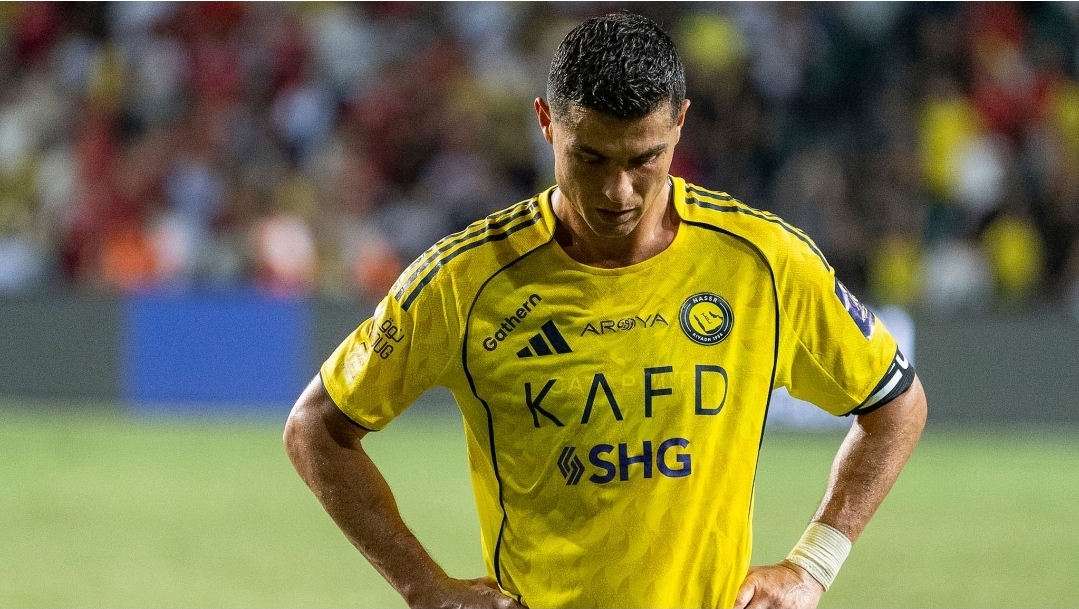
Cristiano Ronaldo’s future in Saudi Arabia has become increasingly uncertain as concerns mount over the financial backing that his club Al Nassr is receiving from the Saudi Public Investment Fund (PIF), the same sovereign wealth fund that owns rival clubs Al Hilal, Al Ahli, and Al Ittihad. The superstar forward’s ongoing strike and his vocal dissatisfaction over perceived inequalities are causing tension not only within his club but also across the Saudi Pro League (SPL), casting a shadow over the Kingdom’s grand ambitions for football.
Ronaldo’s Protest and Financial Backing Concerns
Cristiano Ronaldo’s current stand-off with Al Nassr stems from his belief that the club is being shortchanged financially compared to their main rivals Al Hilal, despite both teams being under the majority ownership of the PIF. Ronaldo is convinced that Al Hilal enjoys preferential treatment, exemplified by their aggressive January transfer activities, such as signing Karim Benzema, which he sees as bolstering their title credentials.
This sense of financial imbalance has driven Ronaldo to undertake what is effectively a one-man protest by missing matches, including a highly anticipated game against Al Ittihad. Although he remains fully fit and has been training regularly with teammates—as evidenced by his recent training photos shared on social media—he reportedly wants to extend his strike action, much to the frustration of league and club officials.

The Impact on the Saudi Pro League and the Kingdom
The situation with Ronaldo has ramifications far beyond one player or club. The Saudi Pro League is currently trying to enhance its stature both domestically and on the world stage, having invested heavily to attract some of football’s biggest names. Ronaldo’s absence from matches, especially under these contentious circumstances, risks damaging the league’s image at a critical time.
Officials are particularly concerned about the narrative this strike sends regarding the unity and professionalism in the SPL. The protest is not only affecting Al Nassr but also painting the PIF—and by extension, Saudi Arabia’s sovereign wealth fund—in a negative light. As owners of multiple clubs, including Al Hilal, Al Ahli, and Al Ittihad, the PIF’s role and influence in the league are under intense scrutiny.
Public Pressure and Official Warnings
With the ongoing stand-off, league officials have resorted to publicly appealing to Ronaldo, urging him to return to competitive play. The SPL’s leadership is aware that fans in Saudi Arabia and worldwide came to the Kingdom partly to witness Ronaldo’s skill and competitive spirit, both of which are currently missing from the pitch due to his strike.
A senior official emphasized the broad fan support Ronaldo continues to enjoy since arriving, highlighting that there remains plenty to play for if he chooses to rejoin the squad immediately. The hope is that the upcoming game on Friday will be a significant enough occasion to persuade the forward that the stakes are too high for him to stay out.
The Economics Behind the Standoff
Interestingly, the officials’ surprise at Ronaldo’s unhappiness seems rooted in the fact that the forward remains one of the highest-paid athletes globally, reportedly earning close to £500,000 per day. This eye-watering salary underscores the complex nature of the protest: it’s not about financial necessity for Ronaldo, but a matter of principle and competitive fairness.
The question of financial backing within PIF-owned clubs brings to light deeper challenges in managing multiple elite teams with a single ownership umbrella. While PIF aims to administer these clubs strategically to promote Saudi football, perceived inequalities threaten to undermine that goal.
What Lies Ahead: Ronaldo’s Potential Return
The upcoming fixture against Al Ittihad will be a litmus test for whether Ronaldo’s protest can be resolved quickly. If he plays, it will signal a return to normalcy and perhaps a re-alignment between player and club ambitions. Conversely, another absence might hint at a prolonged standoff with unknown consequences for his career in the region.
For now, all eyes remain on Ronaldo, Al Nassr, and the Saudi Pro League’s efforts to maintain momentum in their football revolution while managing the delicate financial dynamics within PIF-owned clubs. Fans and officials alike hope this saga ends with the Portuguese forward back on the pitch, competing as the global superstar the league sought to celebrate.
In the midst of this controversy, it is clear that Ronaldo’s personal convictions and concerns over financial backing reflect a broader dialogue about fairness, support, and ambition in Saudi Arabia’s rapidly evolving football scene. Whether this disagreement will serve as a catalyst for positive change or further conflict remains to be seen, but the Kingdom’s footballing future, for now, hinges on this very public standoff.