The 2026 FIFA Men’s World Cup: Navigating Calls for Boycott Amid Political Controversy
The 2026 FIFA Men’s World Cup, set to be hosted jointly by the United States, Canada, and Mexico, is already facing significant international scrutiny. This global sporting event, anticipated to unite fans from all corners of the world, is now entangled in rising political tensions and calls for boycott. These developments have sparked vigorous debate on whether nations should withdraw their participation to protest geopolitical actions and human rights concerns associated with the host countries—particularly the United States.
The 2026 FIFA Men’s World Cup and Growing Political Turmoil
The 2026 tournament is shaping up to be a landmark event, being the first World Cup hosted across three nations. However, recent controversies—especially those related to U.S. President Donald Trump’s provocative threats to annex Greenland from Denmark—have intensified calls to boycott the competition. Soccer officials in countries like Germany and France have publicly considered the possibility of their national teams steering clear of the event as a form of political protest. While the respective soccer federations in these countries have so far resisted calls for a boycott, ongoing incidents such as the civil unrest in Minneapolis have compounded concerns about safety and the welcoming environment for international visitors.

Adding to these concerns, former FIFA President Sepp Blatter has criticized the U.S. for policies perceived as marginalizing political opponents and the harsh immigration crackdowns. Given FIFA’s historical reputation for emphasizing unity and fair play beyond politics, Blatter’s comments have fueled debate over whether hosting the World Cup in the U.S. is appropriate amid such tensions.
Security Concerns: ICE and the Visitor Experience
An often overlooked yet critical component of the upcoming World Cup relates to security enforcement, particularly the role of U.S. Immigration and Customs Enforcement (ICE). Many fans attending the tournament will depend on tourist visas for entry, and ICE is expected to be integral in maintaining security. However, ICE’s director has notably declined to guarantee any suspension of agency operations during the World Cup. This stance has alarmed human rights organizations, which fear that visitors—even those who are merely exercising free speech or engaging in political activities deemed unfavorable by U.S. authorities—might face detention or deportation.
These worries highlight the tension between maintaining strict border enforcement and ensuring an open, inclusive atmosphere for a global gathering centered on sportsmanship and cultural exchange.
Historical Context: Boycotts in International Sports
Boycotts at international sporting events, while impactful, have historically been less frequent than outright bans imposed on nations. For example, some countries were excluded from the 1920 Olympic Games as a consequence of World War I, and South Africa was barred from subsequent Olympics due to apartheid policies until its reentry in 1992. Notably, in 1934, Uruguay chose not to attend the World Cup in Italy in protest of European teams’ refusal to travel to South America for the inaugural tournament.
The most significant sporting boycott remains the 1980 Moscow Summer Olympics, which saw over 60 countries, spearheaded by the U.S., abstain from participation in response to the Soviet invasion of Afghanistan. The Soviet Union, in turn, led a boycott of the 1984 Los Angeles Games. These instances illustrate how geopolitical crises have intersected with sports on rare occasions, influencing international competition on a broad scale.
Interestingly, the FIFA World Cup has never experienced a boycott by qualified teams purely for political reasons. The withdrawals of African teams from the 1966 qualifiers in protest of limited representation show political expression at the margins but not a full-scale boycott of the final tournament.
How Likely Is a Boycott of the 2026 FIFA Men’s World Cup?
Despite mounting pressures and vocal calls from certain governments and activists, no major soccer federation leaders have officially endorsed boycotting the 2026 World Cup. Such a move would require strong, decisive leadership comparable to former U.S. President Jimmy Carter’s boycott of the 1980 Olympics. The complex relationship between FIFA president Gianni Infantino and former President Trump may further reduce the chances of a boycott having significant influence.
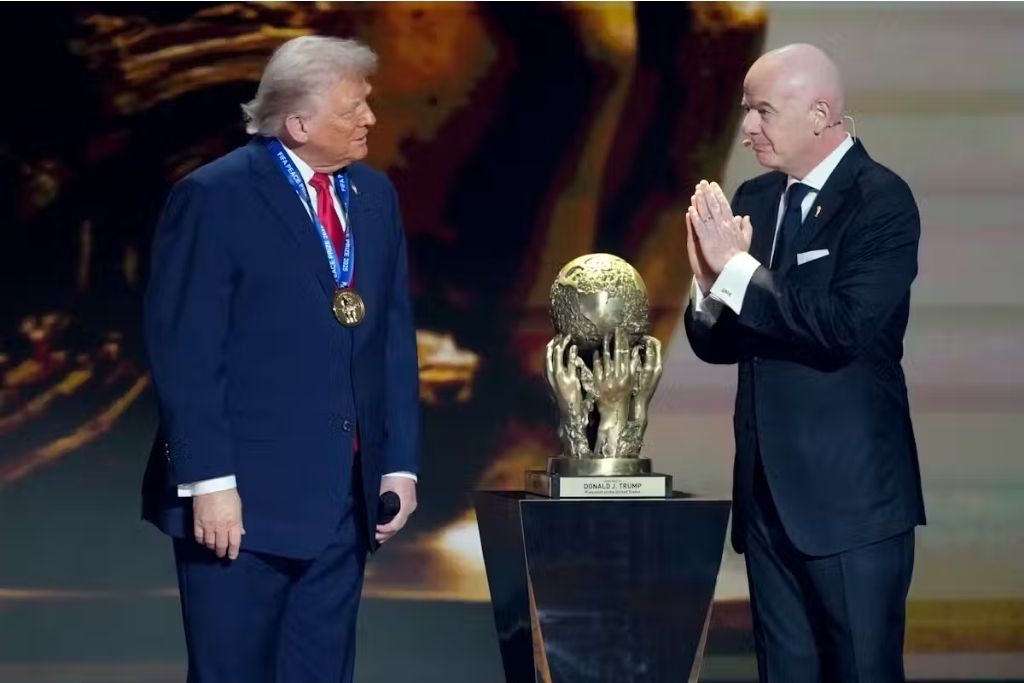
Infantino’s attendance at Trump’s inauguration and his controversial awarding of FIFA’s Peace Prize to Trump underscore the close ties between FIFA leadership and U.S. political figures. These relations suggest that threats of boycott from global soccer authorities might not substantially alter policies related to immigration or tournament hosting protocols.
However, geopolitical tensions remain fluid. Should President Trump or other political actors escalate conflicts, especially with countries involved in the tournament, renewed boycott discussions could surface. For now, though, threats remain largely symbolic, and the likelihood of an actual boycott of the 2026 FIFA Men’s World Cup appears low.
Conclusion
The 2026 FIFA Men’s World Cup stands at a crossroads, challenged by political controversies and concerns over human rights and security. While calls for boycott reflect genuine unease among international communities and certain governments, the event also holds the promise of global unity through sport.
As organizers and stakeholders navigate these complexities, the World Cup’s ability to foster dialogue and connection—despite geopolitical tensions—will be a crucial test of sport’s enduring influence in the modern world. Fans around the world eagerly await an exhilarating tournament, hopeful that the games will transcend political divides and celebrate the global passion for soccer.