According to Qatari media outlet Winwin, controversial remarks by Olivier Safari Kabene, president of the CAF Referees Commission, have come to light regarding the handling of a chaotic moment during the 2025 Africa Cup of Nations (AFCON) final. These revelations have reignited debates about how CAF manages discipline and crises in its flagship tournament, highlighting potential inconsistencies and internal pressures that shaped the game’s conclusion.
Referees Reportedly Instructed to Forgo Cautions in the 2025 AFCON Final
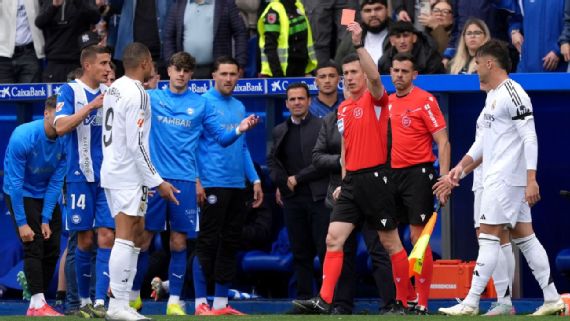
During internal discussions, Safari reportedly disclosed that referees were explicitly told not to issue yellow cards to Senegalese players who left the pitch during the tense final against Morocco in Rabat. The incident occurred after a late penalty was awarded to Morocco, prompting a brief walk-off by Senegal’s players in protest. Normally, such an action would trigger immediate cautions upon return to the field. However, Safari revealed that the referees were instructed to withhold these warnings to avoid the match being abandoned prematurely.
This decision is significant because it suggests that CAF’s disciplinary rules were bent to preserve the flow of the game rather than enforce standard regulations. Safari reportedly stated, “All Senegalese players who left the field should have been cautioned immediately upon their return, but we gave instructions not to do so in order to preserve the match and avoid its abandonment before the end of regulation time.” This admission raises questions about the integrity and impartiality of refereeing decisions in high-stakes matches under CAF’s jurisdiction.
The Chaotic 2025 AFCON Final: A Moment of High Drama
The final, played on January 18, 2025, was marked by unusual tension and suspense. Morocco was awarded a legitimate penalty late in regulation time, leading to Senegal’s emotional response of temporarily leaving the pitch in protest. The walk-off caused a delay of approximately 15-16 minutes before play could resume. Despite the disruption, the match continued into extra time, where Senegal eventually scored to clinch the title with a 1-0 victory.
While the game’s dramatic nature was unforgettable, the lack of immediate disciplinary consequences for the walk-off is what has fueled controversy. CAF’s decision to allow the game to proceed without treating Senegal’s protest as an abandonment elicited divided opinions among fans, analysts, and football officials.
CAF President Motsepe Calls for Stronger Disciplinary Measures
In response to the post-final turmoil, CAF President Patrice Motsepe publicly criticized the leniency of the sanctions imposed after the final. Speaking at the CAF General Assembly, Motsepe condemned such behavior and pledged reforms to the disciplinary code. He emphasized that future editions of the Africa Cup of Nations would not tolerate similar disruptions.
“The Africa Cup of Nations in Morocco… we never want to see it again. It will never happen again; we will not tolerate it. This is non-negotiable,” Motsepe declared. His statement underlined the need for clearer, tougher penalties to prevent teams and players from undermining the integrity of the tournament.
Sanctions Imposed Without Addressing the Walk-off Directly
Following the final, CAF’s Disciplinary Board handed down fines and suspensions targeting individuals and federations involved on both sides, but notably refrained from penalizing Senegal for the act of leaving the pitch itself. The key disciplinary actions included:
- Senegal’s head coach Pape Bouna Thiaw suspended for five matches and fined $100,000.
- Players Iliman Ndiaye and Ismaïla Sarr received two-match suspensions each for unsporting behavior.
- Senegalese Football Federation fined approximately $615,000 for assorted misconduct.
- Morocco’s captain Achraf Hakimi suspended for two matches (one delayed for a year) for unsporting conduct.
- Ismaël Saibari banned for three matches and fined $100,000.
- Moroccan Football Federation fined around $315,000 for a range of offenses including fan misbehavior.
Morocco’s appeal to overturn the match result on grounds of the walk-off was rejected, officially confirming Senegal as champions. This decision further contributed to feelings of injustice among observers.
Questions Raised About CAF’s Internal Governance and Consistency
The newly reported comments from CAF’s referee chief add a layer of complexity to the discussion. They imply that internal directives may have influenced on-field decisions, potentially compromising the ethical standards expected during continental competitions. Critics warn that telling referees to disregard standard disciplinary procedures undermines CAF’s credibility and casts doubt on the legitimacy of match outcomes.
Additionally, media reports indicate unresolved tensions within CAF’s Executive Committee. Concerns about transparency emerged regarding referee appointments, with suggestions that the Referees Committee was not fully informed. This revelation compounds worries about internal governance and decision-making processes within the organization.
The Road Ahead: Balancing Fairness and Crisis Management
As CAF grapples with the fallout, the pressure to reform is mounting from all quarters—fans, federations, and journalists alike. President Motsepe’s commitment to revising disciplinary regulations signals a desire for clearer guidelines that can handle crises decisively while maintaining fairness.
The challenge lies in enforcing rules consistently and transparently, especially in emotionally charged, high-stakes situations. How CAF chooses to navigate this path will shape perceptions of its ability to govern African football effectively and uphold the spirit of competition.