Thomas Müller’s Insight on How Football is Rated in the US and Canada
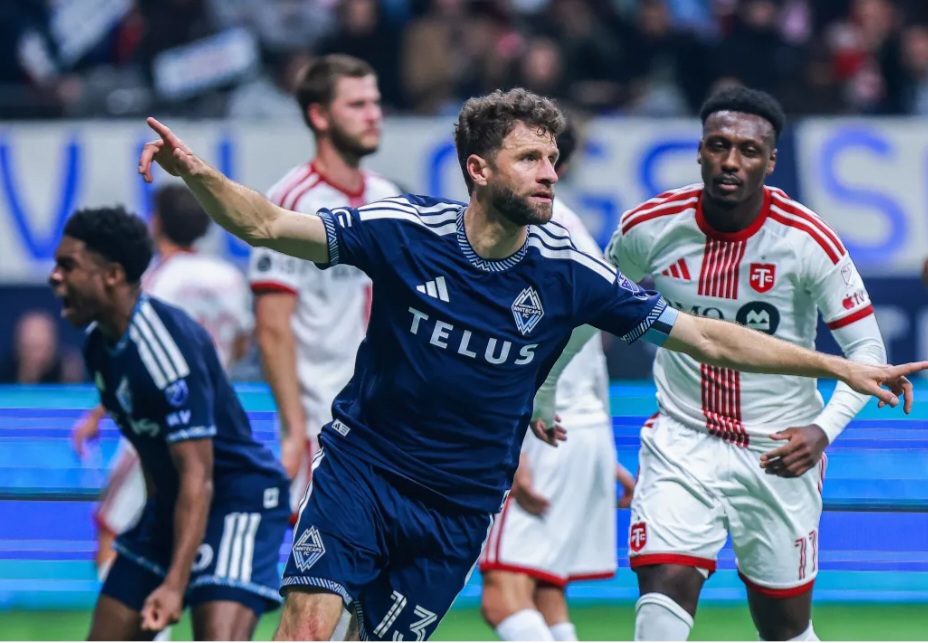
Thomas Müller, the former FC Bayern legend, has been spending time in Canada and recently shared his reflections on how football is perceived in North America. Speaking to the German news outlet Kicker, Müller offered a thoughtful analysis of the sport’s status in the United States and Canada, drawing on his personal experiences and observations. His comments provide a fascinating glimpse into the contrast between football’s global prominence and its unique positioning in the North American sports landscape.
Football’s Place in North American Culture
According to Müller, football in Canada and the US holds a very different cultural stature compared to countries where the sport dominates. “You must separate two different things,” he said, clarifying the divide between the general public and football enthusiasts. In everyday conversations, football lacks significant presence—he pointed out that the sport isn’t something people widely discuss, for example, “It’s not spoken about in the office on a Monday morning.”
This cultural difference stems partly from historical and regional sports preferences. Canadians and Americans traditionally grow up immersed in ice hockey, basketball, and American football. These sports have been ingrained in the national identities of the two countries for decades, overshadowing association football’s rise. Müller likened the ranking of football in North America to the status of handball in Germany, where it isn’t a mass conversation subject but maintains a solid niche following.

The Football Bubble: Passion Within the Stadiums
Despite its limited general popularity, Müller insists that the core football community in North America is far from insignificant. He referred to this group as the “football bubble”—a passionate and dedicated fanbase that brings energy and enthusiasm to the games. While most of the population might be indifferent or unaware, “In the stadia there’s euphoric atmosphere,” Müller noted.
This is reflected in the attendance figures during critical matches. For instance, Müller highlighted how playoff games attract large crowds, citing an example where his stadium was filled with 50,000 spectators. This turnout illustrates that while football may not be omnipresent in broader culture, it commands intense loyalty among its followers and can create memorable experiences within arenas.
Additionally, these stadium atmospheres often rival those in football-crazy countries, showing that the sport resonates deeply with fans who connect emotionally to the game despite the competing sports narratives in their countries.
Geographic and Infrastructural Challenges
The layout and development of sporting infrastructure also impact football’s popularity according to Müller. In Canada, for example, the availability of football pitches is limited compared to the abundance of ice hockey rinks. This is largely due to the country’s topography and the dominance of winter sports, which have historically attracted more investment and recreational attention.
This disparity affects grassroots development and access to the sport, potentially slowing football’s growth compared to regions where pitches are abundant and accessible year-round.
Müller’s Personal Connection and Future Plans
Talking about his own future, Thomas Müller expressed a strong, personal connection to both Germany and Canada. While he appreciates life in Canada, especially Vancouver where he has spent time, his roots remain firmly planted in Germany. “I can imagine in the future always coming back to Vancouver, but I’ll definitely be returning to Germany, where my roots are so very deep. I have a very high regard for life in Germany,” he shared.
His remarks highlight the dual identity many professional athletes experience—embracing opportunities abroad while maintaining deep ties to their homeland. For Müller, Germany represents both home and heritage, a place where his career began and where he envisions future stability.
The Growing Footprint of Football in North America
Thomas Müller’s observations also paint an optimistic picture of football’s potential in the US and Canada. Although the sport currently plays second fiddle to traditional North American games, its growing stadium attendance and passionate “football bubble” fanbase signal gradual but steady progress.
Soccer’s rise in these markets is supported by several factors including investment in Major League Soccer (MLS) and the Canadian Premier League (CPL), increasing youth participation, and the global popularity of events like the FIFA World Cup. With time and infrastructural development to reduce geographic disadvantages, football may become an increasingly central component of North American sports culture.
Conclusion
Thomas Müller’s reflections offer valuable insight into how football is rated and experienced across the US and Canada. While football is not yet a mainstream sport among the general population, it enjoys an enthusiastic and committed following in North America, with vibrant stadium atmospheres and growing fan loyalty. Müller’s balanced view respects the sport’s present standing while recognizing its dynamic future, underscoring both the challenges and opportunities facing football on the continent.