Roma Take Giant Step Towards £1 Billion, 62,000-Seat Stadium in Rome
Roma have taken a giant step towards transforming their future by submitting the key feasibility documents required to build a record-breaking 62,000-seat stadium in Rome’s Pietralata district. This ambitious plan represents much more than a new home for the Italian giants; it is a bold vision to create one of the most modern and sustainable sports infrastructures in Europe while paying homage to the city’s rich history and the club’s passionate fanbase.
A Vision of Modernity and Heritage
The proposed stadium aims to offer Roma supporters a facility worthy of their history, passion, and future. According to an official statement published on the club’s website, the project is the outcome of detailed technical work, placing strong emphasis on sustainability and architectural innovation. This new arena will not only serve as a state-of-the-art venue for football matches but will also function as a multi-use complex that fans can engage with beyond match days.
Roma’s plans focus on incorporating elements inspired by the Eternal City itself, blending iconic Roman architectural motifs with cutting-edge design. The goal is to create a landmark that expresses the club’s identity and resonates with the spirit of Rome while establishing a world-class venue suitable for hosting major events.
The Monumental Curva Sud: Heartbeat of Roma’s Support
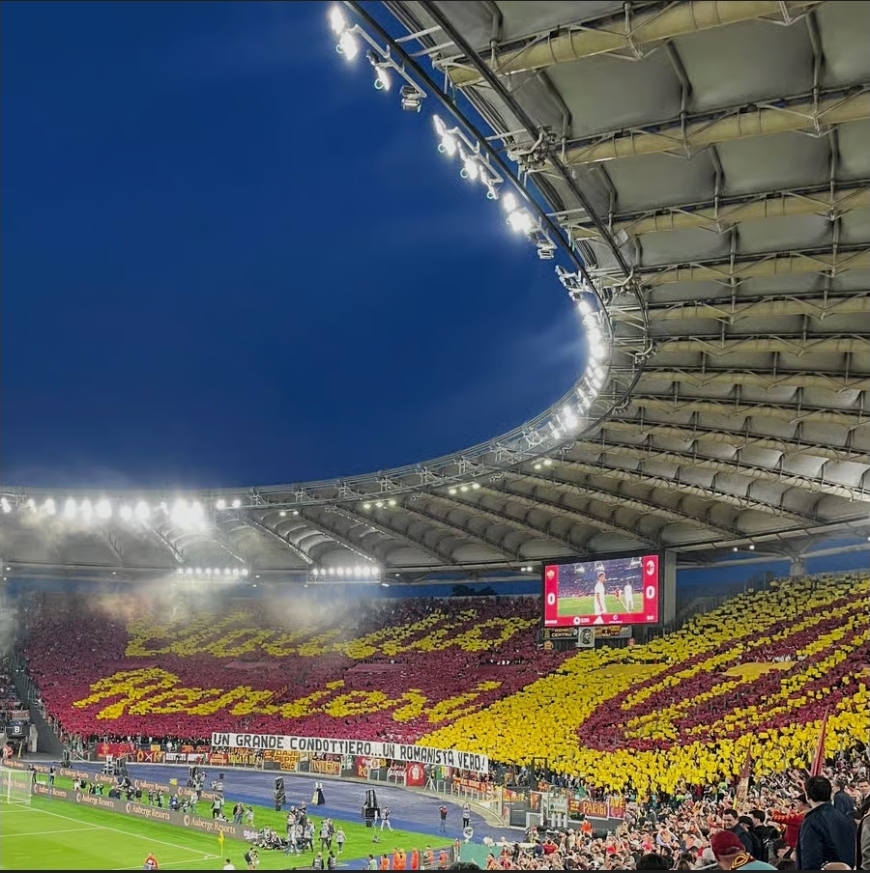
One of the standout features of the new stadium will be an expansive Curva Sud, envisaged as the largest single end in Europe. With a capacity of around 21,000 fans, this section will become the emotional and vocal core of Roma’s famously fiery support, comparable to Borussia Dortmund’s legendary Yellow Wall at Signal Iduna Park.
This colossal stand is designed to give an intimidating atmosphere for visiting teams while uniting thousands of passionate supporters in one electrifying section. The architectural ambition here is not only to maximize capacity but to enhance acoustics and visual impact, turning every matchday atmosphere into an unforgettable experience.
Infrastructure and Sustainability at the Forefront
The proposed stadium complex will also integrate essential infrastructure enhancements, including proximity to Roma Tiburtina station, one of the city’s main high-speed rail hubs. This connection is expected to facilitate convenient and efficient access for fans using the Metro and other public transport systems. Additional road improvements, tram links, and pedestrian bridges are part of the comprehensive development plan, easing mobility and minimizing environmental impact.
Sustainability is a core theme throughout the stadium design. Green spaces will be incorporated around the stadium to create a park-like atmosphere amid the urban setting. The commercial and entertainment areas will focus on eco-friendly constructions and energy-efficient solutions, aligning with growing global trends for responsible urban development.
Economic Impact and Euro 2032 Aspirations
With an estimated construction cost of around €1 billion (approximately £870 million), Roma’s new stadium would become the most expensive football arena ever built. This hefty investment underscores the club’s commitment to securing a long-term future and elevating their home ground status within European football.
Moreover, Roma intends for the stadium to be one of the host venues for Euro 2032, a prestigious tournament that Italy will co-host with Turkey. This opportunity would not only spotlight the club on an international stage but also bring considerable economic benefits to the Pietralata district and the wider city, from tourism to job creation.
Local Controversy and Challenges Ahead
As with any large-scale urban project, the stadium proposal has not escaped local opposition. Some residents have voiced concerns over the site’s proximity to a hospital and the encroachment on public parkland previously earmarked for community use. These objections highlight the delicate balance between urban development and preserving local quality of life.
Roma and the project stakeholders will need to engage closely with the community to address these issues, ensuring the stadium’s benefits outweigh potential drawbacks. Their commitment to sustainability and enhanced infrastructure could play a crucial role in gaining wider acceptance.
Conclusion: A New Era for Roma
Roma’s submission of the feasibility documents is a landmark moment that signals the dawn of a new era for the club and its supporters. With a stadium that could set new standards in capacity, modernity, and fan experience, this project promises to blend the cultural heritage of Rome with the exhilarating passion of football.
If realized, the £1 billion arena in Pietralata will not only become a beacon for Roma fans but will also stand as a testament to the city’s ongoing evolution and its love for the beautiful game. Despite some hurdles, this vision has the potential to redefine Roma’s place in European football for generations to come.Roma Take Major Step Toward £1 Billion State-of-the-Art Stadium in Rome
Roma have taken a giant step towards building a record-breaking 62,000-seat stadium, a project that could cost up to £1 billion. This ambitious development marks a milestone in the club’s long-term vision to create a modern sporting arena that reflects its rich history and vibrant fan culture. Located in Rome’s Pietralata district, the stadium is designed to be a landmark not only for the club but also for the city and its residents.
Roma’s Vision for a Modern Sporting Icon
The Italian giants have officially submitted key feasibility documents essential for advancing the project, signaling their commitment to making this vision a reality. According to a statement released on Roma’s official website, the plans represent “one of the most ambitious and modern sports infrastructures in Europe.” The club emphasized its desire to provide supporters with a home that truly honors their “history, passion and future.” The process has involved extensive technical assessments ensuring the project aligns with sustainability goals, community needs, and innovative design practices.
The new stadium aims to integrate iconic architecture inspired by Rome itself, blending tradition with cutting-edge technology. The concept goes beyond just a football ground — it intends to offer multi-use areas where fans can engage with the club throughout the year, not just during match days. This holistic approach reflects a wider trend among football clubs toward creating immersive fan experiences linked to commerce, entertainment, and social activities.
A Monumental Curva Sud: The Heart of Roma’s Support
One of the most remarkable features of the stadium will be the monumental Curva Sud stand, which is projected to hold approximately 21,000 fans. This alone will make it the largest single-end stadium stand in Europe. The design draws inspiration from the “Yellow Wall” at Dortmund’s Signal Iduna Park, widely regarded as one of the most intimidating and passionate fan areas globally. Roma’s management aims for the Curva Sud to become the throbbing heart of the club’s famously fiery support, creating an electrifying atmosphere that can rival the best in European football.
Infrastructure and Sustainability: A Forward-Thinking Approach
Beyond seating capacity and fan experience, the proposal includes significant improvements to local transport infrastructure. The stadium will benefit from close proximity to Roma Tiburtina station, featuring high-speed rail and Metro access. New roads, tram links, and bridges are planned to accommodate the increased flow of spectators and minimize traffic disruption. The club has been careful to incorporate eco-friendly designs with green spaces and sustainable construction methods as fundamental components of the project. This attention to environmental impact is in line with wider European initiatives to promote greener urban development.
Economic Impact and Integration with Euro 2032
With an estimated cost of around €1 billion (£870 million), this development would become the most expensive football stadium ever built in Italy. Roma hopes to use this state-of-the-art facility as one of the venues for Euro 2032, which Italy will co-host with Turkey. Hosting matches at this new stadium during the tournament would be a major boost, bringing international attention and economic benefits to Rome and its local communities.
Controversies and Community Concerns
Despite the excitement, the project has faced some resistance, particularly from local residents. A number of concerns have been raised about the stadium’s proximity to a hospital and areas initially earmarked as public parkland. Opponents argue that the large-scale construction could impact local services and green spaces used by the community. The club and city planners have stated their intention to address these concerns through transparent discussions and adjustments to ensure the development coexists harmoniously with the neighborhood.
Looking Toward the Future
The Roma stadium project signals a bold step forward for one of Italy’s biggest football clubs. By integrating ambitious architectural design, fan-focused features, sustainable practices, and improved transportation links, Roma is preparing a home that matches the passion of its supporters and the stature of its heritage. While challenges remain before construction can begin, the submission of feasibility documents marks an important milestone toward turning the dream of a modern, iconic stadium in Rome into a reality.
For fans, the promise of a giant Curva Sud, enhanced matchday experiences, and a stadium designed to inspire future generations brings renewed optimism. As the project progresses, the eyes of Italian football – and indeed Europe – will be watching closely as Roma plans to redefine what a football stadium can be.